
The Father She Could Not Recover
Tiny Beautiful Things: Advice on Love and Life from Dear SugarThis flow traces Cheryl Strayed / Sugar’s movement from a childhood shaped by her father’s violence and absence to a later, deliberate attempt at reconciliation that ends in renewed estrangement.
increasing Bearing strength in each event
 decreasing
Bearing strength in each eventdecreasingA Violent Home

Love Under Threat
A Father Who Hurts
Cheryl Strayed / Sugar remembers Cheryl Strayed’s father as a destructive presence who was often violent and mean. The child’s terror does not erase her love for him: she cries, hides, and suffers physical symptoms, yet continues to want her father in her life.
Her attachment is not a judgment that his conduct is acceptable. It is the immediate, powerful bond of a child who cannot simply stop loving a parent, even when that parent makes home frightening.
The Mother’s Departure
When Cheryl Strayed / Sugar is six, her mother finds the courage to leave her abusive husband. Cheryl Strayed / Sugar begs her to return, afraid that losing the marriage means losing her father too.
That fear proves real in one sense: after the divorce, Cheryl Strayed / Sugar has little relationship with him. Her mother’s departure protects the children from the violence, but it cannot give the daughter the father she wanted.
Letters That Were Not For Her
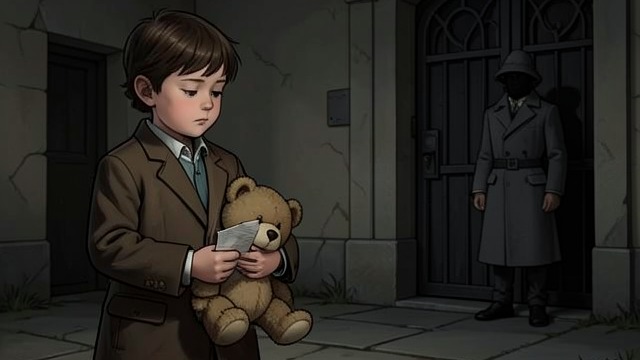
The Father in the Mailbox
A Child’s Hope
After Cheryl Strayed / Sugar’s parents separate, her father appears only rarely. A few times each year, letters arrive addressed to her and her siblings, and the children open them with an excitement that briefly makes their absent father seem close again.
The letters do not contain the connection they hope for. Instead, they are vulgar attacks on their mother, threats, and grievances directed at the adult relationship the children cannot repair.
An Inherited Fear
The threat that Cheryl Strayed’s father might take the children stays with Cheryl Strayed / Sugar. She imagines how the siblings might escape and find their way back to their mother, carrying a fear that shapes the private landscape of her childhood.
At twenty-seven, she realizes with belated force that her father never intended to come for her and never wanted her in the way she had hoped. The recognition breaks through an old fantasy and brings fresh grief, not because she has lost a present father, but because she finally sees what was missing all along.
The First Invitation
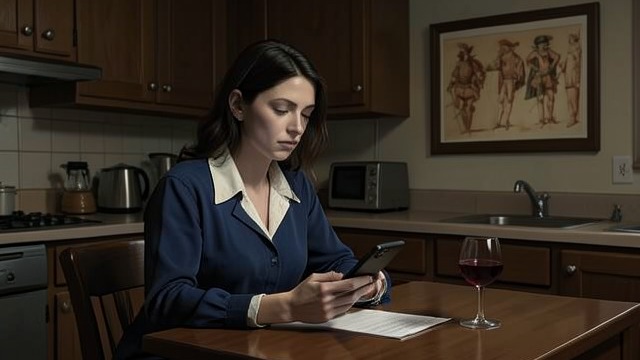
An Opening After Loss
A Letter to Her Father
After Cheryl Strayed’s mother dies, Cheryl Strayed / Sugar writes to her father. She tells him that his former wife has died and that she has always hoped they might someday have a relationship.
She does not offer unconditional access. She asks him to explain why he behaved as he did during their shared past, making honesty the condition for any future closeness.
The Door Slams Shut
Instead of responding with reflection, Cheryl Strayed’s father gets drunk and calls her a liar. He blames her mother for turning the children against him and rejects the possibility that he has responsibility for the estrangement.
Cheryl Strayed / Sugar hangs up. The exchange confirms that the daughter’s hope for repair cannot by itself create a father capable of meeting her truthfully.
A Call After Seventeen Years
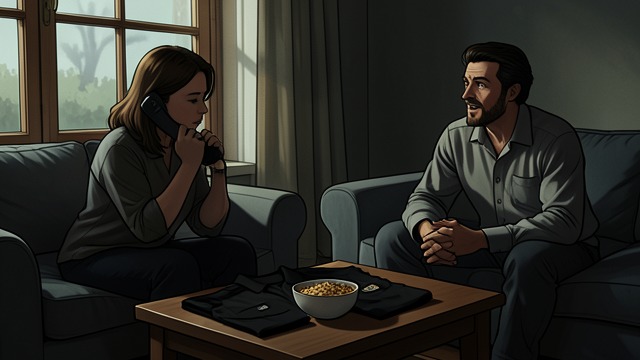
The Familiar Voice
Contact Returns
A telephone call displays Cheryl Strayed’s father’s name. Cheryl Strayed / Sugar initially imagines that his wife is calling to report his death, but the message is from her father, asking her to call him back.
She waits a week before returning the call. He speaks casually about television, recipes, and everyday subjects, as though the painful history between them has never happened.
The Old Condition
The familiar voice evokes the father she knew, but the ordinary conversation does not amount to an acknowledgment of their past. Cheryl Strayed / Sugar remains willing to consider a relationship, yet will not pretend that the childhood they shared can simply be erased.
When he later asks what she wants to know, she prepares a generous, direct account of what hurt her and what she needs from him. The call reopens possibility while revealing how little contact alone can repair.
The Last Boundary

A Final Attempt at Truth
The Daughter Speaks Clearly
Cheryl Strayed / Sugar writes her father a careful letter, trying to be loving, mature, and forgiving while still naming the past. She is no longer the young woman whose life depends on winning his approval; she has a partner and children and a life she values.
Her letter offers a genuine opening, but it asks for a relationship in which both people can speak about what happened. It is not a demand that he become a perfect father, only that he acknowledge their shared history.
Release Without Repair
Her father replies in anger, tells her never to contact him again, and says he is glad to be rid of her. Cheryl Strayed / Sugar does not chase him or collapse into the old effort to make him understand.
She walks to a hill and sits with contradictory feelings: sadness, anger, gratitude, and acceptance. The attempt fails, but the boundary clarifies that she can carry her father’s absence without giving him authority over the life she has built.
During Cheryl Strayed / Sugar’s childhood, before age six
After the divorce, during Cheryl Strayed / Sugar’s childhood
When Cheryl Strayed / Sugar is twenty-two
Seventeen years after Cheryl Strayed / Sugar’s first letter
The week before Cheryl Strayed / Sugar’s thirty-ninth birthday
