Grief
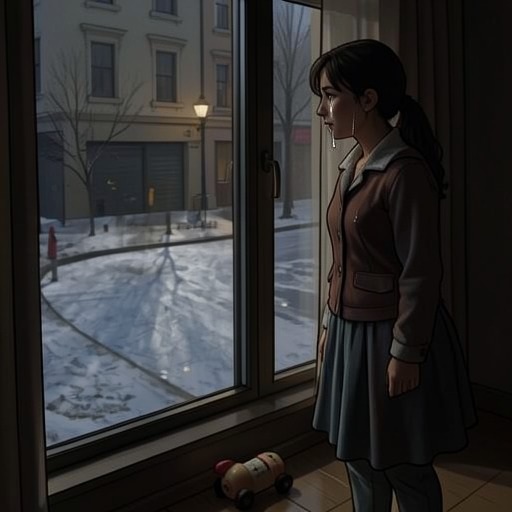
Tiny Beautiful Things: Advice on Love and Life from Dear SugarGrief in the book is both an enduring consequence of loss and a way that loss continues to shape ordinary life. Cheryl Strayed / Sugar’s mother dies, leaving a final word and an absence that cannot be repaired; years later, grief still marks important occasions and inhabits the objects passed from one generation to another. The writing rejects the demand to get over bereavement, while showing that lasting sorrow and a full, joyful life can exist together.
Grief and the Death of a Mother
The death of Cheryl Strayed / Sugar’s mother is rendered through a final exchange whose incompleteness becomes part of its force. Her mother is too sick, weak, and disoriented to say a full sentence. The last word she manages is “love”; the missing pronouns do not diminish what the word conveys. In this memory, grief attaches not only to the death but to the small, irretrievable details of the last encounter.
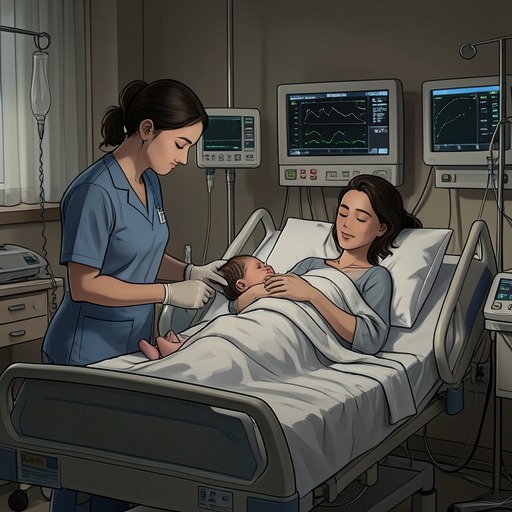
Cheryl Strayed / Sugar was not beside her mother when she died. Her mother died alone in a hospital room, and for years the narrator repeatedly revisited the choices and events that had kept her away. Rehearsing those circumstances could not change them. The account makes the permanence of bereavement explicit: her mother would not return, and their last exchange would remain their last. The narrator remembers trying to kiss her, being asked not to touch because of the pain, promising to return the next morning, and leaving after saying she loved her. Her mother answered only as Cheryl Strayed / Sugar was nearly out the door. When she returned in the morning, her mother was dead.
That sequence gives grief a particular shape: it circles a moment whose outcome cannot be revised. Memory preserves gestures and words, but it cannot produce a different ending. The final “love” stands on its own, a small expression that endures without making the death acceptable or undoing the separation.
The Demand to Move On
The advice to a bereaved correspondent widens the subject from maternal loss to the death of a child. Cheryl Strayed / Sugar responds to the loss of a baby girl by insisting that the correspondent’s suffering is an understandable response to something truly devastating. The surrounding culture may suggest that grief should have an endpoint, but the response rejects that expectation. People who urge the bereaved to be over a death may be trying to help, or may be frightened by the intensity of the loss; either way, minimizing grief does not make those people useful companions in healing.
The image of Planet My Baby Died marks how loss can divide experience into incompatible worlds. Others remain in everyday life, where the death may seem like something that should recede. The bereaved person lives in a reality organized by the child’s death. This is not presented as a failure to recover or as a demand that every moment be consumed by mourning. It names the difference between an outsider’s assumptions and the inner reality of someone whose life has been changed by loss.
Objects, Memory, and What Cannot Be Found
Several months after her mother dies, Cheryl Strayed / Sugar finds a glass jar of stones in the far reaches of her mother’s bedroom closet. She is clearing the house she had thought of as home, a process made brutal by the certainty that the house and its former life are no longer hers in the same way. Holding the jar briefly gives her the sensation of holding her mother. The stones matter because they are not anonymous keepsakes: her brother, sister, and she had found them as children on beaches, trails, and grassy edges of parking lots, then pressed them into their mother’s hands.
On the bedroom floor, she empties the jar and runs her fingers over the stones. Most are smooth, black, and smaller than a potato chip. Her mother had called them worry stones and said that rubbing them could soothe the mind. Their texture and weight offer a physical point of contact with memory, but the object cannot contain the person who is gone. Cheryl Strayed / Sugar later acknowledges that she did not find her mother in the stones, any more than in the other things she had kept or encountered. The jar can briefly make absence feel tangible; it cannot reverse it.
Over twenty years after the death, the search for a code that would make the loss intelligible has ended. The stones have scattered, but the practice of keeping them continues in a new form: the narrator’s children give stones to her, and she keeps the best ones in her pockets. Sometimes she carries a particularly pleasing one for weeks, her hand returning to its black curve. The gesture echoes her mother’s use of worry stones without suggesting that the next generation replaces the one who died. What changes is the direction of the gift: objects once offered by children to their mother are now offered to Cheryl Strayed / Sugar by hers.
Joy, Absence, and Compassion
A conversation with a woman whose mother died when she was young gives Cheryl Strayed / Sugar a blunt way to recognize the persistence of bereavement. Both women are now in midlife, have children, fulfilling careers, and good relationships, yet neither considers it all right that her mother is dead. Their happiness does not cancel the loss. It is shaped by it: at graduations, weddings, book publications, and the births of their children, there was no mother present, and there never will be. Grief is not described only as daily weeping; it also persists as an inner tremor and as the knowledge of who is missing at life’s milestones.
That recognition guides the counsel to a bereaved fiancée. Cheryl Strayed / Sugar asks the correspondent not to treat his partner’s grief as a puzzle that can be solved, but to bear witness to it. He can acknowledge her loss repeatedly, ask about her mother without waiting for a prompt, offer comfort before it is requested, and make room for her mother at their wedding and in their shared life. The dead mother remains present as a shadow in the woman her daughter has become. Mr. Sugar and some of Cheryl Strayed / Sugar’s friends and acquaintances have offered this kind of recognition to her; it does not make the death all right, but it makes living with the loss better.
The resulting account holds two truths together. A person may be happier and luckier than she has any right to expect and still know that her mother’s death will never be okay. Compassion does not promise to solve that contradiction. It asks another person to stay near it, to acknowledge the permanent absence, and to keep giving love without claiming that love can undo what happened.