Mother’s jar of stones
Tiny Beautiful Things: Advice on Love and Life from Dear SugarMother’s jar of stones is a glass jar filled with small rocks that Sugar and her siblings gave to their mother as children. Discovered in a bedroom closet after her death, it becomes a vessel for the contradiction at the heart of bereavement: a loved person can seem briefly present in an object, though no object can bring that person back. The stones hold a history of giving and touch, then pass into a changed family life as Sugar’s children begin giving stones to her.
Discovery and childhood history
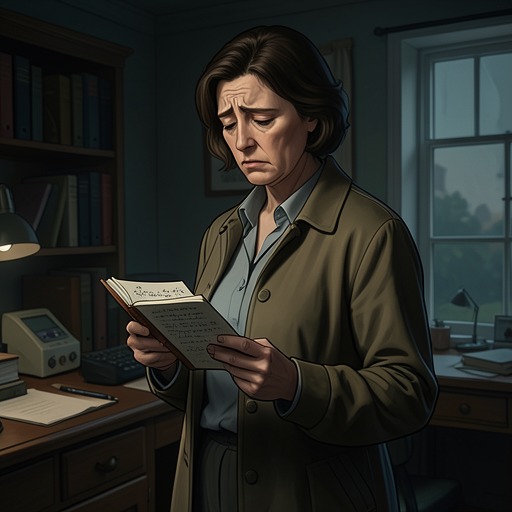
Several months after Sugar’s mother died, Sugar found the jar in the far reaches of her bedroom closet while clearing belongings from the house she had considered home. The task of emptying that house was devastating in its clarity. Against that upheaval, the jar’s cold, clunking weight brought a momentary elation: Sugar felt, however briefly, as if she were holding her mother.
The stones were not anonymous keepsakes. Sugar, her brother, and her sister had found them in childhood on beaches, trails, and grassy strips beside parking lots, then pressed them into their mother’s hands. Her palms had served as a repository for the things the children thought worth saving. The jar therefore records a recurring act of attention: children find something, decide it matters, and entrust it to their mother. Its contents preserve not simply objects but the relationship enacted through giving and receiving.
The stones as touch and consolation
Most of the rocks were smooth, black, and smaller than a potato chip. Sugar’s mother called them worry stones, explaining that their pleasing feel against the palm could soothe the mind when they were rubbed. Their scale and texture made them suited to intimate, repetitive handling. In memory, their significance remains inseparable from the hands that received them and the tactile comfort their mother associated with them.
After finding the jar, Sugar sat on the bedroom floor, emptied it, and ran her fingers over the rocks as though they were sacred. She hoped to find her mother in them. Their physical presence offered contact with a shared past, but not a way to recover the person who had once named and kept them. The object’s comfort and its limits arrive together: the stones can be held and rubbed, while the mother they recall is absent.
Ownership, absence, and the end of the search
The jar also raises practical and emotional questions that Sugar cannot settle. Since the children had given the stones to their mother, their return after her death leaves their rightful place uncertain. Sugar wonders whether they belong with the children, whether keeping them would honor memory, and whether reason or practicality should guide what happens to them. She cannot decide whether to take them along through the sorrow of her twenties or carry them outside and leave them in the yard. At that point, knowing what to do feels impossibly distant; she can only touch the stones and hope to find her mother there.
That hope eventually meets a firm limit. More than twenty years after her mother’s death, Sugar describes the search as over: she has come to believe there is no code to crack. The stones did not contain her mother, and neither could other possessions recover her. This recognition does not make the loss acceptable. A friend who had also lost her mother told Sugar that it would never be okay that their mothers were dead. Sugar recognizes that grief remains present even in a life containing happiness, loving relationships, children, and fulfilling work. The jar’s failure to restore the dead is therefore not a failure of the object; it marks the boundary between keeping a material trace and undoing an irreversible loss.
Inheritance and continuing use
By the time Sugar describes the jar’s place in her life, its original stones have scattered. In their stead are stones given to her by her children. She keeps the best ones in her pockets, and a particularly perfect stone may stay with her for weeks. Her hand repeatedly finds it, moving along its black arc in a soothing gesture. The childhood pattern has returned with its roles reversed: once Sugar and her siblings placed found stones in their mother’s hands; now Sugar receives stones from her own children and carries them herself.
The new stones do not replace the old ones or make the death of Sugar’s mother less painful. Instead, they show how an intimate practice can survive the loss of its first keeper. The jar began as a container for small gifts gathered by children; after the mother’s death, it became an object through which Sugar tried to touch what could no longer be reached. Later, stones carried in pockets sustain a modest, bodily form of comfort without pretending to restore the past. In this movement from jar to pocket, the object’s meaning changes from family archive and imagined link to the dead into a continuing practice of receiving, remembering, and carrying love.