Single motherhood
Tiny Beautiful Things: Advice on Love and Life from Dear SugarSingle motherhood in these advice letters is neither a single family arrangement nor a simple alternative to partnered life. It includes the immediate work of raising a child whose other parent has withdrawn, and the difficult decision to begin parenthood without waiting for a partner. Sugar’s counsel joins emotional responsibility to practical calculation: a parent may need to protect a child’s possible ties to an absent father, while also deciding honestly what support, time, and money solo parenting would require.
Different Conditions, Not One Template
Sugar resists treating single mothers as a uniform group. Some have regular child-free time because their children’s fathers share custody; others seldom receive a break. Some partnered parents divide care evenly, while others shoulder much of it alone. Family and friends can lighten the load, but some parents must pay for every hour of childcare, and others cannot afford to do so. Financial help from relatives or inheritances is available to some and absent for others. Across these circumstances, motherhood can bring intense love and profound exhaustion at the same time.
That range matters because the letters present two different questions under the same heading. One mother is already caring for a baby without meaningful participation from the father. Another woman is considering whether to have a biological child without a partner because she fears her opportunity to become pregnant is running out. The first faces the consequences of a father’s absence; the second must decide whether the absence of a partner should determine whether she becomes a mother at all.
Parenting Alongside an Absent Father
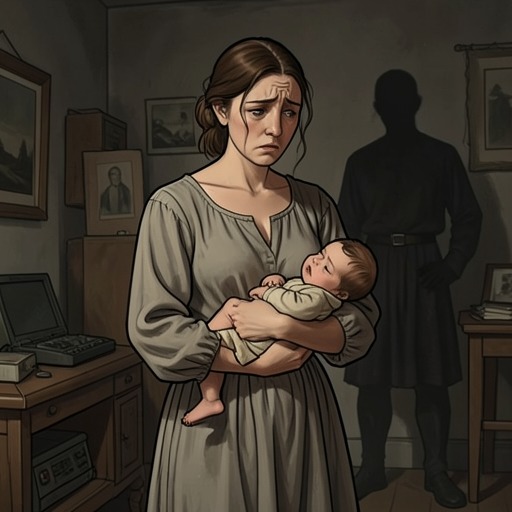
The first mother describes a baby whose father lives in another state. He left while she was pregnant, did not attend the birth, and had not seen the child since a visit when the baby was only weeks old. By the time she wrote, the child was over a year old. The father sent emails about every six weeks saying he cared, but paid no child support and had never called to ask how the baby was doing. The mother asks whether she must send pictures and updates in response to those intermittent messages; she is inclined to stop.
Sugar distinguishes what the mother owes the father from what she owes the child. She says the mother owes the man nothing, but urges her to send updates because a father-child relationship may matter deeply to the child’s life. The father’s failures are not the mother’s responsibility, Sugar argues, yet the situation is still her problem to navigate. She recommends making an effort toward inclusion, communication, acceptance, and forgiveness, while acknowledging that those efforts may or may not lead to a relationship. Her advice depends on a distinction: the father sounds neglectful, but not abusive. The effort to preserve a possible bond is presented as appropriate to that circumstance, not as an obligation to tolerate abuse.
Sugar proposes a concrete next step: an email that recognizes the father’s absence without closing off the possibility of change, asks directly about arranging a visit, and shares details about the child’s personality and development. The mother could attach a couple of photographs and tell stories. This recommendation does not recast the father’s past conduct as acceptable; it gives him room to respond differently and makes an invitation to participate explicit.
The mother also needs somewhere to put her anger. Sugar recommends arranging regular childcare for a few hours so she can spend time with friends and express her hurt and frustration away from the child. Her concern is that unresolved anger could govern the mother’s conduct or be displaced onto the child. The child’s relationship with each parent is not merely a dispute between adults: disparaging one parent to a child can injure the child’s sense of self and family, even when the other parent has behaved badly.
A Model of Restraint and Honesty
Sugar’s own childhood provides the letter’s central example. Sugar’s mother never spoke ill of Sugar’s father to the children, though they discussed honestly the difficult things they had witnessed and suffered at his hands. She neither lied about the past nor reduced him to a villain; she presented him as a complicated, flawed person who might be capable of redemption. When Sugar asked what had made her mother fall in love with him, her mother found things to tell her, even though she could no longer remember them clearly. Later, when Sugar challenged her refusal to condemn him, her mother said she was grateful for him because he was the father of her children.
As a young woman, while her mother knew she was going to die, Sugar heard that reaching out to her father again would not betray her mother. Her mother encouraged openness to forgiveness, reconciliation, and change. The example did not erase the father’s failures. Instead, her mother’s words and conduct left Sugar able to love a father who had been absent and to approach the wounds he had caused. Sugar describes her mother as a single parent in the fullest sense: alone, without shared custody or co-parenting. Her effort to remain generous was not perfection; it was a demanding practice that, in Sugar’s account, became a lasting gift to her children.
Choosing Parenthood Without a Partner
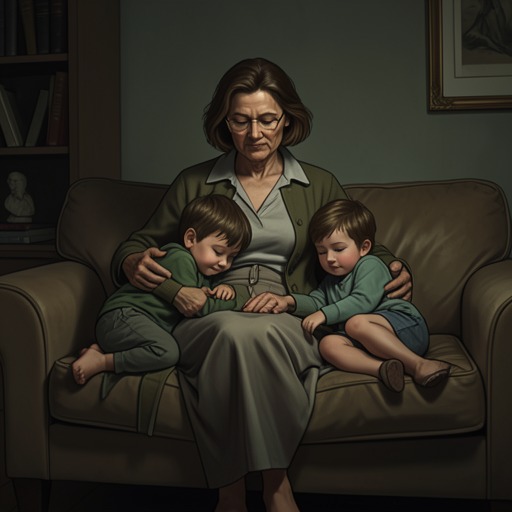
The second letter comes from a woman whose desire for pregnancy and birth has collided with the end of two relationships. Her live-in boyfriend of three years, a divorced father with a child, left to return to his ex-wife as the couple was considering buying a house. He had previously attended therapy and said he wanted a life and children with her, but after leaving he asked her to wait until his daughter, then eight, went to college. The letter writer spent years recovering and later dated someone else with whom she felt a connection; that relationship also ended. With her fertility window seeming to close, she considers becoming a single mother while grieving the conventional family life she had imagined. Friends’ family photographs on Facebook intensify that grief and jealousy.
Sugar separates the intertwined hopes for a romantic partner and a baby. Having a child alone, she argues, would not prove that the woman had permanently ruled out marriage or future love. A partner might appear later; the timing and identity of a future love cannot be known. By contrast, the woman’s present decision about attempting biological pregnancy has a time-sensitive dimension. Sugar frames the choice as one between pursuing a biological child without a partner and having no biological child, and encourages her to consider which possibility she may regret more when she is older. She points to Single Mothers by Choice as a place to begin gathering information, while making clear that no one else can make the decision for her.
Resources, Work, and the Shape of Daily Life
Sugar does not treat desire alone as a plan. The prospective parent needs to picture the actual conditions of her life: how she might restructure it, what resources she already has, what she would need, and how she would obtain them. Sugar identifies money and childcare as central questions. Children cost money, particularly when a parent must pay for care in order to work; parents also differ in whether they have relatives or friends available to help, can afford paid care, or receive financial assistance. These differences prevent a general picture of single motherhood from answering what one particular woman’s life would be like.
Even Sugar’s questions about parenting with a partner—how to pay for a child and arrange care while working—remain relevant to parenting alone. Her example of raising children with Mr. Sugar makes the costs concrete: the family hired a part-time nanny for twenty hours a week at fifteen dollars an hour, while both parents worked as artists. Sugar also reports that preschool tuition over several years nearly bankrupted them. That partnered household is not a direct forecast for the letter writer, but it underscores why practical planning belongs beside the emotional decision. In these letters, single motherhood is defined neither by independence from all help nor by inevitable deprivation. It is a lived arrangement shaped by the child’s other parent, available care, money, relationships, and the particular choice a woman makes about becoming a mother.