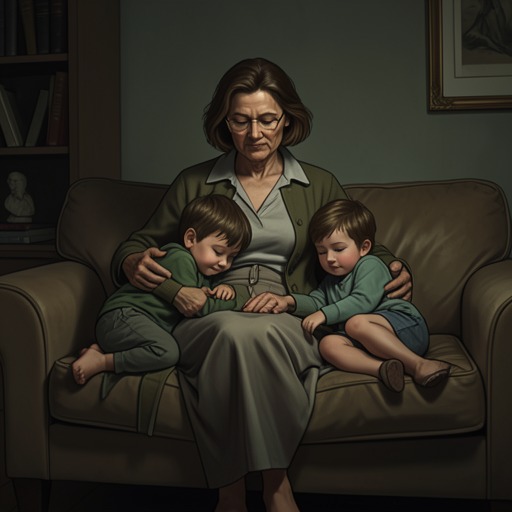
Sugar becomes a mother
Tiny Beautiful Things: Advice on Love and Life from Dear SugarSugar becomes a mother through a decision made without certainty, not through a sudden conviction that motherhood is what she wants. As she recalls it, the choice was shaped by a narrowing fertility window, a desire that only barely exceeded her doubts, and a willingness to accept that either possible life would involve loss.
The Decision Amid Uncertainty
In her mid-thirties, Sugar had two children in close succession. Before becoming a mother, she had assumed she would one day simply know whether she wanted a child. Instead, as she approached the final years of her fertility, she decided to become pregnant while still ambivalent. Her desire to experience motherhood was just stronger than her doubts, not strong enough to silence them.
The choice meant leaving behind a life she valued. Sugar and Mr. Sugar enjoyed sex, unscheduled naps, long stretches of uninterrupted work on their art, and reading in silence on facing couches. They also liked wandering through foreign countries and spending weeks backpacking in the wilderness. The prospect of a baby threatened to make many of these pleasures difficult or impossible, and neither partner greeted that prospect with uncomplicated excitement.
Pregnancy and Shared Apprehension
During the pregnancy, Sugar and Mr. Sugar often wondered whether they had made a dreadful mistake. Their conversations returned to the possibility that they might love the baby less than they were expected to, or find the child boring, annoying, or off-putting. They could still imagine riding bicycles across Iceland or hiking around Mongolia, and recognized that these ambitions belonged to the freer life they might lose.
Their uncertainty was shared rather than confined to Sugar. Mr. Sugar was generally pleased that they were having a baby, but he was also deeply alarmed; the couple were in accord about their lack of clarity. Sugar’s account therefore resists the expectation that a prospective parent must feel a confident, unmistakable desire. In her experience, the absence of that feeling did not settle the decision.
Motherhood and the Life Not Chosen
After the birth, Sugar’s son’s body against hers gave her a clarity she had not possessed while deciding. During the first weeks of his life, she felt rattled by how close she had come to choosing a childless future. Becoming his mother felt both like the ending of her former life and the beginning of another. Despite her fears, she did not regret having a baby; looking back, she says she would make the same choice immediately.
That conviction does not make the alternative life disappear. Sugar continues to wonder whom she might have nurtured, what creative or practical work her love might have gathered around, and what she might have written if she had not been catching her children at the bottoms of slides, steadying them on low brick walls, or pushing them on swings. She also considers what motherhood enabled her to write. The questions leave both possibilities open: she cannot know what she would have experienced by traveling or working without children, just as she cannot know what those years would have meant had she chosen otherwise.
The event’s significance lies in that coexistence of commitment and imagined loss. Motherhood retrospectively supplied a certainty that did not precede the choice, but it did not allow Sugar to know the life she had foregone. Her story presents the decision not as a puzzle resolved by finding perfect clarity, but as a consequential choice between futures whose costs and meanings cannot be fully known in advance.