The reckoning
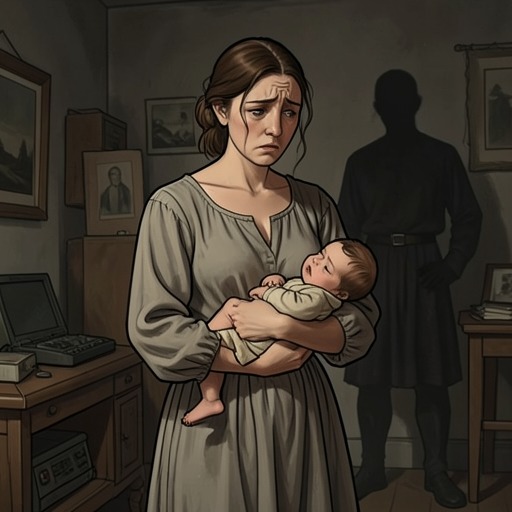
Tiny Beautiful Things: Advice on Love and Life from Dear SugarThe reckoning is the lifelong work of making sense of childhood: what happened, why it happened, who one’s parents were, and how they succeeded or failed in their responsibilities. Sugar presents it not as a single verdict but as an eventual accounting whose consequences reach across family relationships. It gives present-day choices particular weight, because the way adults act toward one another can become part of how a child later understands both parents and the self.
Meaning and Structure
For Sugar, the reckoning belongs to the process of becoming a whole, grown-up person. It involves accounting for the history of one’s childhood and the people who shaped it, especially when a parent has failed a child. The concept therefore joins retrospective understanding to present responsibility: childhood may be interpreted years later, but the conditions and stories that inform that interpretation are being made in the present.
The reckoning is not described as a guarantee of reconciliation or as a promise that every parent will change. In advising a mother whose child’s father is intermittently in contact, Sugar leaves the outcome open. The father may become a loving parent, or he may continue to be absent or unreliable. Because neither outcome is yet known, the mother’s task is to distinguish her justified anger from the choices she makes about the child’s relationship with the father. She is urged to support communication and inclusion not because she owes the father anything, but because the child’s future understanding of that relationship matters.
A Child’s Inheritance
Sugar’s own childhood supplies the clearest example of the stakes. Her mother divorced her father when Sugar was six, a decision Sugar describes as probably the best thing that happened to her. Her father had been violent and mean, and Sugar recalls terror, sorrow, crying, hiding, headaches, and bed-wetting. Yet she loved him deeply. When her mother left, Sugar begged her to return, afraid that losing the marriage would mean losing her father. In that sense, the child’s love did not simply disappear when the adults’ relationship ended.
After the divorce, Sugar had little contact with her father. She saw him only three times during short visits, and for much of her childhood there was no active father in her life. Letters addressed to Sugar and her siblings arrived only a couple of times a year, but their arrival still mattered to the children. Much later, at twenty-seven, Sugar understood that her father had never intended to take her with him. The realization brought grief: it revised the meaning of the childhood fear that he might take the children away, revealing that the feared possibility had not been matched by a desire to be their father.
That delayed understanding shows why the reckoning cannot be reduced to what a parent intended or what a child was told at the time. Sugar’s later knowledge changed how she understood her father’s absence, while her childhood love remained part of the history she had to account for. The concept holds these truths together without making one cancel the other: a parent can cause serious harm, and a child can still love that parent.
The Mother’s Bridge
Sugar’s mother did not demonize her former husband to the children, though she did not lie about the painful things they had seen and endured. She presented him as a complicated, flawed human being who might be capable of redemption. When Sugar asked what had made her fall in love with him, her mother found things to tell her, even when she could no longer clearly remember them. As a teenager, Sugar argued with her mother’s refusal to condemn him; her mother answered by acknowledging that without him she would not have had her children.
When Sugar was just beginning adulthood and her mother knew she was dying, her mother said that reaching out to her father would not betray her. She encouraged Sugar to remain open to forgiveness, reconciliation, and change. Sugar later understood these words and her mother’s conduct as a bridge toward healing the wounds her father had made. The reckoning, in this account, is shaped not only by what the harmful parent did but also by the other parent’s refusal to dictate what the child must feel. That restraint preserved room for Sugar to understand her father in her own time.
Responsibility in the Present
The same idea informs Sugar’s advice to the separated mother. The child will eventually have to account for both parents, and the mother’s words and actions will affect how the child feels about the father and about the self. Sugar therefore distinguishes between excusing a father’s failures and avoiding further harm to the child. The mother cannot make the father become reliable, but she can avoid letting fury determine every decision concerning the father-child bond. Sugar’s appeal is to make a good-faith effort while recognizing that the result cannot be controlled.
Other advice in the book applies this concern for future understanding to family boundaries. When an older mother’s adult sons live in her home and disregard her independence, Sugar compares setting a firm limit to letting them go so they can learn to support themselves. The sons’ need for separation is paired with the mother’s need to be recognized as an adult with privacy and a life of her own. In a different family crisis, Sugar advises a woman to cut ties with a destructive brother without abandoning her parents, and to seek ways to remain present for her niece and nephew while considering their safety. These situations do not promise easy repair. They show that accountability may require both continued care and a refusal to participate in a family’s self-destruction.
The concept also clarifies the limits of pleading with others to change. In a letter about two couples in which the spouses are unemployed, Sugar distinguishes a temporary period without earnings from a more entrenched pattern: one spouse has a long record of brief, irregular employment, while the other has stopped looking for work. Their partners have tried appealing to fairness and shared financial well-being without effect. Sugar observes that they cannot compel their spouses to take responsibility by repeating those appeals. Across these different cases, the reckoning is not simply blame assigned after the fact. It is an account of what people did, what they failed to do, and how others must decide what responsibility remains theirs.
Narrative Significance
Sugar’s image of an unopened letter gives the idea a future-facing shape: the child’s eventual understanding has not yet arrived, and what it will contain is uncertain. People can change and repair dreadful mistakes, but they may also continue in old patterns. This uncertainty makes the reckoning a reason for careful action rather than a device for predicting an outcome.
The concept binds together childhood memory, parental conduct, and adult boundaries. Sugar’s mother could not erase her father’s failures, but her honesty and refusal to demonize him influenced the ground on which Sugar later made sense of them. In the advice to other families, the same principle becomes practical: protect a child’s interests, leave room for possible change, and do not mistake love for an obligation to accept destructive behavior. The reckoning arrives later, but its materials are being laid down now.