Boo Radley
To Kill a MockingbirdBoo Radley, whose real name is Arthur Radley, is the Finch children's reclusive neighbor and one of the most enigmatic figures in Maycomb. For years, he is the subject of wild neighborhood speculation and childhood terror, yet he gradually reveals himself through a series of secret, benevolent acts as a quiet protector and a symbol of the novel's central themes of innocence, empathy, and courage. His story is one of extreme social isolation, misunderstood motives, and a final, decisive intervention that saves the lives of Jem and Scout Finch.
Identity and Seclusion
Boo Radley is the son of the Radley family, living in the dilapidated Radley Place on the same street as the Finches. He is rarely seen by the community; his mother, Old Mrs. Radley, dies that winter, and Atticus Finch reports that she died of natural causes, disappointing Jem and Scout who had speculated that Boo had finally "got her." When Scout asks Atticus if he saw "Mr. Arthur" at the Radley house, Atticus responds sternly that he did not, indicating the family's continued protectiveness over Boo's seclusion. The neighborhood's perception of Boo is shaped by rumor and fear, reinforced by the fact that his brother, Mr. Nathan Radley, fills the knot-hole in the tree with cement, effectively cutting off the secret communication Boo had established with the children. The Radley Place itself is a Gothic space, described as dark and creepy, with shadows on the ceiling, a place that Jem associates with the same kind of dread he feels inside Mrs. Dubose's house.
Secret Gifts and Protection
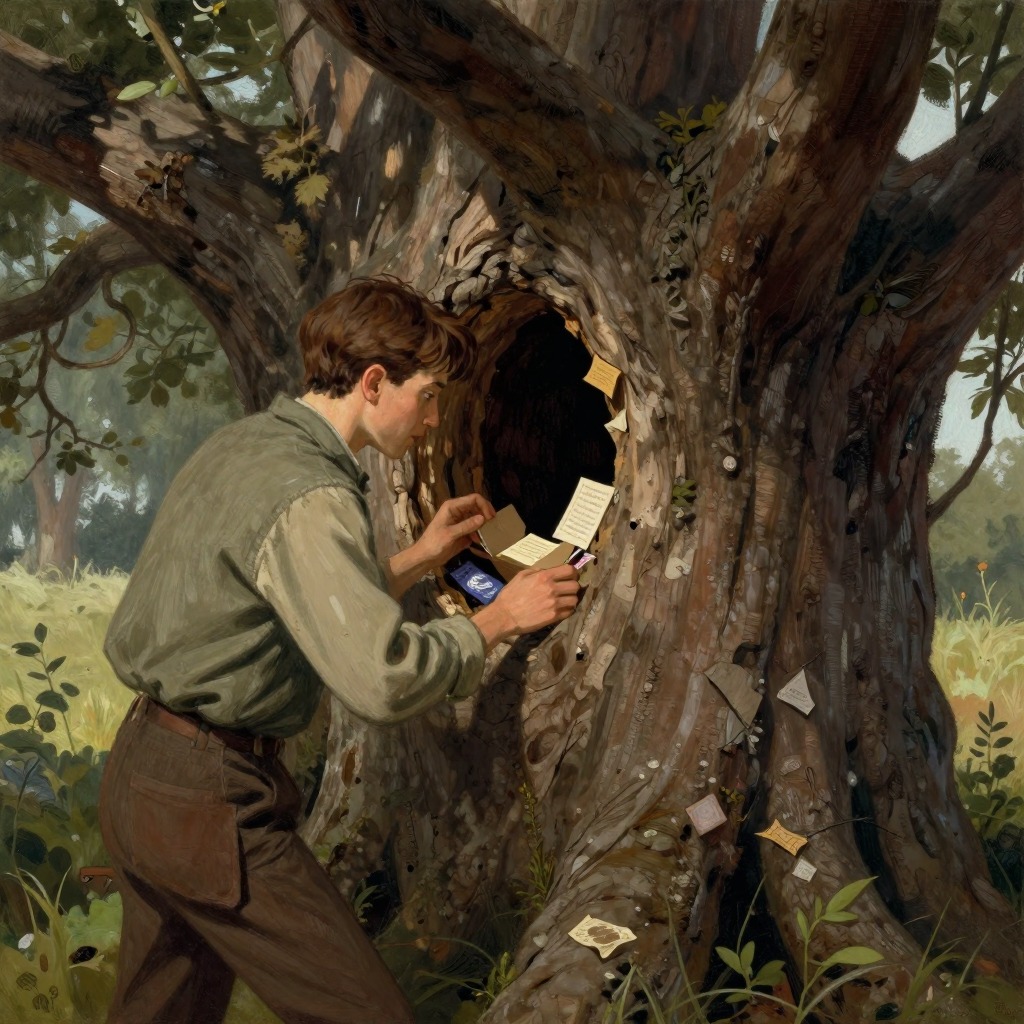
Despite his isolation, Boo Radley initiates a secret, benevolent relationship with Jem and Scout. He leaves small gifts for them in the knot-hole of a tree on the Radley property, including two small soap carvings that are almost perfect miniatures of the children themselves—a boy with a shock of hair and a girl with bangs. He also leaves a tarnished spelling medal, a pocket watch that won't run on a chain with an aluminum knife, and a whole package of chewing gum. These gifts are the children's first tangible evidence of a kind presence, and they respond by writing a thank-you note. When Mr. Nathan Radley cements the knot-hole, Jem is devastated, crying silently, and later tells Atticus that Mr. Nathan did it to stop them finding things, adding that Boo "ain't ever harmed us, he ain't ever hurt us, he coulda cut my throat from ear to ear that night but he tried to mend my pants instead." This revelation confirms that Boo had been watching over them, even mending Jem's torn pants. The most dramatic act of protection occurs during Miss Maudie's house fire, when Boo Radley, unnoticed by Scout, sneaks out of his house and places a brown woolen blanket around her shoulders as she stands in the cold. Atticus later explains, "Boo Radley. You were so busy looking at the fire you didn't know it when he put the blanket around you." This act transforms Boo from a figure of fear into a secret guardian.
Relationships and Conflict
Boo Radley's primary relationships are with the Finch children, though they are conducted from a distance. He is the object of Jem and Scout's childhood fascination and fear, but his gifts and protective actions gradually build a bond of trust and gratitude. His relationship with his brother, Mr. Nathan Radley, is one of control and confinement; Mr. Nathan cements the knot-hole to stop the children from finding things, an act that Jem interprets as a sign of Mr. Nathan's craziness. Boo's relationship with the wider community is one of total alienation; he is the subject of gossip and legend, and even the neighborhood's attempts to warn him of danger—such as Calpurnia pounding on the Radley door during the mad dog incident—go unanswered. The only direct conflict Boo faces is the constant threat of exposure and the social stigma of his reclusiveness, which is reinforced by his family's actions.
Change and Ending
Boo Radley's trajectory is one of gradual, secret emergence from total seclusion. His gifts and the blanket at the fire are steps toward a more direct, though still anonymous, involvement in the children's lives. The climax of his story comes when he saves Jem and Scout from an attack by Bob Ewell, an event that forces him into the open. In the aftermath, Scout finally meets him face to face, and she walks him home, standing on his porch and seeing the neighborhood from his perspective. This moment marks the end of his role as a phantom and the beginning of his recognition as a real, vulnerable human being. The novel ends with Scout's reflection that Atticus was right: "You never really understand a person until you consider things from his point of view... until you climb into his skin and walk around in it." Boo Radley, once a monster of legend, becomes the embodiment of that lesson.
Thematic Significance
Boo Radley is the novel's most powerful symbol of the mockingbird—an innocent being who does no harm and only brings good, yet is destroyed or marginalized by the cruelty and prejudice of society. His gifts, his protection of the children, and his ultimate act of heroism all underscore the theme that true courage and goodness often exist in the most unexpected and misunderstood places. He represents the danger of judging others based on rumor and appearance, and his story is a direct challenge to the community's "usual disease" of prejudice. Through Boo, the novel argues that empathy and understanding are the only antidotes to fear and hatred, and that the most marginalized members of society may be its most valuable protectors.