Jem
To Kill a MockingbirdJem (Jeremy Atticus Finch) is the older brother of Scout and the son of Atticus Finch. As the novel's central figure of adolescent growth, Jem's journey from a childhood of games and superstitions to a painful awareness of Maycomb's deep-seated racism and injustice forms the emotional backbone of the story. His development is marked by key events that challenge his understanding of courage, fairness, and the adult world.
Identity and Background
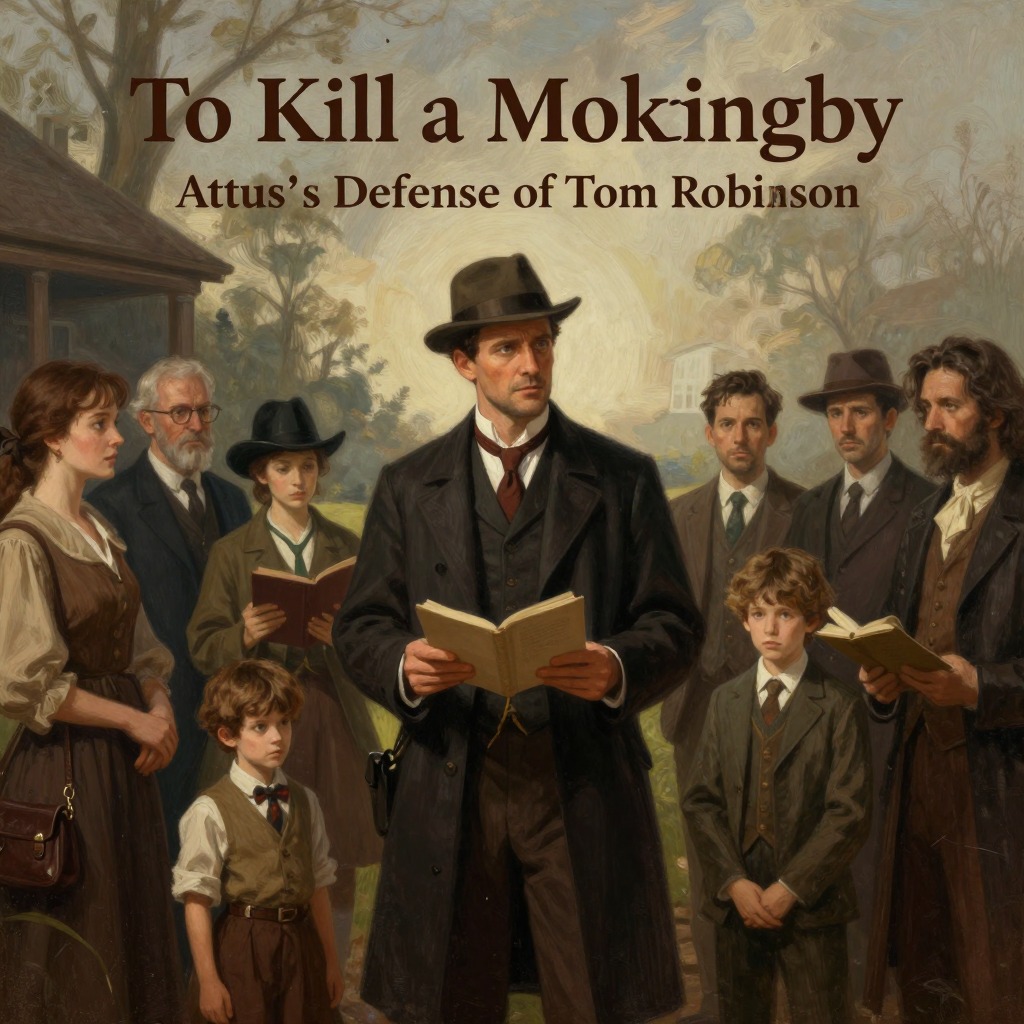
Jem is introduced as a typical boy of Maycomb, four years older than Scout. He is protective of his sister, often taking charge of their adventures, and is deeply influenced by their father, Atticus. Jem's early life is filled with the ordinary concerns of childhood: school, games, and the mysterious Radley Place. He is imaginative and resourceful, as shown when he constructs a snowman out of dirt and snow, earning Atticus's praise that he will "always have an idea." Jem also has a strong sense of fairness, which is tested when he learns that Atticus is defending Tom Robinson, a black man accused of rape. He is initially confused and angry when schoolmates taunt Scout about their father, but he tries to follow Atticus's advice to "hold your head high and be a gentleman."
Arc Through the Plot
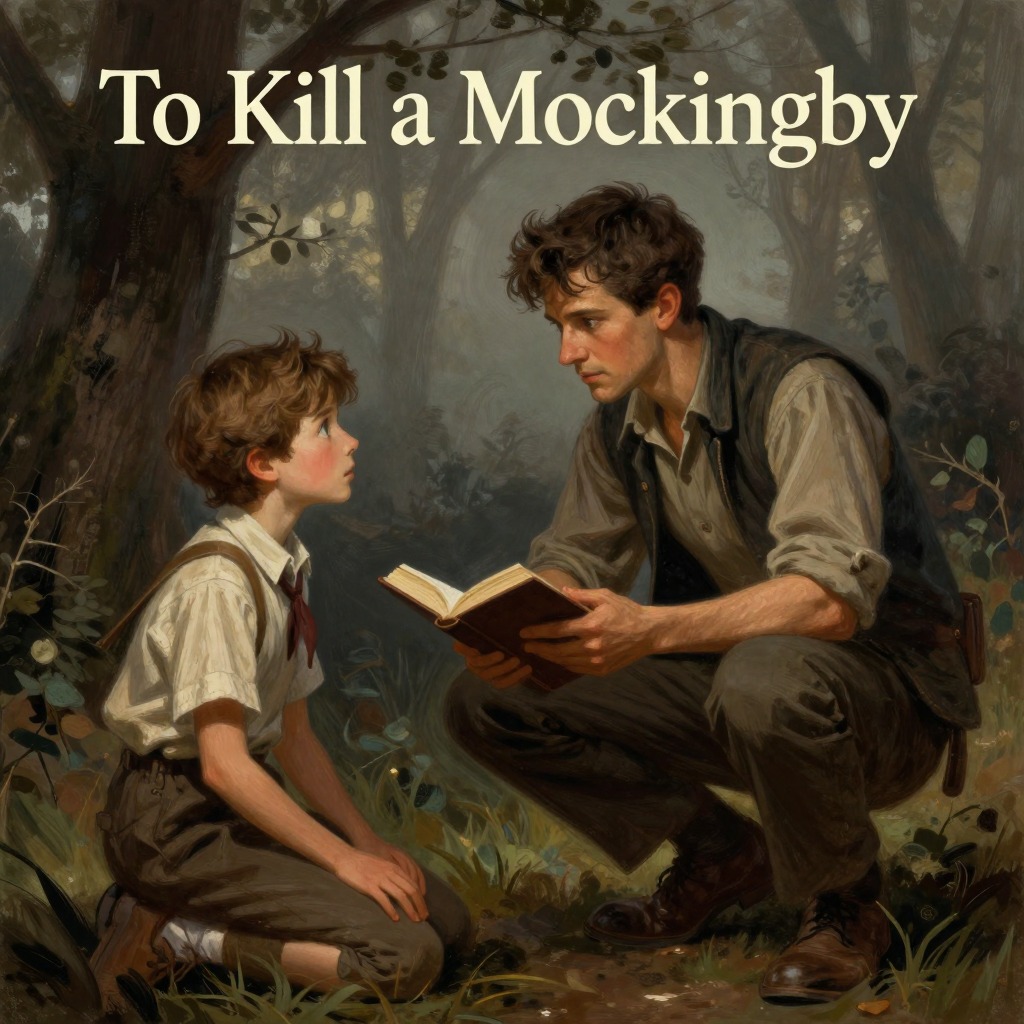
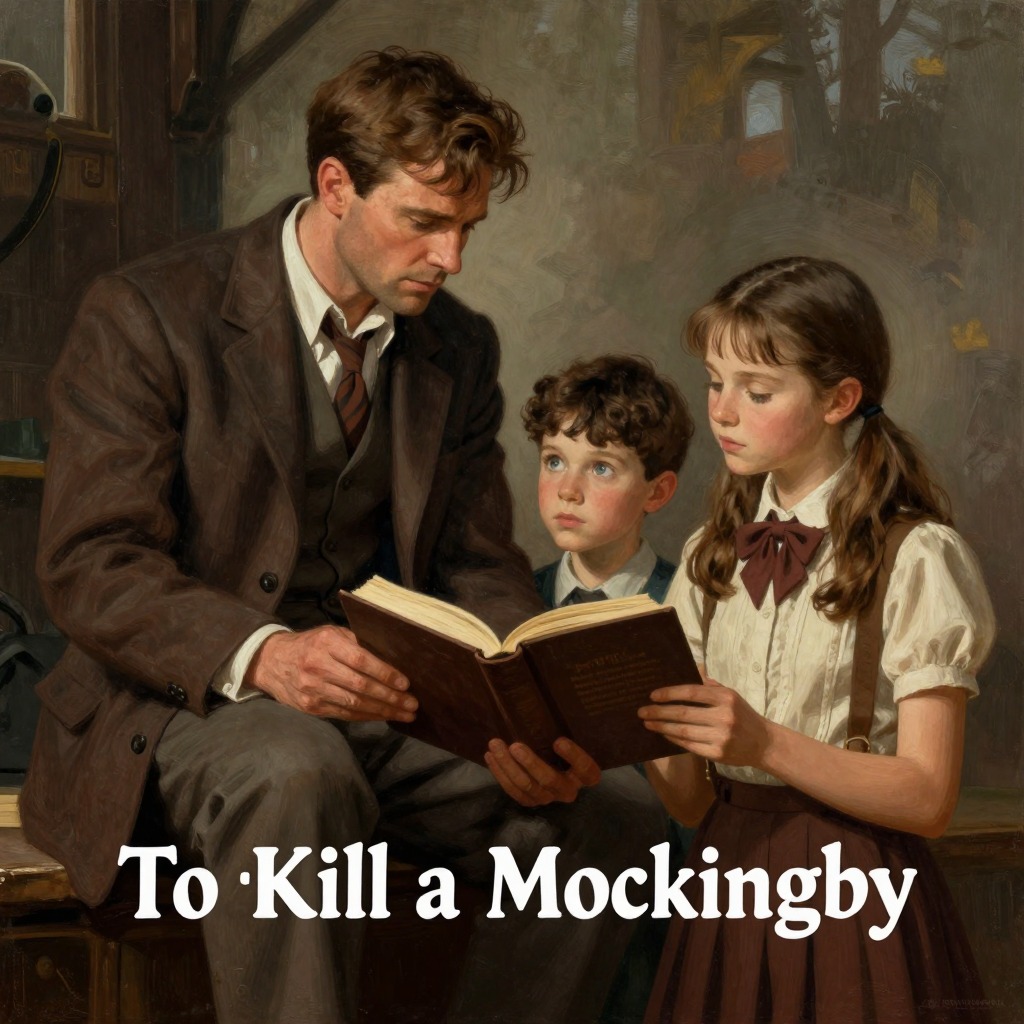
Jem's moral development is charted through a series of escalating challenges. His first major test comes when he destroys Mrs. Dubose's camellia bushes after she insults Atticus. Atticus forces him to read to her daily for a month, a punishment that Jem initially resents but which ultimately teaches him a profound lesson about courage. Jem witnesses Mrs. Dubose's painful withdrawal from morphine addiction and learns from Atticus that "real courage is when you know you're licked before you begin but you begin anyway and you see it through no matter what." This experience reshapes his understanding of bravery, moving it from physical acts to moral endurance. Later, Jem is present when Atticus shoots a rabid dog, Tim Johnson, revealing his father's hidden talent as "One-Shot Finch." This moment fills Jem with pride and a new respect for his father, whom he had previously considered feeble. The trial of Tom Robinson is the climax of Jem's arc. He is certain that Atticus's evidence will win the case, and the guilty verdict shatters his faith in the justice system. After the trial, Jem is visibly shaken, crying and expressing his disillusionment. This loss of innocence marks his transition into a more somber, questioning adolescence.
Relationships and Conflict
Jem's relationship with Scout is central to the novel. He is her protector, guide, and occasional tormentor. As he enters adolescence, he becomes moody and distant, telling Scout to "start bein' a girl and acting right!" This change confuses and hurts Scout, but Calpurnia explains that Jem is simply growing up. Jem's relationship with Atticus is one of deep respect, though it is tested. He is initially embarrassed by Atticus's age and perceived lack of skills, but the mad dog incident and the trial transform his view. Jem's conflict with Mrs. Dubose is the most direct external challenge to his character. Her insults about Atticus provoke him to violence, but the subsequent reading sessions force him to confront her humanity and her own private battle. Jem also has a fraught relationship with his cousin Francis, whom he finds boring, and he is protective of Dill, his summer friend. The arrival of Aunt Alexandra introduces a new source of tension, as she tries to impose her ideas of "gentle breeding" on Jem and Scout, a concept Jem finds alien and uncomfortable.
Change and Ending
By the end of the novel, Jem has undergone a fundamental change. He is no longer the carefree boy who played games about Boo Radley. The trial and its aftermath have left him with a bitter awareness of the world's injustice. He is described as "difficult to live with, inconsistent, moody," and his appetite is "appalling." He has acquired an "alien set of values" and a "maddening air of wisdom." The final act of the novel, the attack by Bob Ewell and the rescue by Boo Radley, brings Jem's arc to a close. He is injured in the attack, but survives. The experience, combined with his earlier lessons, leaves him with a deeper, more complex understanding of courage and humanity. He has learned that true bravery is not about winning, but about persevering in the face of certain defeat, and that goodness can be found in the most unexpected places.
Thematic Significance
Jem's character embodies the novel's central theme of moral growth through painful experience. His journey from a child who believes in a simple, fair world to an adolescent who recognizes its complexities and injustices mirrors the reader's own journey. Jem's loss of innocence is not a defeat but a necessary step toward a more mature, empathetic understanding of the world. His relationship with Atticus, his confrontation with Mrs. Dubose, and his disillusionment with the trial all serve to illustrate the novel's core message: that courage is not about physical strength or social approval, but about acting according to one's conscience, even when the outcome is uncertain. Jem's final, silent acceptance of the camellia from Mrs. Dubose, and his later fingering of its petals, signifies his internalization of this lesson. He has learned to see beyond the surface of people and events, a skill that will define his adult life.