Mr. Link Deas
To Kill a MockingbirdMr. Link Deas is a white farmer and landowner in Maycomb County whose quiet, consistent decency places him among the few white citizens who actively resist the town's racial code. Though he appears only briefly in the narrative, his actions—employing Helen Robinson when no one else will, and publicly defending Tom Robinson's character during the trial—carry disproportionate moral weight. In a community where silence often signals complicity, Mr. Link Deas speaks and acts, and his choices illuminate the gap between professed Christian values and the actual behavior of Maycomb's white majority.
Identity and Background
Mr. Link Deas is a farmer who lives and works in the Maycomb area. He is known to the Finch children primarily as a neighbor they pass on their walks to and from town. On one such afternoon, Scout nearly hits him with her twirling baton when she misses a toss, and he calls out, "Look out now, Scout!"—a casual, friendly warning that suggests an easy, unguarded relationship with the children. He is not a member of the Finch family's inner circle, but he moves in the same social world, a working farmer rather than a professional man like Atticus. His name carries no particular weight in Maycomb's hierarchy of old families, yet he commands enough respect to be heard when he speaks.
Employment of Helen Robinson
After Tom Robinson is jailed on charges of raping Bob Ewell's daughter, his wife Helen finds herself unable to get work. The community shuns her because of her husband's alleged crime. Reverend Sykes explains to Scout that "Helen's finding it hard to get work these days," but adds that "when it's picking time, I think Mr. Link Deas'll take her." This prediction proves accurate: Mr. Link Deas does employ Helen during the cotton-picking season, an act that carries real social risk in a town where associating with the Robinson family is seen as taking sides against the Ewells and, by extension, against the racial order. His willingness to give Helen work is not a grand political statement but a practical, humane decision that stands in stark contrast to the general boycott of her labor.
Intervention at the Trial
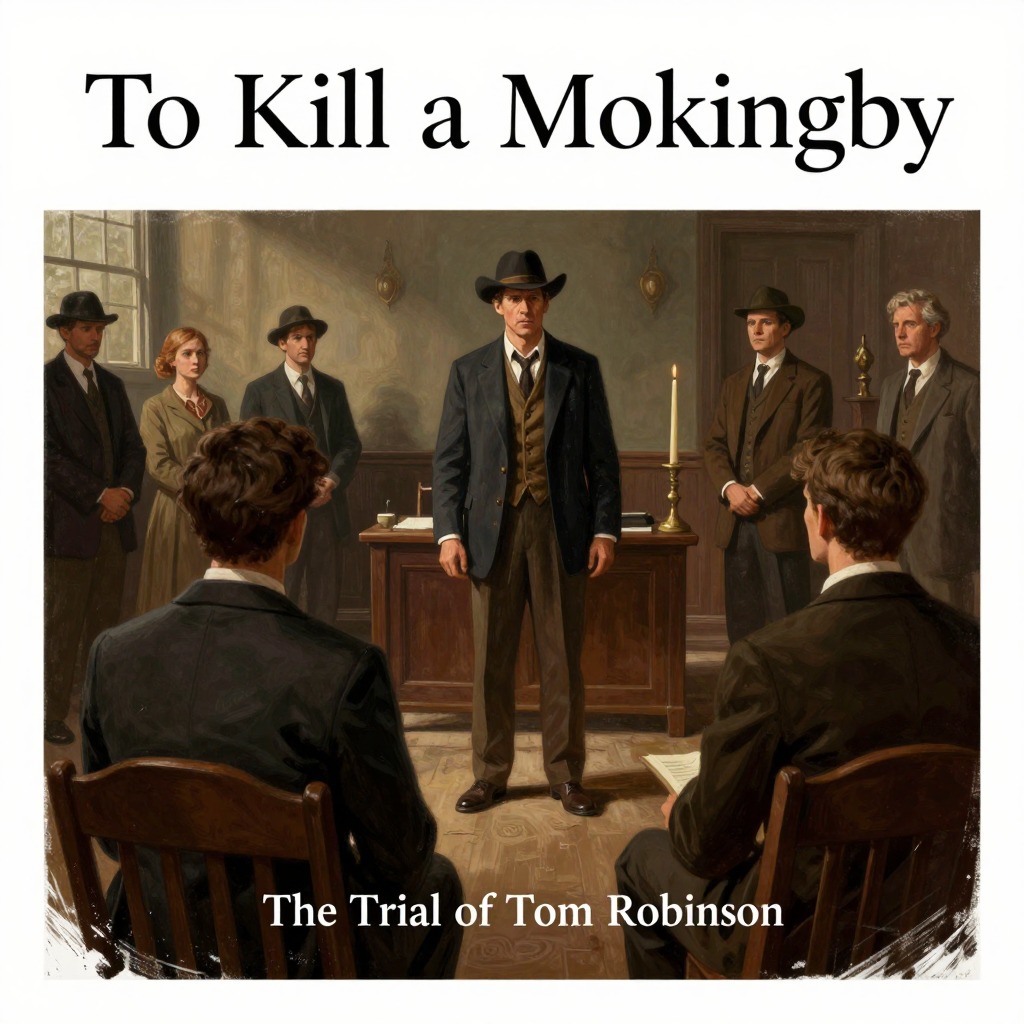
Mr. Link Deas's most dramatic appearance comes during Tom Robinson's trial. In a moment of public defiance, he rises from the courtroom audience and declares that Tom Robinson has never caused him a minute of trouble and has always been a respectful, hardworking man. This unsolicited testimony, delivered in open court, is a direct challenge to the narrative that Tom is a dangerous predator. It is also a breach of courtroom protocol, and the judge must call him to order. But the damage to the prosecution's case—and to the town's comfortable fiction about Tom's character—has been done. Mr. Link Deas speaks not as a lawyer or an expert but as a white man who has actually employed Tom and knows him personally, and his words carry the weight of lived experience.
Relationship with the Finch Family and the Community
Mr. Link Deas occupies a position of quiet respectability in Maycomb. He is not a close friend of Atticus Finch, but he is clearly aligned with the same basic values of fairness and honesty. His decision to employ Helen and his public defense of Tom place him on the same side of the moral divide as Atticus, though he lacks Atticus's eloquence and legal training. He is a man of few words and concrete actions. In a town where most white citizens either actively support the Ewells or remain silent, Mr. Link Deas's voice is a rare and valuable counterpoint. He does not lecture or preach; he simply does what he believes is right, and in doing so, he becomes a quiet exemplar of the courage that Atticus later defines as "when you know you're licked before you begin but you begin anyway and you see it through no matter what."
Thematic Significance
Mr. Link Deas embodies the possibility of individual moral action within a deeply flawed social system. He is not a hero in the grand sense—he does not lead a movement or change the law—but his small, consistent acts of decency demonstrate that the town's racial code is not absolute. He proves that a white citizen can defy the unwritten rules of segregation and survive, that one can employ a black woman shunned by the community and still hold one's place in the social order. His presence in the novel serves as a reminder that Maycomb contains not only bigots and cowards but also men of quiet integrity. In a story that often emphasizes the power of the mob and the weight of tradition, Mr. Link Deas stands for the individual conscience that refuses to be silenced.