Radley Place
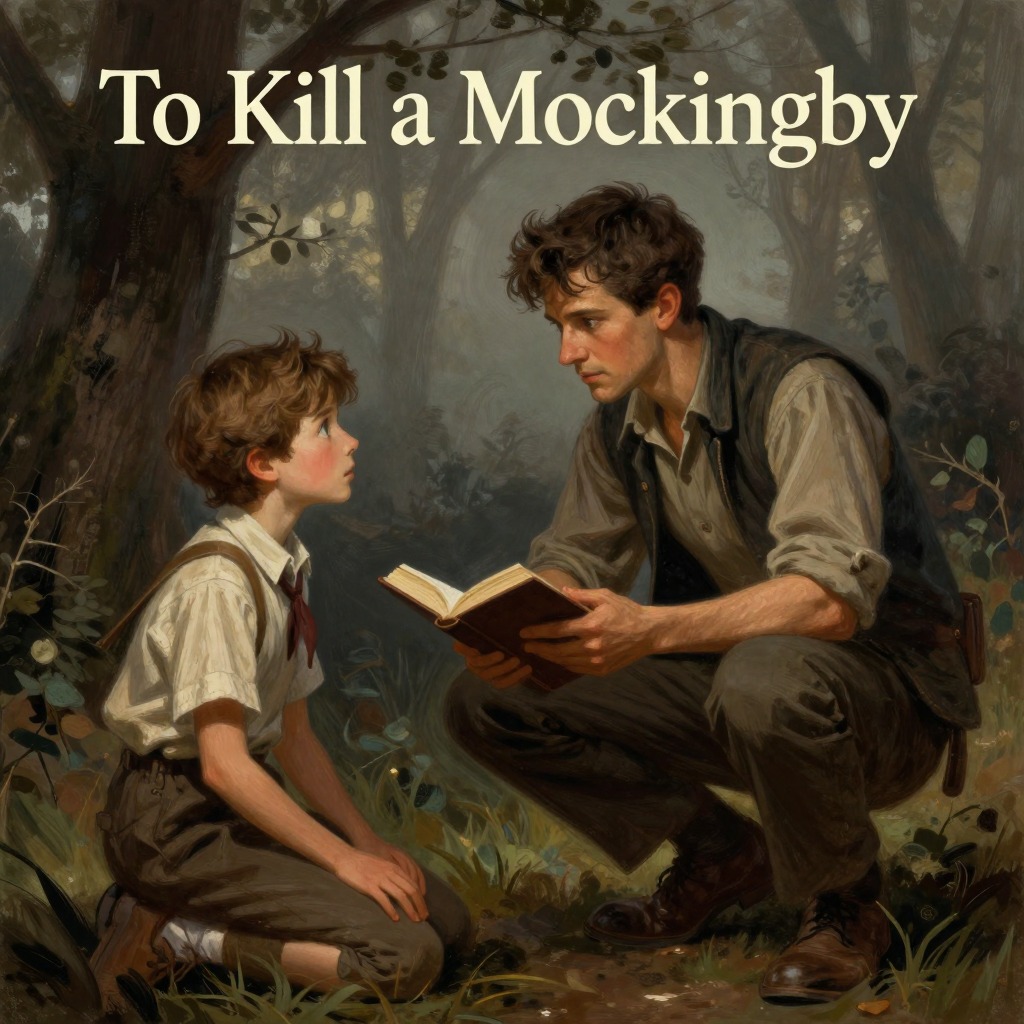
To Kill a MockingbirdThe Radley Place is the decaying, shuttered house on the corner of the Finch family's street in Maycomb, Alabama, whose reclusive occupant, Boo Radley, becomes the central object of the children's fascination and, ultimately, their secret protector. The house functions as the novel's primary Gothic space, a site of neighborhood legend, childhood terror, and hidden kindness that forces the Finch children to confront the gap between public rumor and private reality.
Location and Appearance
The Radley Place sat on a corner lot at the end of the Finch children's street, a house that had long ago withdrawn from the life of the neighborhood. Its physical condition mirrored the seclusion of its inhabitants: the house was dark and shuttered, its yard overgrown, and it was widely understood that everything on the property was poison. The house was the residence of Mr. Nathan Radley and his brother, Arthur "Boo" Radley, whom the town had not seen in years. The Radley Place was the only house on the block that did not participate in the communal life of Maycomb; during the fire at Miss Maudie's house, Atticus Finch directed Scout and Jem to stand in front of the Radley gate, a location that was both safe and symbolically charged. The house's front porch held a swing that was always empty, a detail that Scout noted with a mixture of expectation and disappointment.
The Knot-Hole and the Gifts
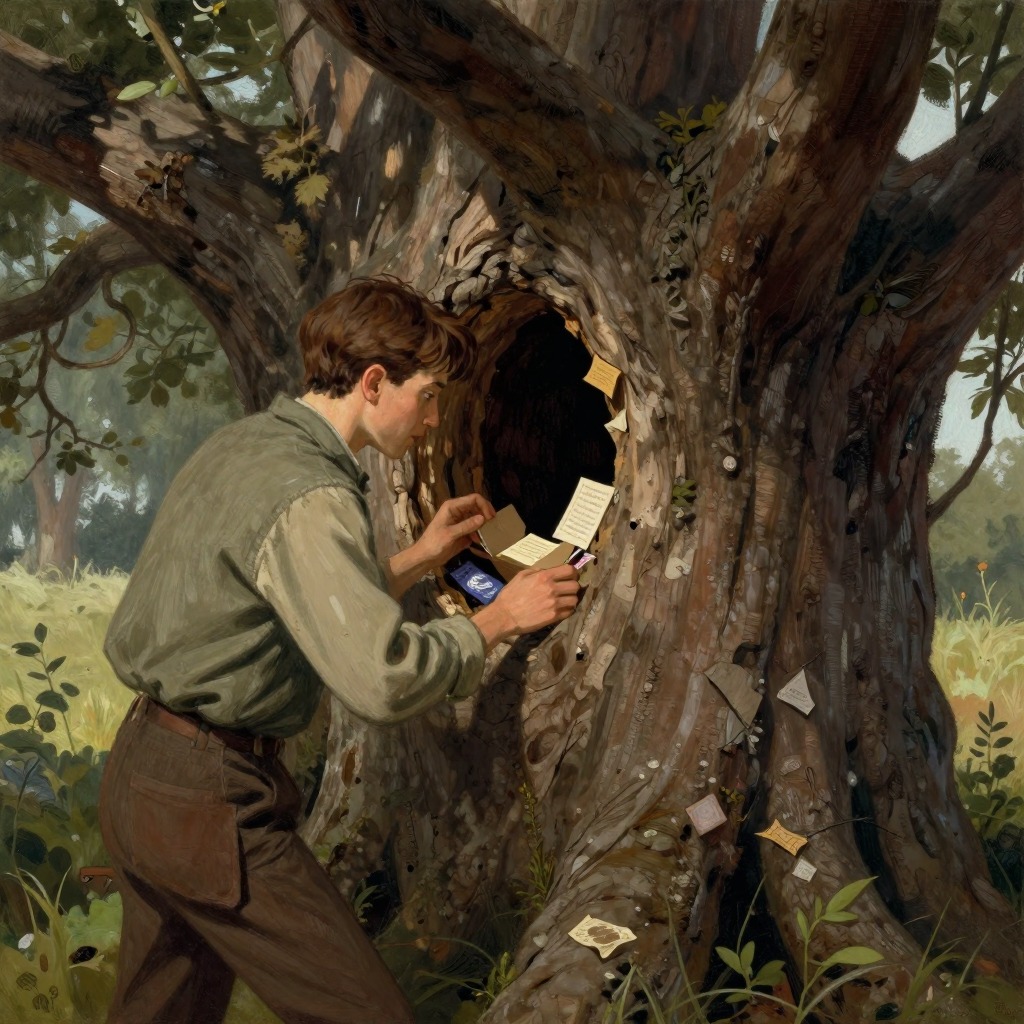
The most significant point of contact between the Radley Place and the Finch children was a knot-hole in one of the oak trees on the Radley lot. For a period of weeks, the knot-hole yielded a series of small treasures: two soap dolls carved in the likenesses of Scout and Jem, a whole package of chewing gum, a tarnished spelling medal, and a pocket watch that would not run on a chain with an aluminum knife. The children, who had previously considered everything on the Radley Place to be poison, came to regard these items as their property. The gifts culminated in a letter of thanks that Jem and Scout wrote and placed in the knot-hole. The next morning, however, Jem found that someone had filled the knot-hole with cement. When Jem confronted Mr. Nathan Radley, the man claimed the tree was dying and needed to be plugged, but Atticus later confirmed that the tree was perfectly healthy. The cementing of the knot-hole was a deliberate act of closure, and Jem stood by the tree until nightfall, crying silently.
The Fire and the Blanket
The Radley Place became the site of the novel's most direct revelation of Boo Radley's protective presence during the fire that destroyed Miss Maudie's house. Atticus ordered Scout and Jem to stand in front of the Radley gate and stay there. In the chaos of the fire, Scout was so absorbed in watching the flames that she did not notice when someone placed a brown woolen blanket around her shoulders. Later, at home, Atticus discovered the blanket and deduced that Boo Radley had slipped out of his house, approached Scout from behind, and covered her without her knowledge. Jem, upon realizing this, poured out the children's accumulated secrets about the knot-hole and the mended pants, insisting that Boo had never harmed them. Atticus instructed the children to keep the blanket and the knowledge to themselves, saying that someday Scout could thank Boo for covering her up.
The Mad Dog and the Radley Yard
The Radley Place also figured in the episode of the mad dog, Tim Johnson. When the rabid dog staggered down the street, it paused in front of the Radley gate, and Sheriff Heck Tate refused to shoot because a miss would send the bullet straight into the Radley house. Atticus, who had not fired a gun in thirty years, took the rifle and killed the dog with a single shot. The Radley house thus served as the backdrop for the revelation of Atticus's hidden skill as "One-Shot Finch," a moment that fundamentally altered Jem and Scout's understanding of their father.
The House as Gothic Space and Social Symbol
The Radley Place is the novel's most concentrated Gothic space, a house whose physical decay and secret interior embody the community's unspoken fears and suppressed histories. The house is never entered by the children during the main action of the novel; it remains a dark, unknowable presence at the edge of their world. The interior of the Radley Place is imagined by the children as a place of shadows and horrors, a projection of the town's gossip about Boo Radley. Yet the house is also the source of the only genuine kindness the children receive from an adult outside their family: the gifts in the knot-hole, the mended pants, and the blanket at the fire. The Radley Place thus becomes a symbol of the novel's central moral lesson: that the most feared and isolated figures in a community may be the most gentle, and that the stories a town tells about its outcasts are often lies.