mockingbird
To Kill a MockingbirdThe mockingbird is the novel's most potent and explicit symbol, a creature whose defining characteristic—making music for the enjoyment of others without causing any harm—becomes the moral standard by which human actions are judged. Atticus Finch articulates this principle in a single, unforgettable rule: "it's a sin to kill a mockingbird." Miss Maudie Atkinson elaborates on the meaning, explaining that mockingbirds "don't do one thing but make music for us to enjoy. They don't eat up people's gardens, don't nest in corncribs, they don't do one thing but sing their hearts out for us." The bird's complete innocence and its gift of beauty without cost establish it as a creature that exists only to give, never to take, making any act of violence against it a fundamental moral transgression.
The Mockingbird as a Moral Principle
Atticus's declaration that it is a sin to kill a mockingbird is the only time Scout ever hears him describe any action as a sin, giving the statement extraordinary weight within the Finch household. The rule is not a legal one but a moral and almost spiritual injunction, a piece of wisdom that Atticus passes to his children as a guide for how to treat the vulnerable and the innocent. Miss Maudie's confirmation—that mockingbirds "don't do one thing but sing their hearts out for us"—reinforces that the sin lies in destroying something that exists purely to bring joy. The principle becomes a lens through which the novel's central tragedies are viewed: characters who, like the mockingbird, are defenseless and benevolent, yet are destroyed by the cruelty or prejudice of others.
Human Mockingbirds: Tom Robinson and Boo Radley
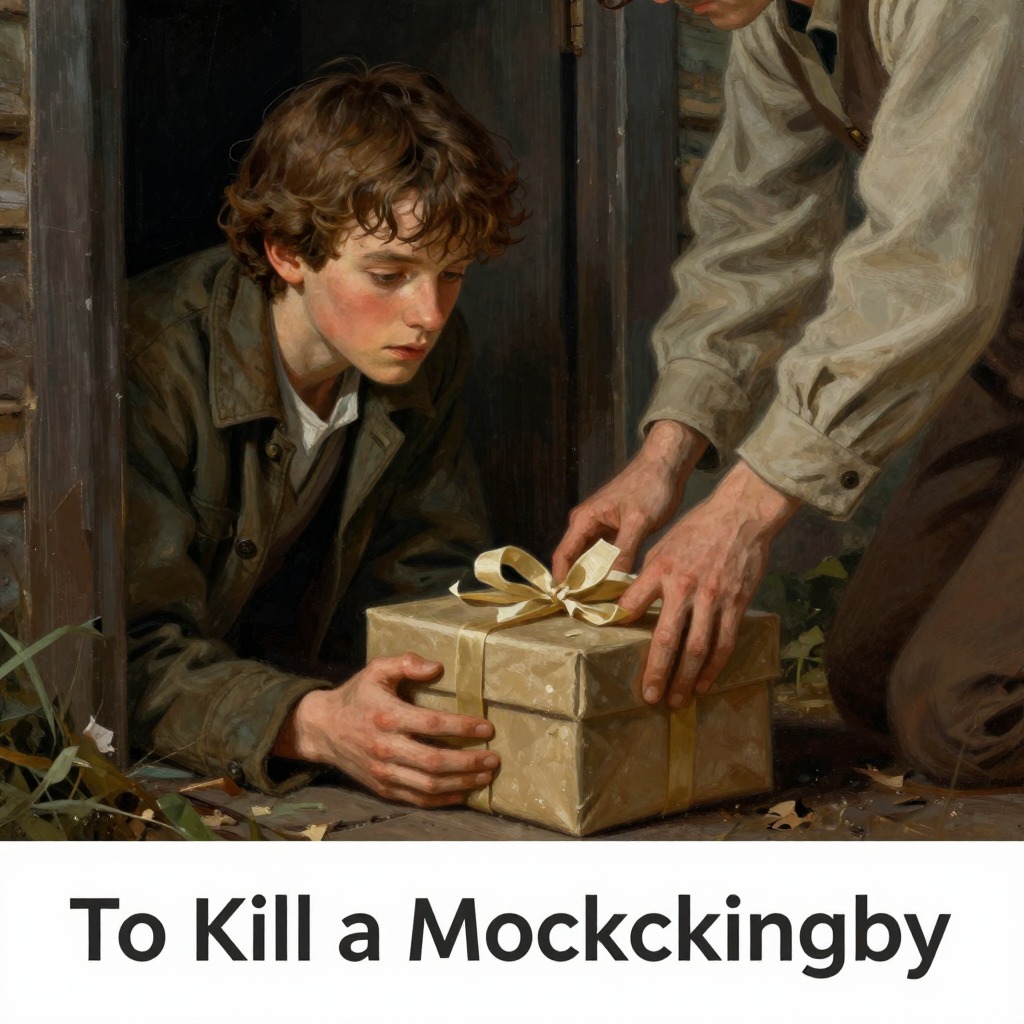
The symbolic weight of the mockingbird falls most heavily on two characters. Tom Robinson, a black man falsely accused of raping a white woman, is a figure of complete innocence within the context of the crime; he is a hardworking, churchgoing man who has never harmed anyone. His conviction and eventual death are the novel's central act of injustice, a clear parallel to the killing of a mockingbird. Boo Radley, the reclusive neighbor, is the other figure who embodies the mockingbird's qualities. Despite being the subject of the children's fearful games and the town's cruel gossip, Boo's actions are consistently gentle and protective: he leaves gifts for Scout and Jem in the knot-hole of a tree, mends Jem's torn pants, and, most dramatically, emerges from his house to place a blanket around Scout's shoulders during Miss Maudie's house fire, shielding her from the cold without her knowledge. He is a source of quiet, unseen kindness, and to expose him to the public's attention or to harm him would be the same sin as killing a mockingbird.
Thematic Significance: Innocence and the Unfair Advantage
The mockingbird symbol also connects to Atticus's own character and his decision to give up hunting. Miss Maudie explains that Atticus was once the deadest shot in Maycomb County, known as "One-Shot Finch," but that he put his gun down when he realized that God had given him "an unfair advantage over most living things." This decision reflects the same moral logic as the mockingbird rule: a person with a gift that gives them an overwhelming advantage over the defenseless has a responsibility not to use it for destruction. Atticus's refusal to hunt, and his insistence that it is a sin to kill a mockingbird, together define a code of conduct based on restraint, empathy, and the protection of the innocent. The mockingbird, then, is not merely a symbol of innocence but a test of character: the way a person treats the powerless and the harmless reveals their true moral nature.