
Adelstein Versus Goto’s Threat
Tokyo ViceThis thread traces how a threatened reporter retreats from publication, rebuilds his evidence, and eventually turns a private confrontation into public exposure.
increasing Bearing strength in each event
 decreasing
Bearing strength in each eventdecreasingThe Hotel Ultimatum

The Ultimatum
A bargain under pressure
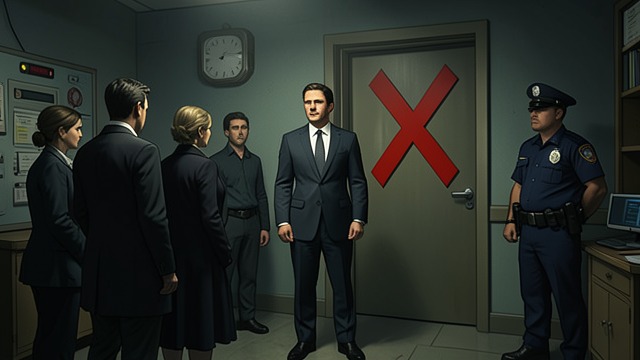
At a hotel, two enforcers from Goto-gumi confronted Jake Adelstein with a stark choice: abandon his investigation into Tadamasa Goto’s liver transplant or risk death for himself and his family. Adelstein had been investigating for months, but he admitted to himself that he did not yet have enough verified material to publish a defensible story.
The threat made the cost of reporting immediate and personal. Goto was not merely a subject in a criminal investigation; he was a powerful boss whose organization could reach beyond the journalist to the people he loved. With no reliable promise that the threats would stop, Adelstein agreed not to write the story in the Yomiuri Shinbun.
Retreat as a tactic
Chiaki Sekiguchi told Adelstein that protecting his family was the only choice available in that room. But he also warned that the agreement would not hold indefinitely: the reporter had to learn what Goto feared becoming public and preserve that knowledge for a safer moment.
The encounter changed the investigation from a question of whether to publish into a question of how to survive long enough to publish. Retreat offered temporary safety, but it left Adelstein with unfinished work and the knowledge that silence could become another form of captivity.
The Cost of Returning
Back in the Field
A new assignment, old danger
After resigning from the Yomiuri Shinbun, Adelstein returned to America intending to leave reporting behind. He began preparing for law school, but a U.S. Department of State–sponsored research project on human trafficking drew him back to Japan. The work promised resources and public value, yet it also brought him back into the criminal world from which he had tried to withdraw.
Before proceeding, he visited Sekiguchi, who was seriously ill. Sekiguchi warned that investigating how organized crime made its money was more dangerous than writing about gang rivalries or violence. Human trafficking touched revenue streams and business interests, and Goto’s territory was not a place where an investigator could move casually.
The threat changes shape
Adelstein agreed to keep his family in America, but he nevertheless resumed the work. He saw the assignment as a duty and believed that professional caution could contain the danger. Sekiguchi’s warning marked a shift in the conflict: the threat was no longer confined to a newspaper story or a single meeting, but attached to the broader investigation Adelstein had chosen to continue.
The return also weakened the protection that had come from his old employment. He was no longer a Yomiuri reporter with the standing and institutional support of a major newspaper. He was working independently, with fewer safeguards and more exposure, even as he entered subjects that powerful criminal groups had reason to defend.
The Warning Becomes Concrete
From Intimidation to Surveillance
A target under protection
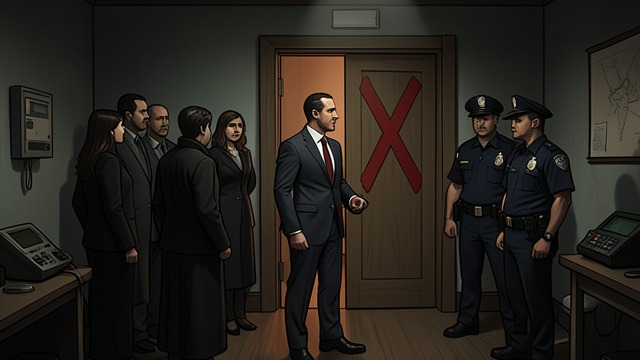
As Adelstein assembled evidence about Goto’s entry into the United States for a liver transplant, sources warned that Goto might arrange to have him killed and make the death look like suicide. The danger was no longer a vague consequence of publication: Adelstein was told that Goto knew about the book and was deciding what to do about it.
On March 5, 2008, Adelstein was placed under police protection. FBI and Japanese officials discussed precautions, and the Tokyo Metropolitan Police Department assigned detectives to protect him. The protection brought a measure of safety, but it also confirmed that the threat had crossed the threshold from rumor to an official security concern.
Pressure on the people around him
An officer at the National Police Agency warned Adelstein that returning home could put his family in danger. At a gathering with police acquaintances, he learned that a corrupt officer was passing information about him to Goto’s side, including information that could help locate his family and contacts.
The warning widened the conflict beyond the reporter himself. Friends, sources, and relatives could be used as leverage, while police protection could not erase the risks created by compromised insiders. Adelstein began listing people who might be exposed and preparing them for the danger, realizing that the investigation had made his private network part of the battlefield.
Publication Against Silence

The Story Finds an Exit
Rejection at home
Adelstein tried to place his account of Goto’s alleged intelligence deal with the FBI in Japanese media, but editors declined. Some considered the story too old; others feared offending the National Police Agency or doubted that the FBI would confirm it. One publishing executive stated plainly that retaliation could endanger staff and destroy business relationships.
The refusals turned media caution into a central part of the conflict. Even with substantial documentation, Adelstein could not assume that a Japanese outlet would risk publication. The pressure he faced was therefore not only criminal intimidation but also the institutional self-censorship that allowed threats to shape what could be reported.
A public record takes shape
Adelstein eventually wrote the story in English and submitted extensive documentation to The Washington Post. After its editors independently verified the central claim with the FBI, the newspaper published his report on May 11, 2008. The Los Angeles Times later published a separate report about the UCLA transplant, bringing the issue to a wider audience and making it harder for Japanese outlets to ignore.
Publicity reduced the advantage of keeping the story private: more people now knew what Adelstein was investigating, and a sudden attack would draw attention. But exposure did not remove the danger or resolve every question. It changed the balance of risk, giving the reporter a public platform while making clear that publication alone could not force institutions to investigate further.
The Organization Turns on Goto

Exposure and Internal Reckoning
Returning to the evidence
Adelstein and Tomohiko Suzuki published a detailed Japanese-language account in Heisei Japan Taboo Compendium 2008. It identified three other yakuza leaders who had received liver transplants at UCLA, extending the story beyond Goto and exposing a pattern that Adelstein believed deserved scrutiny.
The publication carried substantial personal risk. Suzuki received threats, and the publisher Kodansha International withdrew its planned book after a risk assessment. Adelstein worked with a former yakuza bodyguard, Teruo Mochizuki, while continuing to face the possibility that Goto’s people might retaliate.
A shift in power
In October, Goto was expelled from the Yamaguchi-gumi. Police sources told Adelstein that his reporting had helped tip the organization toward action, although the public explanation emphasized internal discipline rather than the transplant disclosures. Goto lost his position as a crime boss, and several associates were also suspended or expelled.
The outcome altered the conflict without ending it. The organization’s decision made Goto less powerful, and the story had reached the public, but Adelstein had not established what happened to Helena or eliminated the danger posed by Goto’s remaining allies. The reporting achieved a consequential political and organizational result while leaving its most painful personal questions unresolved.
2005, after Adelstein learns of Goto’s liver transplant
January 2006, after Adelstein leaves the Yomiuri Shinbun
March 2008, after Adelstein investigates Goto’s alleged FBI deal
May 2008, as Adelstein seeks a publisher for his investigation
August–October 2008, following publication of the Japanese-language account
