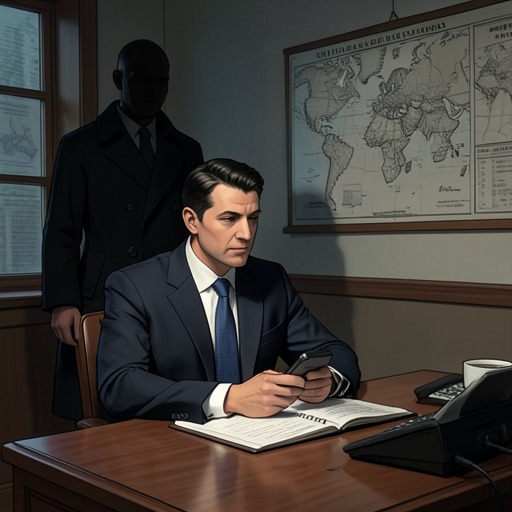
Goto-gumi’s Death Threat Against Jake Adelstein
Tokyo ViceGoto-gumi’s Death Threat Against Jake Adelstein marks the point at which Jake Adelstein’s investigation of Tadamasa Goto’s liver transplant became an immediate threat to Adelstein and his family. A well-dressed enforcer demanded that Adelstein abandon the story, presenting the demand as a bargain backed by a threat of murder. Adelstein agreed not to publish it in the Yomiuri Shimbun, but Chiaki Sekiguchi’s advice afterward turned that apparent surrender into a temporary retreat: the investigation, he insisted, must continue.
Background and Stakes
For months, Adelstein had been pursuing a story about how Goto, one of Japan’s most notorious gangsters, received a liver transplant at the Dumont-UCLA Liver Cancer Center in the summer of 2001. The transplant raised questions that Adelstein had not yet answered. He believed he knew, or thought he knew, which doctor had performed it, but accounts differed sharply about the price: some sources put the cost close to one million dollars, others at three million.
The money trail was part of the mystery. Some of the funds for Goto’s hospital expenses had reportedly been sent from Japan to the United States through the Tokyo branch office of a Las Vegas casino. Adelstein did not know how Goto had entered the country. Goto was reportedly on the watch lists of U.S. Customs and Immigration, the FBI, and the DEA, and had been blacklisted. Adelstein considered it unlikely that Goto could have entered legally, but the evidence in hand did not establish how he had done so. He suspected that a passport had been forged or a politician bribed, while recognizing that these were possibilities, not proven answers.
The unfinished state of the investigation mattered to the threat. Adelstein believed the journey and operation concealed a much larger story, but he lacked the facts needed to publish it. He suspected that someone had informed on him while he worked, though he could only guess how the people confronting him had learned of the investigation. The story’s potential importance and its evidentiary gaps were therefore inseparable: it was consequential enough to provoke pressure, yet not complete enough for him to expose its underlying mechanism.
The Ultimatum
The enforcer spoke slowly and framed the demand in stark terms: Adelstein must erase the story or be killed, with his family threatened first. The speaker’s manner made the warning sound to Adelstein like a proposition rather than a negotiation between equals. Adelstein believed the enforcer was sincere. As he understood the man’s reasoning, the investigation would ultimately bring about Goto’s death, even if it would not do so directly. Goto was the enforcer’s oyabun, or surrogate father; the threat was presented as justified protection of that bond and of his boss.
Adelstein’s predicament was practical as well as moral. He did not have the complete story, but could not reveal that weakness to the men making the demand. Nor did he believe he had leverage to bargain with. He considered whether the enforcer would honor his side of the arrangement if Adelstein complied, but had no assurance that the threat would end once the newspaper stopped pursuing the story. The demand thus required an immediate concession without providing a reliable guarantee of safety.
Adelstein accepted the condition that he would not write the story in the Yomiuri Shimbun. The agreement concerned publication in that newspaper; it did not resolve the unanswered questions about Goto’s transplant or establish that the investigation itself was finished. The men stood, exchanged only slight bows, and left the encounter with the appearance of a formal understanding. That restrained closing gesture did not erase the threat that had produced it.
Immediate Aftermath and Sekiguchi’s Counsel
After the meeting, Adelstein was numb. Sekiguchi walked him out of the hotel, and they took a taxi to a coffee shop in Shinjuku. There, Sekiguchi offered him a cigarette and told him to consider leaving the newspaper, a course Adelstein had already contemplated. Sekiguchi did not treat departure as cowardice: he argued that Adelstein had no cards to play and that the groups he might have considered less dangerous were not comparable to the men now confronting him.
Sekiguchi also admitted that he did not know why Goto was so determined to keep the transplant story from coming out. But he reasoned from the scale of the threat: whatever Goto had done, it mattered enormously to him. For Sekiguchi, the danger was evidence of the story’s importance, not a reason to publish prematurely or recklessly. His counsel joined two instructions that might otherwise seem contradictory: retreat from the immediate confrontation, but do not abandon the inquiry.
He warned that the agreement would not hold indefinitely and that Goto’s side would not forget the encounter. If Adelstein stopped investigating altogether, Sekiguchi believed he would remain afraid without understanding what had made him a target. He urged Adelstein to find out what Goto feared people learning, wait a year or two if necessary, and use the information carefully once he had a card to play. The goal was not simply to resume publication, but to discover what lay behind the pressure before deciding how to act.
Retreat, Risk, and the Unfinished Story
Sekiguchi grounded this advice in his own experience. After being demoted from detective work to traffic duty, he had wanted to leave the police force every day. He said that a colleague had engineered the demotion, and that family obligations helped make the choice about more than his own frustration. He endured the assignment until circumstances changed and he could make his case. His example gave retreat a specific meaning: endure a forced setback, preserve the possibility of acting later, and wait for a moment when the balance has shifted.
The threat therefore produces no clean resolution. Adelstein has agreed not to publish in his newspaper, but the promise offers no assurance that Goto’s side will keep its part of the bargain. The transplant’s financing, Goto’s entry into the United States, and the reason for his determination to suppress the story remain unresolved in this account. Sekiguchi’s intervention replaces the false certainty of the ultimatum with a more difficult plan: stay alive, keep investigating, and postpone the confrontation until the facts provide leverage.
As a narrative turning point, the episode makes the cost of reporting concrete without making the underlying story complete. The family threat forces Adelstein to weigh the work against the people who would bear its consequences, while the still-missing facts keep him from treating publication as an immediate answer. The agreement is consequently both a concession and a delay. The investigation continues not as a claim that the danger has passed, but as a commitment to learn what the threat was meant to keep concealed.