Jake Adelstein—Tadamasa Goto antagonistic relationship
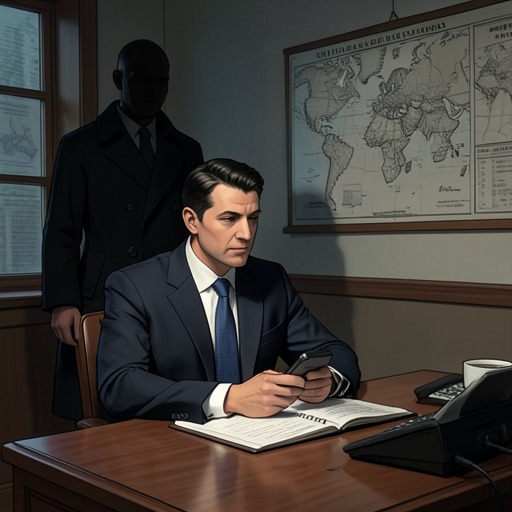
Tokyo ViceJake Adelstein’s antagonistic relationship with Tadamasa Goto takes shape around a story about Goto’s 2001 liver transplant in the United States. Goto does not confront Adelstein in the described meeting; instead, a Goto-gumi enforcer delivers a threat on his behalf. Adelstein gives a limited promise not to publish in the Yomiuri Shinbun, while Sekiguchi advises him to withdraw for the moment and continue seeking the truth. The relationship is therefore defined by intimidation, an incomplete investigation, and a truce neither man can rely on.
The investigation behind the conflict
Adelstein had been working for months on the circumstances of Goto’s transplant. He knew that Goto had received a liver at the Dumont-UCLA Liver Cancer Center in the summer of 2001, but his understanding of the case was still incomplete. He believed he knew, or thought he knew, which doctor had performed the operation; the evidence does not establish that identification as certain.
The reported cost was also unsettled. Adelstein had heard estimates ranging from close to one million dollars to three million dollars. Some money for the hospital expenses, he knew, had been sent from Japan to the United States through the Tokyo branch office of a Las Vegas casino. These were leads in an unfinished investigation, not a fully verified account of the transaction.
The central question for Adelstein was how Goto had entered the United States. He considered the possibility of a forged passport or a bribe involving a Japanese or U.S. politician, but the evidence presents these as suspicions, not established explanations. Goto was said to be on the watch lists of U.S. Customs and Immigration, the FBI, and the DEA, and to have been blacklisted. That apparent conflict between his status and his arrival made the journey, and the operation around it, the story Adelstein wanted to understand. He suspected that someone had exposed his work to Goto’s associates, but he could only guess how the information had reached them.
The threat and its intermediary
The threat came from a man sitting across the table from Adelstein, identified as a member of the Goto-gumi. The distinction matters: the meeting is not a direct exchange between Adelstein and Goto, but a confrontation conducted through Goto’s organization. The enforcer presented the choice as abandoning both the story and the job or facing pursuit throughout Japan. He delivered the proposal without conspicuous hostility. In a dark suit, and without the theatrical appearance Adelstein associated with gangsters in films, he seemed more like a surly waiter than a stereotypical underworld figure. The calm manner did not soften the substance of the warning.
The organization’s reputation supplied the threat’s context. The Yamaguchi-gumi, described as Japan’s largest organized crime group, had about forty thousand members; its Goto-gumi subgroup had more than nine hundred. The account associates the group with violent attacks and destructive intimidation, including attacks on film directors, people thrown from hotel balconies, and bulldozers driven into homes. Against this background, Adelstein did not consider the enforcer’s warning a bluff. He understood that the proposed story might, in the enforcer’s view, endanger Goto, his boss and surrogate father, and that this perceived danger could be used to justify killing the reporter.
A narrow concession
Adelstein’s response was shaped by both the threat and the limits of his reporting. He did not yet have all the facts, but could not reveal that weakness during the meeting. After the enforcer set out the terms, Adelstein agreed not to write the story in the Yomiuri Shinbun. The promise was specific to that newspaper; the scene does not establish that he abandoned the investigation or made a broader pledge never to report on Goto.
The enforcer accepted the concession and advised Adelstein to leave Japan, take a long vacation, and consider other work. He also referred to Adelstein’s wife and two children, making clear that the danger was framed not merely as a professional risk. The meeting ended with brief bows and fixed attention rather than any assurance of lasting safety. Adelstein was left numb and asked Sekiguchi afterward whether he had done the right thing. His agreement had stopped the immediate confrontation, but it offered no reliable protection against future retaliation.
Retreat as strategy
Sekiguchi advised Adelstein to consider leaving the newspaper, emphasizing that he had no effective cards to play against Goto’s organization. He contrasted the danger with that posed by the Inagawa-kai and the Sumiyoshi-kai, which he considered comparatively minor. Sekiguchi also admitted that he did not know what lay behind Goto’s transplant or why Goto was so determined to prevent the story from appearing. That uncertainty reinforced, rather than diminished, the need to discover what the operation meant to Goto.
His advice was not to surrender the story. Sekiguchi urged Adelstein to retreat, wait a year or two if necessary, and learn what Goto feared people would discover. In his view, the peace made at the meeting could not hold: Goto’s side would not forget the conflict, and without understanding its source Adelstein would remain afraid. Knowledge, carefully used, might eventually give the reporter leverage and allow him to return to the work he wanted to do.
Sekiguchi grounded this counsel in his own professional experience. After being demoted from detective work to traffic duty because, he said, one of his colleagues had set him up, he had repeatedly wanted to quit the police force. Family obligations kept the decision from being his alone. He endured the reassignment until circumstances changed and he could make his case, eventually returning to work he was good at. The parallel reframed Adelstein’s concession: withdrawal could be an interval of endurance rather than acceptance of defeat.
An unresolved antagonism
The relationship remains unsettled at the close of the episode. Adelstein has complied with the enforcer’s immediate demand, but Sekiguchi regards the arrangement as a temporary peace, not a dependable settlement. The story’s unresolved elements—the uncertain route into the United States, the conflicting estimates of the transplant’s cost, and Goto’s reason for wanting the investigation stopped—are also the elements that make the threat consequential. They give Adelstein a reason to continue, while the possibility of retaliation gives him reason to wait.
The conflict thus turns on an imbalance of power and information. Goto’s organization can make the cost of publication immediate; Adelstein’s possible counterweight is evidence he does not yet possess. The meeting forces him to choose between exposing an unfinished story and preserving his safety and family’s security. Sekiguchi’s response offers a third course: concede the immediate ground, investigate patiently, and seek the fact that might change the balance. The evidence establishes that this is his advice, not that Adelstein has already uncovered the answer or that the danger has passed.