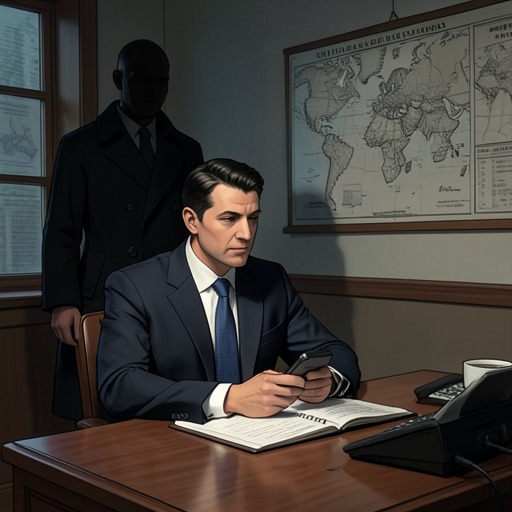
Teruo Mochizuki
Tokyo ViceTeruo Mochizuki is a former yakuza boss who becomes Jake Adelstein’s bodyguard and driver during Adelstein’s effort to publish an account of Tadamasa Goto. Once responsible for roughly a hundred gangsters, Mochizuki now works for a journalist he considers his employer, while risking retaliation from the Goto-gumi to protect him. His role joins the book’s account of media intimidation to a more intimate story of loyalty, obligation, and two men who have ended up far from the lives they once expected.
Identity and Background
Mochizuki had left the yakuza the previous year when Tomohiko Suzuki proposed that Adelstein write a chapter for an anthology of forbidden news stories. Suzuki described him as unemployed and the father of a one-year-old son, and suggested that his former underworld experience made him a suitable bodyguard and driver. Adelstein already knew Mochizuki and understood that the job would represent a sharp reversal: the man who had led about a hundred gangsters would be working for him.
Before entering organized crime, Mochizuki had been an artist. He fell in with the wrong people, accumulated debts in Soapland, and drifted into the yakuza. A later act meant to demonstrate remorse for a subordinate’s mistake left him unable to return to the kind of art he had practiced. His departure from the underworld came after insubordination, not a return to his earlier career: he objected to leadership’s increasingly money-at-all-costs approach. Adelstein presents him as a relic of a period when yakuza followed a code, however morally compromised that code might have been.
Mochizuki’s history also crossed the boundaries between rival organizations. He had been close to Yasunobu Endo, a crime boss killed by Gen Sekine in the 1990s. The two men belonged to different groups, but their friendship had made them blood brothers. The connection helps explain why Mochizuki’s relationships could not be understood only through formal gang affiliation; personal bonds sometimes persisted across those divisions.
Recruitment and the Work of Protection
Adelstein hired Mochizuki using savings from a well-paid project researching the pachinko industry for a California company. He felt he had little choice. The anthology was nearing completion, and the risk of publishing material about Goto was not theoretical: Mochizuki warned that Goto might try to have them both killed, with Adelstein the likelier first target. He made clear that the journalist could still walk away without being judged for it.
The warning came as Mochizuki reviewed the manuscript, visibly troubled before he spoke. His concern did not end the project. Adelstein decided to proceed, hoping the publication might damage Goto’s position and help get him expelled from the Yamaguchi-gumi. Mochizuki agreed to watch his back. His protection was not an abstract pledge: he stayed with Adelstein as the anthology moved toward publication and served as his bodyguard around the clock.
Their working arrangement carried an unusual reversal of age and status. Mochizuki was fifty and Adelstein thirty-nine; Mochizuki was the senior and, in Adelstein’s judgment, the tougher man. Yet Adelstein paid his salary and gave the orders. He recognized that Mochizuki would not describe the arrangement as working together: to Mochizuki, the person paying was the boss. Adelstein did not fully understand the former gangster’s soldierly work ethic, but valued it.
A Warning, and a Decision to Continue
As the publication deadline approached, Mochizuki asked Adelstein to consider the consequences once more. The prospect was not simply that Goto hated the journalist; it was that publication could put both their lives at risk. Mochizuki’s candor gave Adelstein a real opportunity to withdraw. Instead, Adelstein accepted the danger, believing that Goto was already waiting for circumstances to settle before acting and that the article might help bring about his expulsion from the Yamaguchi-gumi.
Mochizuki’s manner made the exchange more than a calculation of risk. After warning Adelstein, he took a cigarette from his coat, offered it to him, and shielded the flame of his Zippo while lighting it. Adelstein reflects on the strangeness of a former crime boss lighting his cigarettes and making his coffee, but the gesture also belongs to the daily routine through which Mochizuki carried out his new role. The man who had once commanded others now gave practical care to the person whose decisions could endanger them both.
Mochizuki’s loyalty was expressed in the language of debt. He told Adelstein that if anything happened to him, he would find the person responsible and retaliate. Adelstein told him he did not expect such action and should not take it. Mochizuki invoked Isshukuippaku no ongi, the debt owed to someone who provides lodging for a night and a meal. Adelstein had taken him in and looked after him; Mochizuki understood that hospitality as an obligation he would repay. The exchange gives his protective work a personal meaning beyond the salary Adelstein paid.
Protection and Consequences
The anthology drew threats, which Suzuki received, while Mochizuki’s own past connections supplied a less visible layer of security. Around the time the book appeared, Mochizuki’s blood brother, who remained an organization man, stationed four cars in Adelstein’s neighborhood around the clock. Adelstein did not know this was happening and had not requested it; he says he would have refused because he did not want to become indebted to a Japanese mafia group. The cars nevertheless served as a warning to the Goto-gumi that Adelstein was under another group’s protection. He was grateful to the man who had put himself at risk, even as the protection created precisely the kind of obligation he had wanted to avoid.
Mochizuki’s presence was part of a precarious publication effort. Kodansha International withdrew the book after an outside risk assessment, and Adelstein was warned to lie low. Around October 14, Goto was officially expelled from the Yamaguchi-gumi. The public explanation, as Adelstein relates it, concerned Goto’s partying and truancy; police told him that publication of the anthology had in fact been the tipping point. The evidence does not establish that Mochizuki’s protection alone caused this outcome, but it places his service within the dangerous campaign that helped bring the publication about.
Narrative Role and Significance
Mochizuki is both a practical safeguard and a counterpoint to Adelstein’s work. The Japanese newspapers and publishers had ignored or declined the journalist’s reporting on Goto, in part because of political, legal, and security concerns. Mochizuki’s willingness to stand beside him did not remove those pressures; it made their personal cost visible. When institutions would not take the risk, protection came through a former underworld figure and the relationships that remained active around him.
His story also resists a simple division between criminal past and respectable present. Mochizuki had been a boss, left the yakuza after conflict over its direction, and now earned a salary as a driver and bodyguard. He had been an artist before debts and association drew him into the underworld; the choices and consequences of that passage limited what he could return to. His debt-of-gratitude code is not presented as proof that the yakuza world is benevolent. Rather, it shows the personal obligations through which Mochizuki understands loyalty, even as those obligations connect him to danger. For Adelstein, he is a protector; for Mochizuki, protection is also repayment.