
Law, Vigilantism, and Moral Risk
Towards ZeroThe novel tests whether private certainty can justify violence and contrasts retaliation with patient, accountable investigation.
increasing Bearing strength in each event
 decreasing
Bearing strength in each eventdecreasingRoyde’s Private Sentence

Justice Outside the Courts
A provocative position
Thomas argues that someone may be justified in executing a person who has escaped punishment, provided the facts are certain. He says he would accept the responsibility of killing such a person.
Treves rejects the doctrine, insisting that private action remains unjustifiable. Their disagreement turns abstract justice into a question with personal stakes.
The danger of certainty
The debate foreshadows the novel’s central crimes, in which individuals decide that another person’s life can be used or taken for a purpose. The story does not let confidence stand in for lawful proof.
Treves’s Unanswered Example
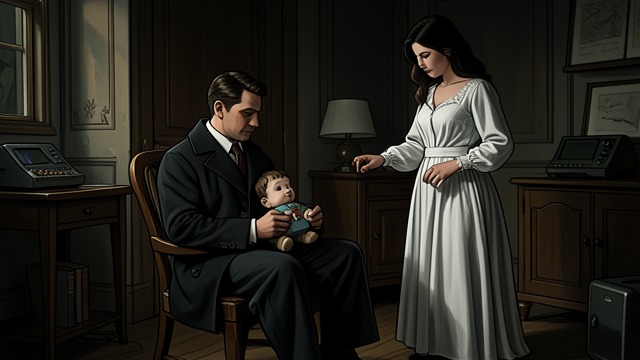
The Witness Who Held Back
Doubt about punishment
Treves describes a child who may have deliberately killed another child with an arrow. A farmer’s observation suggests practice and intent, but Treves never tells the authorities what he suspects.
He says the child deserved the benefit of a doubt because the future of a child was at stake. His restraint may have protected an innocent person or allowed a murderer to go unpunished.
Moral cost
The story presents judgment as an obligation burdened by uncertainty. Treves’s later death removes the chance to learn what he knew or why he remained silent.
Battle’s Duty to Evidence
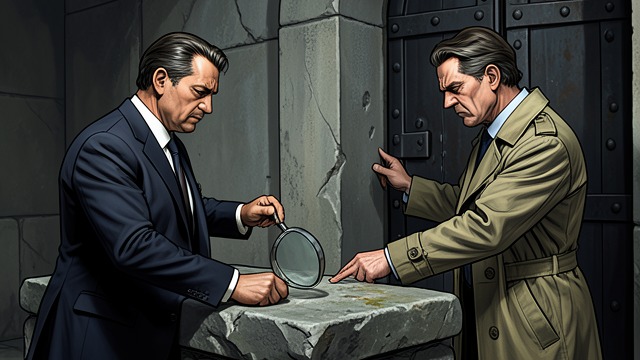
Suspicion Is Not a Verdict
Facts tested, not worshipped
Battle acknowledges that the case against Nevile is strong enough to justify arrest but refuses to let a fingerprint settle the whole question. He sees that evidence can be real yet misleading about how and when it was made.
He checks the financial motive, the timeline, and the supposed weapon rather than relying on a single coherent story.
A method of restraint
Battle’s caution contrasts with both vigilantism and premature legal certainty. He remains responsible for investigating what evidence means, not merely collecting what supports an accusation.
A Lie in the Service of Law
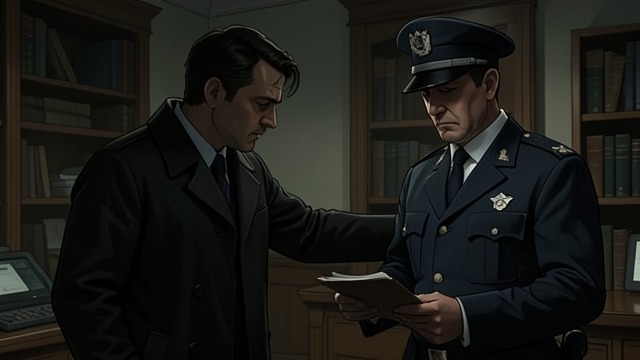
MacWhirter’s Fabrication
An unlawful shortcut
MacWhirter gives Battle a false eyewitness account, hoping the police can use it to expose the murderer. His action resembles the private bending of truth he once refused to tolerate.
The lie risks corrupting a prosecution if taken as literal testimony. It also supplies Battle with a practical experiment that can test the suspect’s physical ability.
An uneasy alliance
Battle recognizes the story’s limits and uses it strategically. The episode leaves a moral tension: a necessary breakthrough is obtained through deception rather than clean proof.
Confession and Accountability
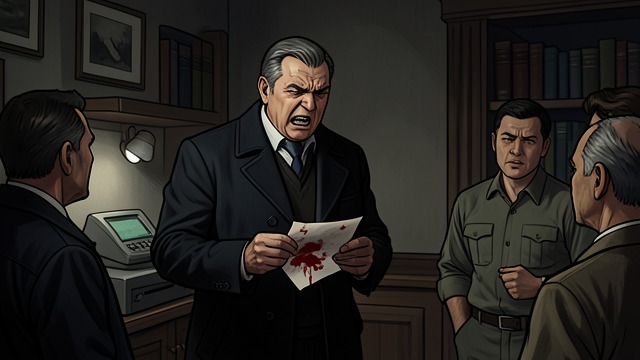
The Crime Is Named
Private punishment exposed
Nevile planned to have Audrey executed because she had left him. His scheme uses a death and a false accusation to satisfy a private desire for revenge.
He claims that his plan was clever and that Audrey must die, showing how completely he has confused injury with authority to punish.
Law after manipulation
Battle’s theatrical provocation elicits a confession, but the solution returns the crime to formal investigation. The novel condemns Nevile’s private sentence while acknowledging the difficult tactics needed to expose it.
September 11, after the discussion of unsolved crimes
September 11, later that evening
September 13, during the false case against Nevile
September 13, after MacWhirter approaches Battle
Near the ending, aboard the launch
