
The Murder as a Planned Performance
Towards ZeroNevile turns ordinary social behaviour, timed routines, and recognizable evidence into a performance intended to control how others judge Audrey.
increasing Bearing strength in each event
 decreasing
Bearing strength in each eventdecreasingA Plan Written in Secret
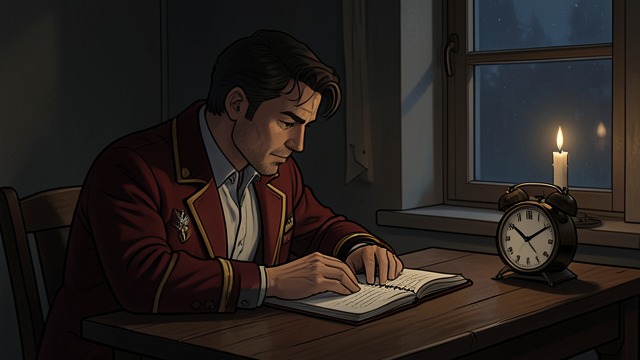
A Murderer as Creator
A controlled intelligence
An unidentified person writes a detailed scheme for murder, testing possible reactions and accounting for people’s virtues and flaws. The plan has a date in September but is not yet complete.
The writer imagines controlling not only the killing but the people who will interpret it. The crime is conceived as an arrangement of human responses.
Creation without conscience
The planner destroys the written pages and keeps the scheme in memory. The act of planning provides a creator’s satisfaction while concealing the moral emptiness of the design.
A Role Assigned to Nevile
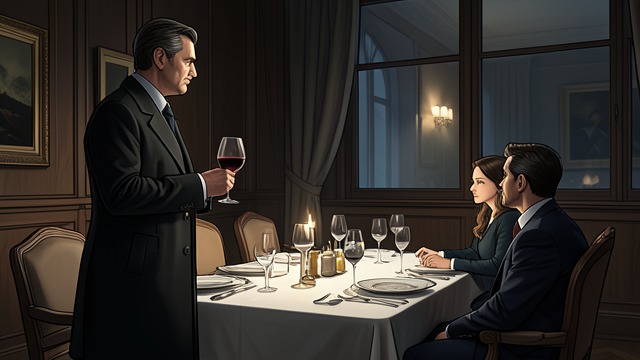
The Expected Suspect
A social scene constructed
The gathering places Nevile, Audrey, and Kay together, where jealousy and marital tension are already visible. The arrangement ensures that a later quarrel can be remembered as a motive.
Nevile publicly claims the reunion as his idea, making the invitation seem like his own awkward attempt at reconciliation.
A second role concealed
The same man who appears to be the likely first suspect is also the planner. He expects investigators to see the first frame and congratulate themselves when it fails.
Props and Timings
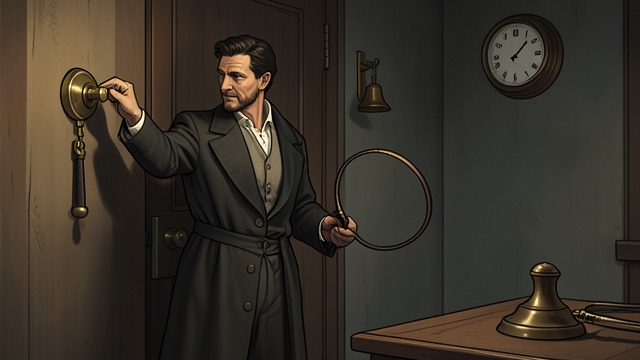
Household Objects Recast
Familiar things become instruments
Nevile prepares a modified racket, uses the fender knob as a weapon, and exploits the bell-pull and Barrett’s evening routine. Each ordinary object serves a different part of the performance.
The false lift notice that kills Treves removes a dangerous observer and conceals the plan’s connection to the child-murder story.
A timed appearance
The bell makes Barrett see Nevile leave while Lady Tressilian remains alive. That truthful sighting becomes a false alibi because the call itself was fabricated.
The Audience Misled
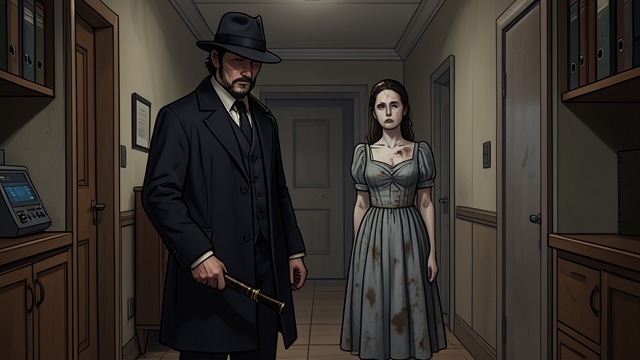
Investigators as Spectators
The first reveal
The planted club and stained clothes point to Nevile, then the weapon’s weaknesses suggest he may have been framed. The police feel they have detected a deliberate trick.
The second set of clues directs them toward Audrey, whose apparent surrender reinforces the new scene. The change of suspect is designed to look like progress.
Performance controls interpretation
Nevile’s plan relies on the investigators’ desire to distinguish themselves from credulous observers. The more they trust their own reading of clues, the more effectively the second frame can work.
The Creator’s Confession
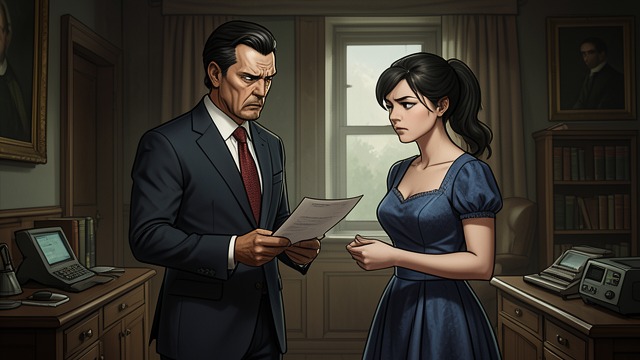
The Script Breaks
A role no longer sustainable
Battle’s challenge makes Nevile believe that Audrey’s arrest may not survive and his plan is failing. The controlled public figure gives way to the angry man who wants revenge.
Nevile confesses that Audrey’s punishment, not Lady Tressilian’s death, was the objective. His words disclose the emotional purpose hidden beneath the procedural construction.
The audience sees the author
The apparent plot against Nevile and the apparent case against Audrey are revealed as performances created by the same person. The planner’s control ends when he can no longer control his own response.
February, before the September murder
Before September, when the reunion is proposed
September 11, before and during the murder night
September 13, during the first and second accusations
Near the ending, after Battle’s launch experiment
