
Treves’s Story and the Child Within
Towards ZeroThe unresolved childhood arrow killing serves as a disturbing mirror for the adult crime and raises the question of whether violence can remain hidden for life.
increasing Bearing strength in each event
 decreasing
Bearing strength in each eventdecreasingA Child Practises Alone
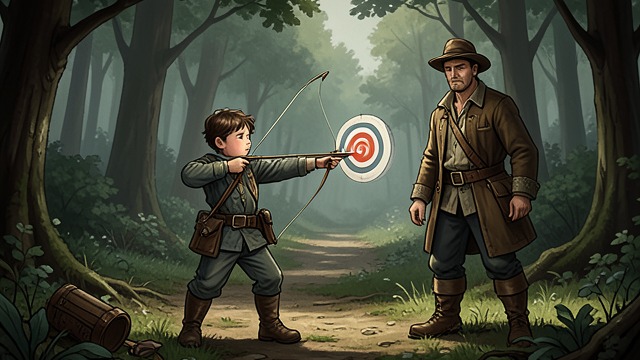
Practice Behind an Accident
A farmer’s observation
A farmer once sees a child practising with a bow and arrow in a woodland clearing. Later, another child is killed by an arrow, and the death is treated as an accident.
The surviving child appears distraught, and witnesses offer sympathy rather than suspicion. The earlier practice remains the only clue that the shot may have been deliberate.
Intent concealed by grief
The case turns on whether the child’s apparent innocence can be trusted. Treves’s story asks whether a carefully planned act can hide inside a convincing performance of sorrow.
The Doubt Preserved
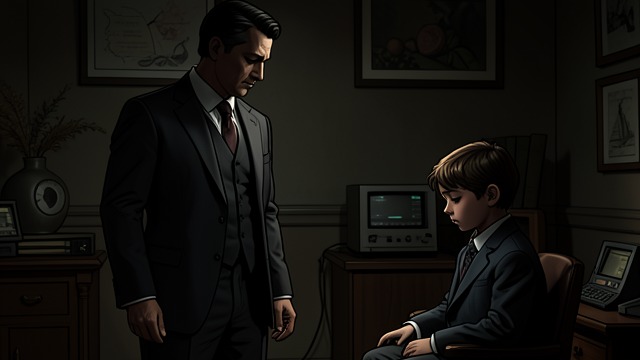
A Future Given the Benefit of Doubt
No public accusation
Treves believes one child may have killed deliberately but does not know with certainty. He chooses not to endanger the child’s future on a suspicion that might be wrong.
The decision prevents a possible miscarriage of justice, but it also leaves a possible murderer unchallenged. The unresolved moral cost remains with Treves.
An adult still unknown
The child grows into an adult whose identity Treves says he could recognize. The past remains present as a question rather than a settled verdict.
The Tale at Dinner
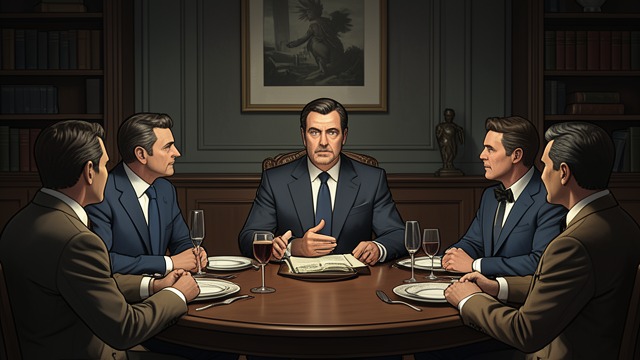
A Story Told to the Guests
A deliberately careful account
Treves tells the company about the arrow death without giving the child’s age or sex. He stresses the methodical practice, the staged grief, and the possibility of a child’s deliberate murder.
He says that a physical peculiarity would let him recognize the child. His careful emphasis turns the story into more than casual conversation, though listeners cannot tell who it concerns.
A warning not understood
The guests hear a troubling anecdote but do not identify a present danger. Treves’s warning reaches them too indirectly to prevent his death or the later accusation against Audrey.
A Physical Clue Revisited
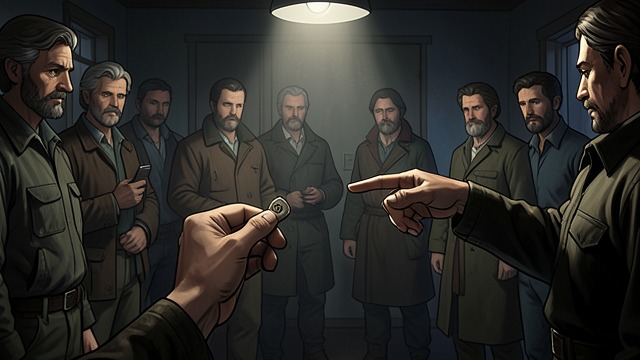
The Child May Be Present
The remembered peculiarity
Battle asks whether anyone in the house has a scar or other unusual mark. Several possibilities come to mind, but Nevile’s unequal little fingers provide the significant connection.
Treves had not named the person or explained his suspicion. The physical detail turns his story into a possible recognition, not a legally established fact.
A pattern of punishment
Battle suspects that Nevile’s current crime echoes an earlier willingness to plan violence and conceal intention. The childhood story informs the investigation without substituting for proof of the adult murder.
The Question Left Open
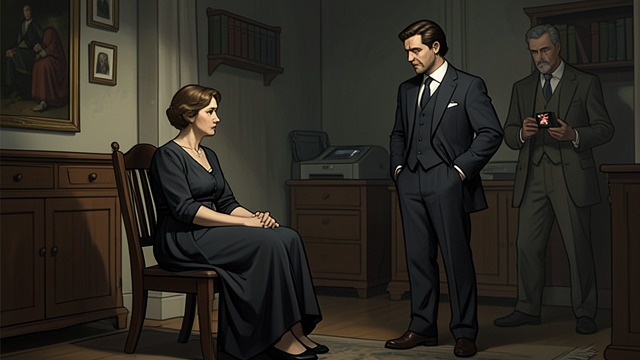
No Final Certainty About Childhood
A disturbing resemblance
Nevile confesses to planning the murder of Lady Tressilian and framing Audrey. His hatred and careful manipulation resemble the child Treves described.
Battle believes the physical clue identifies Nevile as the child, but the childhood killing itself was never proved in court. The parallel strengthens a psychological reading while leaving a historical uncertainty.
Character and accountability
The novel links the adult crime to a possible early pattern without claiming that childhood alone absolves or determines him. Nevile remains accountable for the deliberate violence he confesses to committing.
Years before the September events
At the childhood inquest, recalled by Treves
September 11, evening at Gull’s Point
September 13, after Battle hears Mary’s account
After Nevile’s confession
