
The Cost of Being Seen
Towards ZeroPublic appearance shapes whose emotions are believed, who is suspected, and how a polished identity can conceal danger.
increasing Bearing strength in each event
 decreasing
Bearing strength in each eventdecreasingKay’s Visible Anger
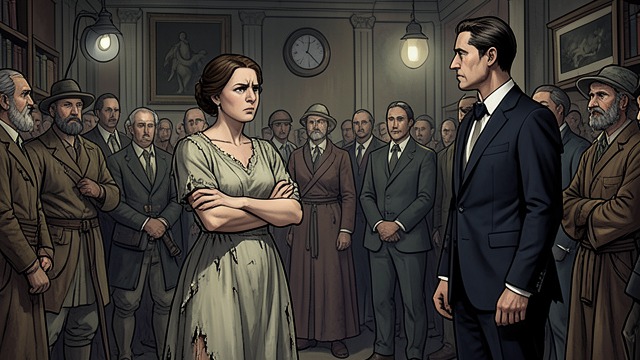
Emotion on Display
A reaction everyone notices
Kay openly reacts when Nevile hands the paper to Audrey. She cries, argues, and makes her jealousy visible to Thomas and the household.
Her unrestrained manner makes her seem volatile and potentially dangerous. At the same time, it reveals real insecurity that more composed characters conceal.
A misleading interpretation
Because Kay’s anger is public, it becomes easy to mistake it for evidence of murder. The plan against Audrey benefits from the household’s tendency to read the loudest emotion as the most likely motive.
Nevile’s Calm Reputation
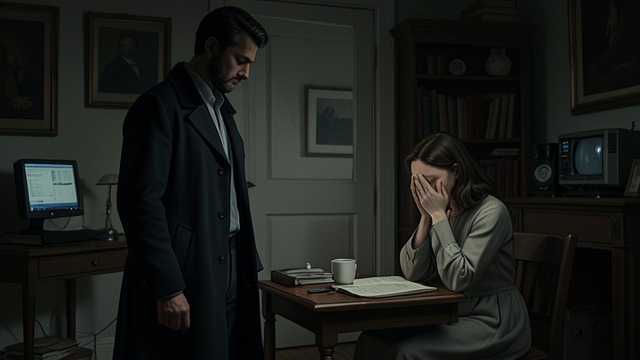
Virtue as Camouflage
The public sportsman
Nevile accepts losses with a smile and is admired for his control. Ted Latimer calls him too good a loser to become a champion, mistaking emotional restraint for an uncomplicated virtue.
The same reputation later makes a brutal outburst seem unlikely. It also makes those who know him resist believing that he could be dangerous.
A role maintained
Battle understands that Nevile’s sportsmanship is partly an identity he must perform. The performance hides an unstable pride that cannot bear Audrey’s rejection.
Audrey’s Stillness
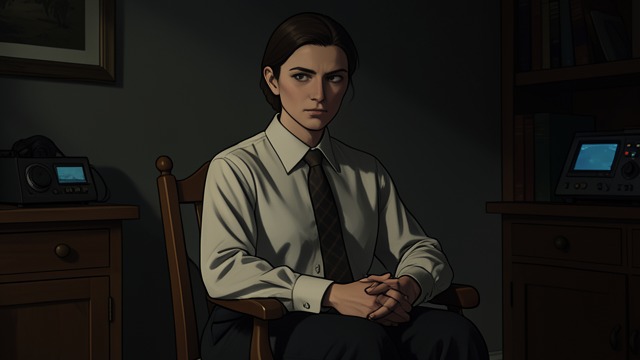
Emotion Hidden in Form
A ghostly impression
Audrey sits quietly, speaks gently, and withdraws from the dance when it becomes uncomfortable. Others describe her as mysterious and almost unreal.
Her restraint draws attention precisely because it gives little outward explanation. People project onto her the feelings they cannot read.
A mask of endurance
The stillness is not evidence of a cold nature. It is the outward shape of fear and exhaustion accumulated over years.
Battle Reads the Room

Faces as Starting Points
An investigator’s first impressions
Battle studies each person’s posture and expression, but treats those observations as provisional. He notices Kay’s fear, Nevile’s nervousness, and the composure of Mary and Thomas.
The impressions help him choose questions, not reach verdicts. He knows that people can look guilty, frightened, or harmless for reasons unrelated to the crime.
Evidence must correct perception
His investigation repeatedly revises its initial readings. The discipline of looking again becomes essential when both the apparent suspect and the apparent victim behave unexpectedly.
A Performance Ends in Truth
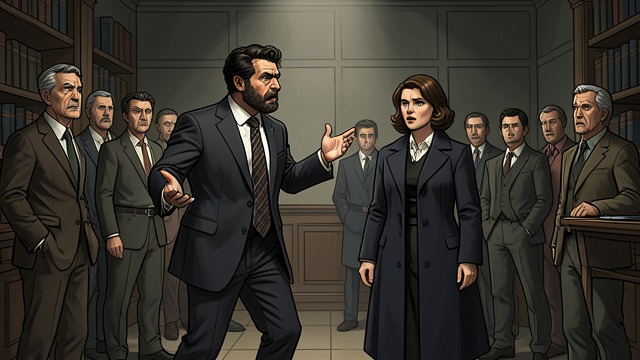
The Hidden Emotion Emerges
Hatred breaks through
Nevile’s rant reveals the hatred concealed beneath his courteous conduct. His confession makes visible what his sportsman’s persona had kept hidden from family and friends.
Kay’s visible anger, by contrast, did not make her the murderer. Audrey’s stillness did not make her guilty.
Appearance reassessed
The investigation succeeds when the characters’ conduct is interpreted in context rather than ranked by how convincing it looks. The novel exposes the danger of treating social performance as moral truth.
Early September, on the terrace
Before the murder, during the tennis season
Early September, during the dance and terrace scene
September 13, at the first household interviews
Near the ending, after Nevile’s confession
