
The Two Wives and the Public Eye
Towards ZeroKay and Audrey experience the same household through opposing forms of visibility: one is judged for showing too much, the other for revealing too little.
increasing Bearing strength in each event
 decreasing
Bearing strength in each eventdecreasingKay’s Visible Personality

A Woman Read at First Glance
Appearance and reputation
Kay’s vivid beauty, direct speech, and open irritation make her easy to notice. Lady Tressilian regards her as vulgar, while other guests see her as passionate and entertaining.
Her visible behaviour invites judgement before anyone understands the insecurity beneath it.
A narrow role
Kay is often described through her attractiveness and temperament rather than her own fears. The role of the glamorous new wife limits how others interpret her reactions.
Audrey’s Unreadable Reserve
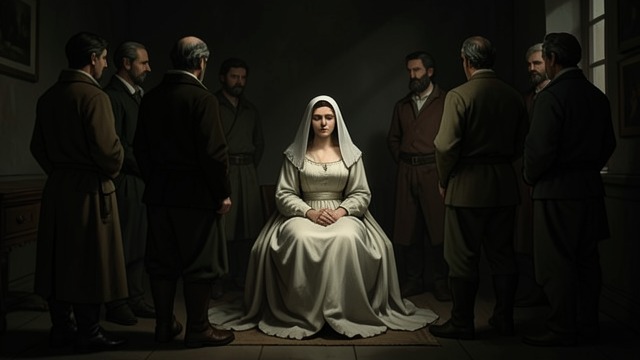
A Woman Read as a Ghost
Composure mistaken for mystery
Audrey’s pale, quiet manner makes her seem unreal or difficult to know. She does not expose what she thinks, leaving others to supply their own explanations.
Kay sees a calculating rival; Mary senses a powerful but hidden emotion; Thomas recognizes a secret that he cannot name.
The limits of projection
Audrey’s reserve is not proof that she has no feeling. It protects a person whose fear has become difficult even for herself to articulate.
The Household’s Judgement
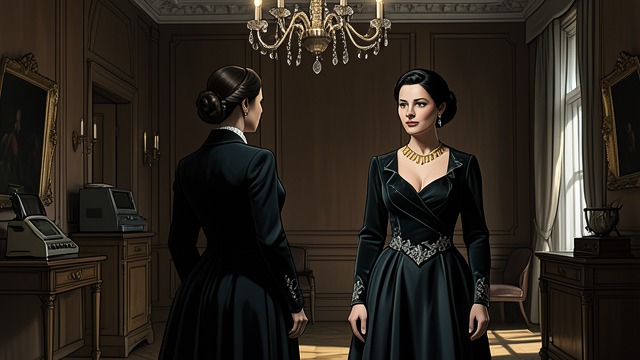
Politeness and Prejudice
Social comparison
Lady Tressilian and Mary compare Kay unfavourably with the well-bred, self-contained Audrey. Their view makes Kay’s discomfort appear like a character flaw rather than a response to being treated as an outsider.
Meanwhile, Audrey’s silence is praised as poise, even though it hides fear. The household rewards restraint and condemns visible anger without knowing what lies behind either.
A dangerous imbalance
These judgements shape whose account seems credible. They make the group more ready to suspect Kay of temper and Audrey of concealed schemes.
The Arresting Image
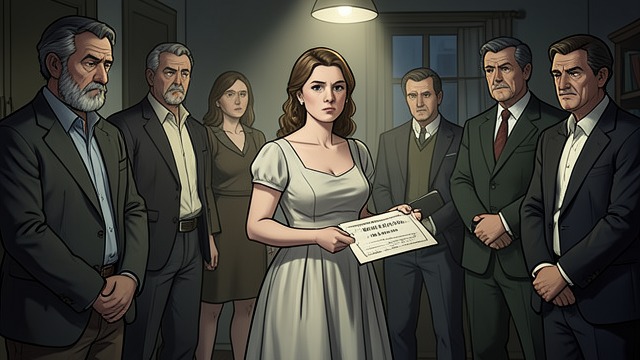
Guilt Seemingly Confirmed
Silence becomes evidence
Audrey responds to the murder questions without visible emotion and accepts the warrant with apparent calm. The assembled household interprets her conduct as proof that she is guilty.
Her actual relief comes from being removed from Nevile and from the terror of waiting for an undefined attack.
Battle refuses the image
The investigator recalls that innocence can collapse under pressure and recognizes fear behind Audrey’s behaviour. His reading challenges the group’s confidence in what it sees.
A Person Beyond the Labels
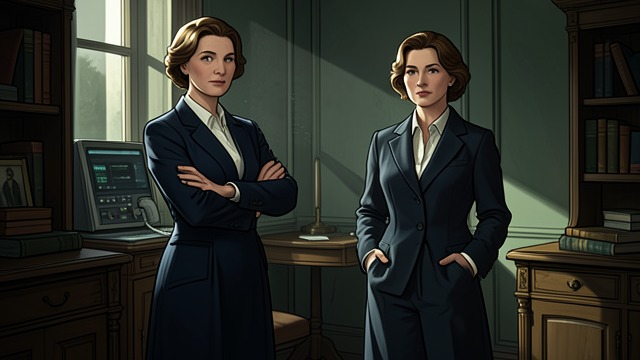
The Wives Become Individuals
Kay’s anger put in context
Kay’s jealousy and threats were real, but they did not make her the murderer. She was a woman confronting the loss of her marriage, not the hidden architect of the crime.
Audrey, likewise, was neither a ghostly avenger nor an emotionless presence. She had been frightened and trying to survive.
Seeing past the role
The novel exposes how labels such as “new wife,” “former wife,” “beautiful,” and “cold” simplify people into parts in a social drama. The murder is solved only when those roles are not mistaken for the truth.
Before the Gull’s Point reunion
Early September, during the first visit to Gull’s Point
September 11, during the gathering
September 13, when Battle questions Audrey
After Nevile’s confession
