
The Old Story and the New Crime
Towards ZeroTreves’s unresolved account of a child’s violence supplies a disturbing interpretive frame for Nevile’s adult plan and for the limits of proof.
increasing Bearing strength in each event
 decreasing
Bearing strength in each eventdecreasingThe Arrow’s Fatal Flight
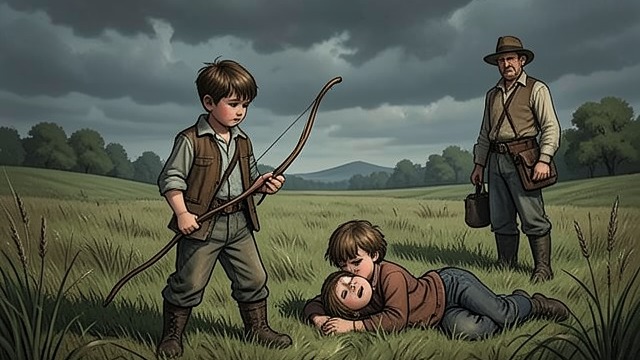
The Childhood Killing
A fatal shot
Two children play with bows and arrows, and one child’s arrow strikes another in a vital place. The inquest treats the death as an accident and the surviving child as distraught.
A farmer recalls seeing a child practising with a bow earlier. That observation raises the possibility that the lethal shot was planned rather than careless.
The unproved intention
The evidence cannot establish what was in the child’s mind. Treves is left with a suspicion that may be correct but cannot be safely converted into a verdict.
Treves Chooses Restraint
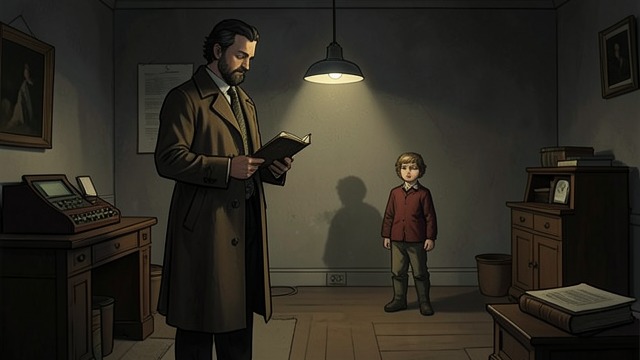
A Child Given Doubt
The future at stake
Treves says the farmer did nothing with what he had seen. He understood that the child’s future would be affected by an accusation that might never be proved.
Treves does not say whether he would have acted differently. He remains uncertain whether the decision was compassionate or mistaken.
A moral question retained
His silence preserves the child’s future but leaves the possible victim without justice. The case becomes an enduring test of how much certainty a person needs before intervening.
The Adult Somewhere in the World
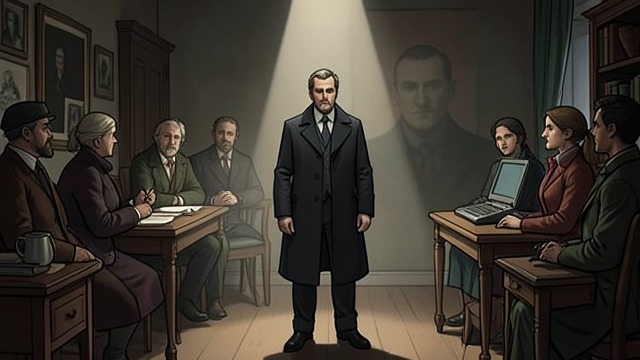
Recognition Across Time
A physical peculiarity
Treves says the child is now an adult and that he would recognize the person by a particular physical trait. He declines to specify the person’s age or sex.
His wording makes it possible that the suspected child is among the guests, but offers no direct accusation or identifying detail.
A story becomes a warning
The tale makes the dinner conversation uneasy. Its meaning becomes clearer only after Treves dies and Battle searches for the person he might have recognized.
A Murderer’s Physical Mark
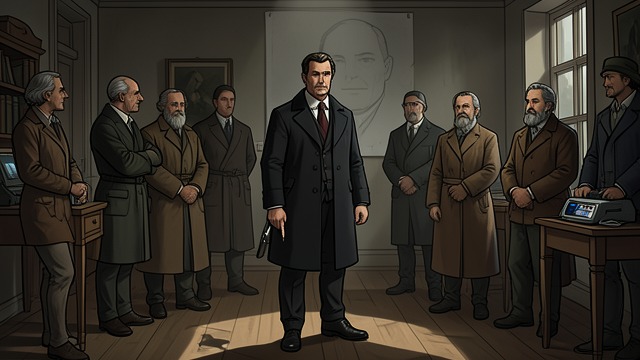
The Unequal Fingers
A peculiar feature noticed
Battle considers several traits in the household before identifying Nevile’s left little finger as shorter than the right. He believes the unusual difference matches Treves’s description.
The detail connects Nevile to the old story, though it cannot by itself prove what happened during childhood.
A pattern gains force
Nevile’s adult scheme also depends on planning, feigned appearances, and an assumed right to punish. The resemblance makes Treves’s warning psychologically powerful.
History Without a Trial
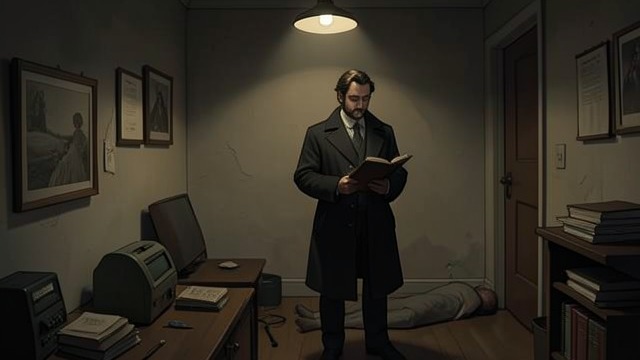
The Unresolved Past
Adult guilt established
Nevile confesses to planning Lady Tressilian’s murder and framing Audrey. His current crime is proved by the confession and the reconstructed evidence.
The childhood arrow killing remains less certain. Treves’s suspicion and Battle’s identification never become a formal verdict about that earlier death.
A lasting ambiguity
The novel suggests continuity in Nevile’s capacity for violence without claiming that the first suspicion was conclusively proven. It preserves the difference between a compelling pattern and a legally established fact.
Years before the novel’s present
At the childhood inquest
September 11, during Treves’s dinner story
September 13, after Battle considers the dinner story
After Nevile’s confession
