
The Price of a Witness
Towards ZeroSeveral witnesses hold fragments of the truth, but their knowledge is incomplete, delayed, or dangerous to disclose.
increasing Bearing strength in each event
 decreasing
Bearing strength in each eventdecreasingTreves Sees Something
The Observer’s Warning
A story with an audience
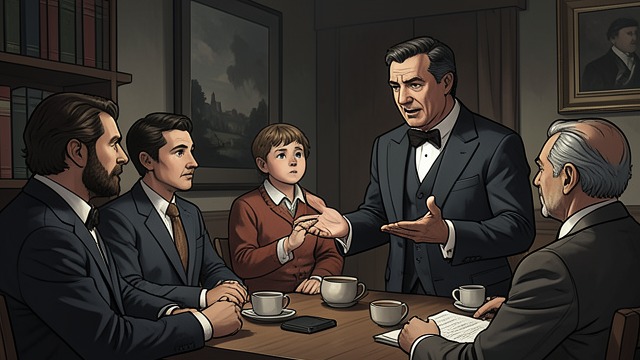
Treves tells the guests about a child who may have killed deliberately and says he would recognize the adult by a physical peculiarity. His careful choice of details suggests he may have noticed someone.
He does not openly name the person or explain his suspicion. The others hear a disturbing story rather than a warning they can act on.
Knowledge creates danger
Treves’s observational skill may make him a threat to the planner. His death soon after the dinner turns his ambiguity into a crucial question for the police.
Barrett Sees Nevile Leave
A Witness to a Manufactured Moment
A limited sighting
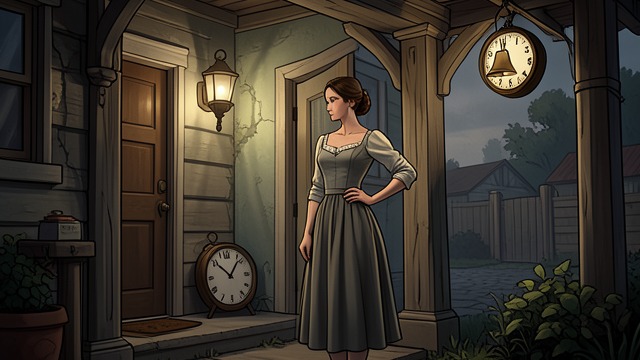
Barrett sees Nevile leaving the house after hearing the bell. She does not witness the murder and does not know that the call was staged.
Her statement is sincere, but her knowledge covers only a small part of the night.
A true fact used falsely
The murderer turns Barrett’s limited observation into a powerful alibi. The episode shows why a witness’s honesty cannot replace a complete account of events.
Hurstall Remembers Voices
The Quarrel Heard Through the House
Fragments overheard
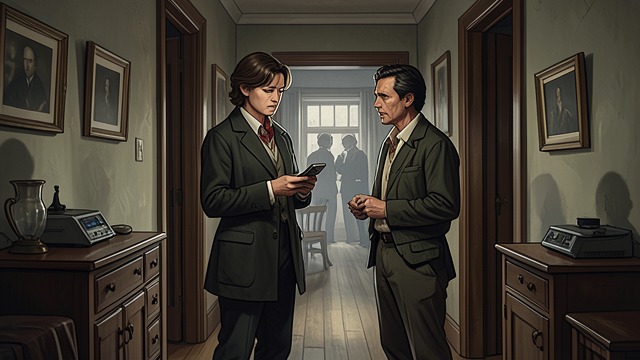
Hurstall and Emma hear raised voices between Nevile and Lady Tressilian. They remember fragments about something not being allowed in the house and a defence of “her.”
They cannot explain the context, but the sounds make the previous quarrel available as evidence.
A fragment made to accuse
The argument is real, yet incomplete recollection makes it easy to treat it as a direct cause of murder. The witnesses supply a plausible story without seeing the crime.
MacWhirter Deduces a Route
A Witness Made by Inference
No direct view
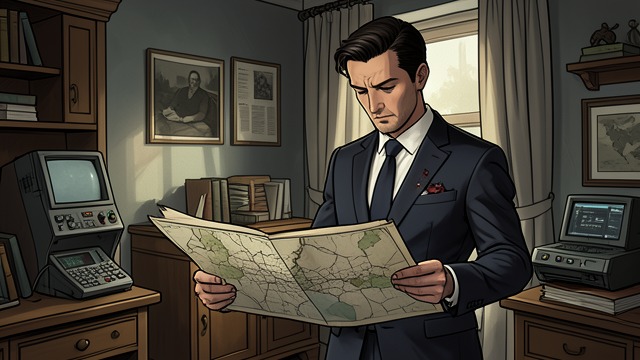
MacWhirter does not see Nevile climb a rope on the murder night. He reasons from the fish stain, the suit, and the possibility of crossing the river.
He understands that police may demand a witnessed event rather than a chain of deductions.
A risky account offered
He presents his inference as an eyewitness report to force attention onto the route. His evidence is useful, but the method threatens the integrity of the case.
Witnesses Assemble a Truth
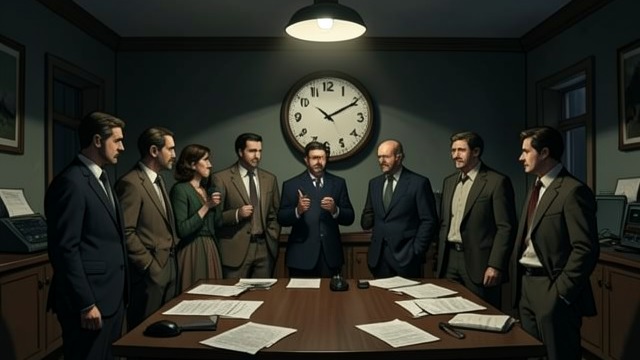
Fragments Become an Account
Different limits, one pattern
Barrett supplies the timing of the false call; Hurstall supplies the quarrel; Mary recalls Treves’s story; MacWhirter infers the route; Thomas corrects the marriage history.
No single witness can explain the murder. Their distinct fragments become meaningful when Battle tests them against physical evidence and each other.
A qualified conclusion
Nevile’s confession completes the account, but the process shows that testimony needs context. The truth emerges collectively, despite error, silence, and deliberate deception.
September 11, during dinner
September 12, around 10:25 p.m.
September 12, after ten at night
September, after examining the wrong suit
Near the ending, after Nevile’s confession
