
The Point Where Fear Turns to Action
Towards ZeroAudrey’s paralysis gives way only when another person’s intervention interrupts the threat and helps her recover her capacity to choose.
increasing Bearing strength in each event
 decreasing
Bearing strength in each eventdecreasingFear Mistaken for Weakness
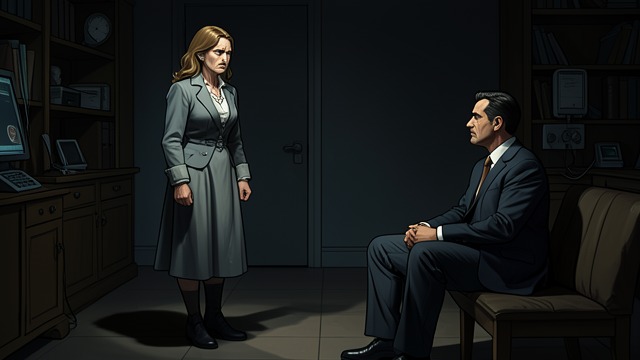
A Threat She Cannot Explain
Self-doubt grows
Audrey senses something wrong in Nevile but cannot identify an event that would persuade others. She concludes that the problem may lie in her own mind.
Her uncertainty makes it harder to act or ask for help. A person who appears calm to outsiders is internally living under constant strain.
Escape without resolution
She leaves Nevile for Adrian, but his death and the subsequent divorce do not free her from fear. The danger remains a presence she cannot confidently name.
A Polite Return to the House

Courtesy Draws Her Back
An invitation accepted
Nevile says he wants the two wives to meet, and Audrey agrees partly because she feels she owes him for his kindness. She is not comfortable, but cannot see how to refuse.
Her decision appears voluntary to the household. Its emotional context is invisible to those who do not know how afraid she has been.
The threat returns
Gull’s Point becomes a setting where Audrey senses danger without understanding its form. Her politeness lets the visit proceed while her fear intensifies.
The Arrest Feels Like an Ending
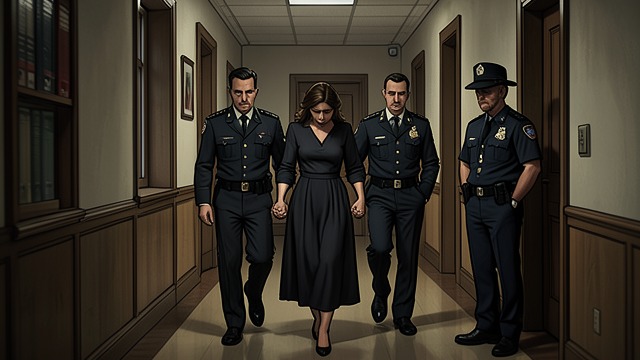
Relief Under Accusation
A crisis finally arrives
Audrey has spent days expecting something terrible. When Battle arrests her, she feels that the waiting is over and does not resist strongly.
The police escort appears to remove her from Nevile’s influence. Her apparent calm is a response to terror, not an admission of murder.
A life nearly decided by appearances
The same fear that makes her grateful for removal makes the case against her look stronger. Battle’s understanding of false confession keeps the danger from becoming final.
A Witness Interrupts the Ending
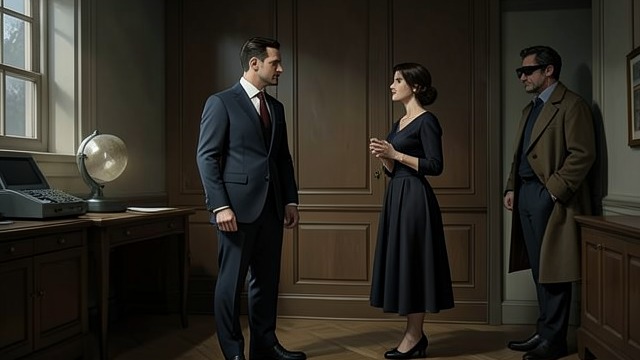
The Pattern Breaks
A new account arrives
MacWhirter’s statement gives Battle a reason to delay the formal conclusion. His theory about the rope and the shore reopens the question of who could have entered the house.
Battle separates Audrey from the immediate danger of the accusation while preparing an experiment. The threatened ending is interrupted by an outsider’s decision to act.
Fear begins to loosen
Audrey leaves under police escort believing the worst has happened. She does not yet know that the real murderer is about to be exposed.
Choosing After Fear
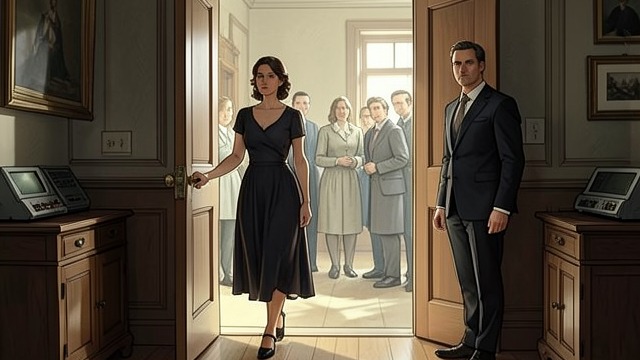
A Future Chosen Freely
The danger named
Audrey tells Battle that she feared Nevile and thought she was losing her mind. Having the fear acknowledged lets her begin separating past danger from present safety.
She also chooses to leave with MacWhirter, making a decision that is not forced by gratitude or panic.
Action replaces paralysis
The choice does not erase trauma, but it marks a return of agency. Audrey’s life is no longer organized solely around waiting for something terrible to happen.
During the years of Audrey’s marriage
September, when Audrey agrees to the reunion
September 13, at the first arrest
September 13, after MacWhirter arrives
After the case, during MacWhirter’s departure preparations
