
A Crime Hidden in Ordinary Things
Towards ZeroThe murder depends on familiar household objects being made strange through careful preparation and misleading interpretation.
increasing Bearing strength in each event
 decreasing
Bearing strength in each eventdecreasingThe Ordinary Club Bag
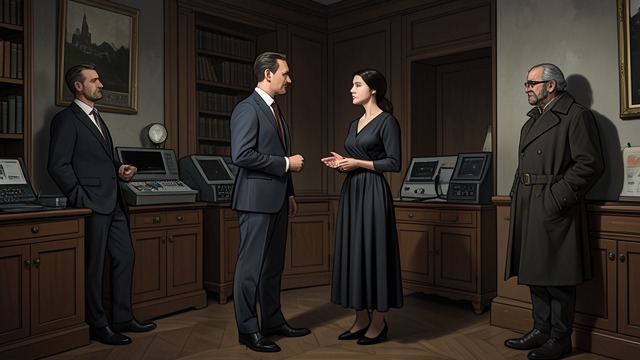
A Familiar Sporting Object
Equipment in plain sight
Nevile’s golf clubs and tennis rackets are stored among the household’s sporting equipment. The objects appear ordinary in a home where games are part of daily life.
A niblick from his collection later appears at the crime scene, making the clue seem natural rather than introduced.
Familiarity invites assumption
Because the club belongs to Nevile, police initially treat the fingerprints as a direct link to the attack. The object’s normal place in the house helps disguise its staged role.
A Fender Knob Removed
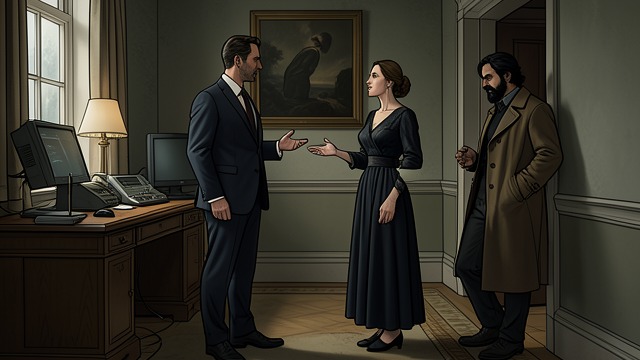
A Heavy Object Disguised
A piece of furniture altered
Nevile removes a steel knob from the old fender and prepares it as a concealed weapon. The damaged symmetry is subtle enough to escape notice until Battle studies the room closely.
He later cleans the visible surface but misses evidence on the screw, leaving a trace of blood.
Routine becomes concealment
The fender belongs to the bedroom’s ordinary furnishings. Its familiarity lets the weapon return to the room without looking like a newly introduced object.
A Racket Reconstructed
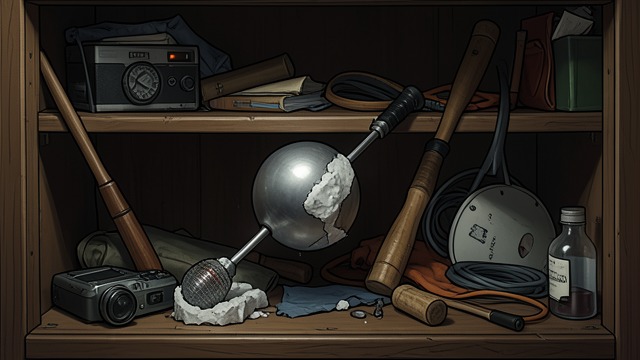
The Modified Racket
A hidden instrument
The racket head is sawn off and the steel ball attached to its handle with surgical plaster. Afterward, the pieces are separated and returned to the crowded cupboard among other equipment.
The materials create a second apparent weapon and leave traces that can be associated with Audrey.
An object tells a false story
The racket’s placement makes an accusation seem physical and precise. It is not the weapon that killed Lady Tressilian, but a prop in the case constructed against Audrey.
The Glove in the Ivy
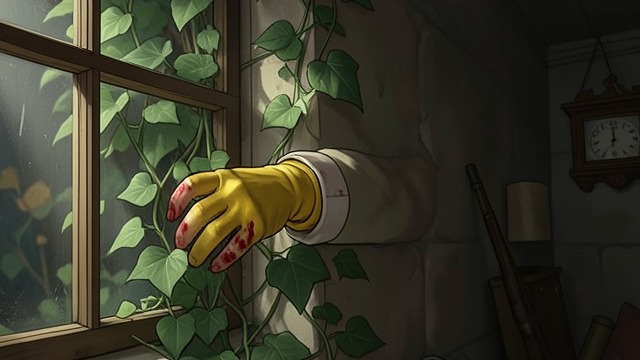
A Small Object Outside the Window
A clue planted in view
Battle finds a yellow glove pushed into the ivy outside Audrey’s window, with its fellow nearby. Blood stains the left glove, apparently matching the left-handed blow.
Audrey initially says it is not hers, then admits it might be after it fits her hand. Her uncertain response seems to strengthen the case.
A staged intimacy
The glove links Audrey to the crime through a personal possession. Its placement outside her own room creates a story of escape that the murderer wants the police to accept.
Objects Lose Their Authority
The Scene Reinterpreted
Props separated from proof
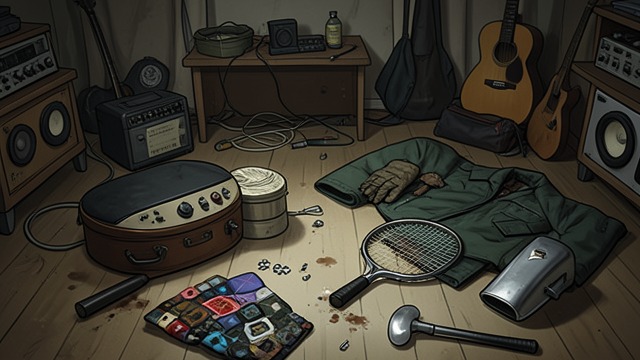
Battle explains how the club, racket, glove, coat, and fender parts were used to stage competing accusations. None can be read reliably without considering how it arrived in the scene.
The room’s familiar contents concealed both the actual weapon and the false story. Small residues on a screw and a hidden route mattered more than the dramatic objects left in plain sight.
Seeing beyond the object
The investigation succeeds by asking not only what an object appears to show, but who placed it and for what audience. Material evidence becomes meaningful through reconstruction, not display alone.
Before September 12, in Nevile’s room
Before the murder night, during Nevile’s preparation
After the murder, in the search of the cupboard
After the murder, before Battle presents the evidence
After Nevile confesses
