
The Two Kinds of Courage
Towards ZeroThe novel contrasts physical boldness with the quieter courage required to trust, testify, and act under uncertainty.
increasing Bearing strength in each event
 decreasing
Bearing strength in each eventdecreasingMacWhirter’s Earlier Courage

Honesty at a Cost
Refusing the lie
MacWhirter refuses to falsify the speed of a car for his employer. The decision costs him his job and contributes to his later despair.
His action is not rewarded immediately, and he does not experience it as heroic. It is simply a line he will not cross.
A principle under pressure
The refusal establishes his belief in truth before the case asks him to reconsider what honesty demands when another person’s life is at stake.
Thomas Speaks Plainly
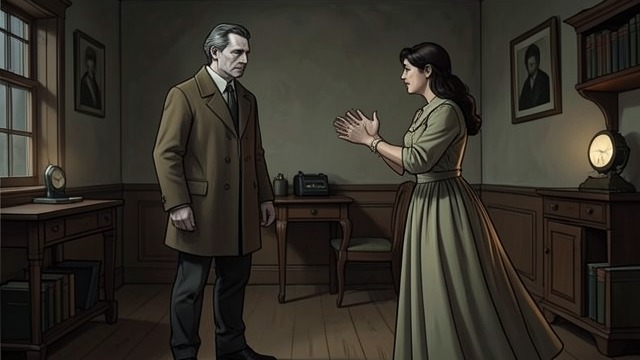
A Love Confessed
The quiet man takes a risk
Thomas tells Audrey that he has loved her for years and admits that Nevile’s success has made him jealous. The words are difficult for a man accustomed to silence.
Audrey does not give him the answer he hopes for. She says she is different now and cannot explain herself.
Courage without reward
Thomas’s honesty does not secure love or certainty. It nonetheless replaces years of hidden feeling with a truth Audrey can answer on her own terms.
Audrey Names Her Fear
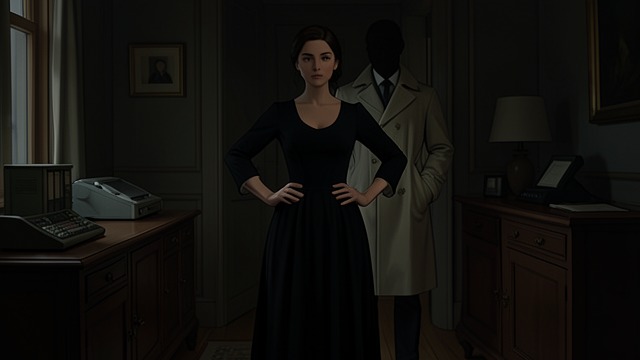
A Voice Recovered
Speaking to Battle
Audrey tells Battle that she feared Nevile after their marriage and thought she might be mad. She connects her long silence to the absence of any clear proof of what she sensed.
Battle’s attentive response lets her trust her perception again. Speaking is a step toward recovery rather than a simple recounting of events.
Courage as self-belief
Audrey begins to act from her own understanding of the danger. Her courage is quiet and arrives after the threat has been named.
MacWhirter Risks His Reputation
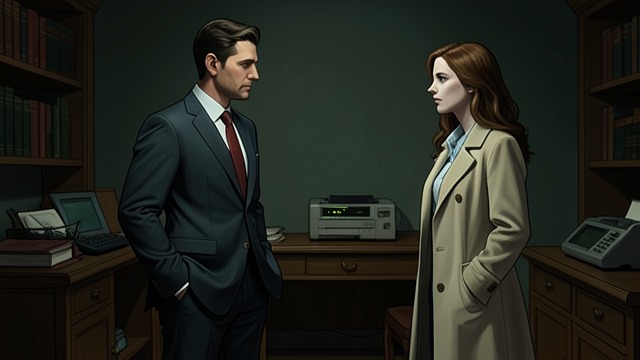
A Moral Choice
A lie to save a life
MacWhirter tells Battle he saw Nevile climbing a rope, although he reached the conclusion by deduction. He knows he may be required to repeat the story under oath.
This choice reverses his former refusal to bend the truth. He accepts the danger because Audrey faces an unjust accusation.
Courage judged by consequence
MacWhirter does not act to appear brave or to earn Audrey’s love. His risk is an attempt to keep the law from punishing the wrong person.
A Choice Without Obligation
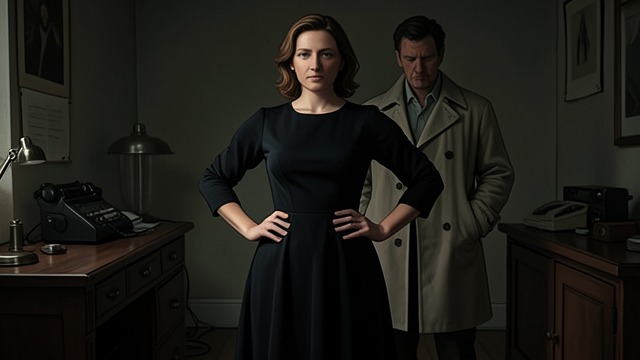
Audrey Chooses a Future
Love without repayment
Audrey asks to accompany MacWhirter, despite his insistence that she owes him nothing. Her choice is not a payment for his intervention but a decision about the life she wants.
MacWhirter accepts her only after confirming that she understands what she is saying. Their exchange makes mutual consent part of the new relationship.
Courage after danger
Audrey’s final act of courage is not resisting an arrest or confronting Nevile. It is choosing a future after years in which fear seemed to remove her power to choose.
Before the hospital, during the dispute with his employer
Early September, on the rocks near Easterhead Bay
After Nevile’s confession, on the terrace
September 13, before the launch experiment
After the investigation, in MacWhirter’s room
