
The Three Deaths That Define the Case
Towards ZeroThe linked fates of Lady Tressilian, Mr. Treves, and the threatened Audrey reveal how the murderer’s design expands beyond a single killing.
increasing Bearing strength in each event
 decreasing
Bearing strength in each eventdecreasingTreves as a Potential Witness
A Listener May Recognize
A story with personal risk
Treves tells the guests of a child who may have murdered deliberately and says he could recognize the adult. His words suggest that he may have seen a trait in someone present.
The story does not identify that person, leaving the threat indirect and easy to ignore.
The planner responds
Treves’s death after returning to the hotel suggests that the hidden murderer regards recognition as dangerous. The murder plot now includes silencing an observer as well as attacking the household.
The Stairway Death
A Vulnerability Exploited
A fatal exertion
A false lift notice sends Treves up the hotel stairs despite his weak heart. He collapses in his room and is found dead the next day.
The medical explanation initially looks credible because his heart is known to be poor. The hotel staff’s insistence that the lift was working later changes the interpretation.
A murder hidden as misfortune
The method is indirect and depends on exploiting Treves’s physical weakness. His death is part of the larger effort to keep an insightful witness from identifying the planner.
Lady Tressilian as the Instrument
The Central Killing
The hostess is attacked
Nevile kills Lady Tressilian in her bedroom and stages the scene with misleading evidence. Her death appears to be a crime about money, domestic anger, or burglary.
In fact, she is not the main object of the murderer’s hatred. Her murder is chosen because it can be used to frame Audrey.
A larger purpose
The killing turns the house into an investigation and supplies the apparent evidence needed for the planned accusation. Lady Tressilian’s vulnerability makes the plot possible.
Audrey as the Intended Victim
A Death by Law Intended
The second fatal outcome
Nevile’s plan is designed to have Audrey convicted and hanged. He intends to use the justice system to complete a death that he cannot present as an open murder.
Her arrest makes him believe that the plan has succeeded, while her relief at leaving the house is mistaken for guilt.
Violence through accusation
The threatened execution shows that murder can be pursued through fabricated evidence and institutional force. The case is not only about who struck Lady Tressilian but who intended Audrey’s death.
The Planned Victims Become Evidence
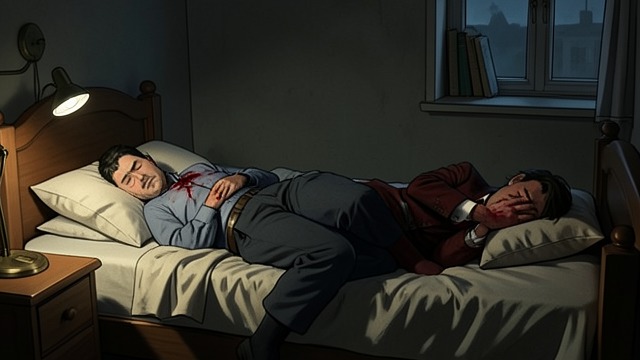
Three Outcomes Reconsidered
Treves and Lady Tressilian
Treves’s death removes a possible recognizer; Lady Tressilian’s death creates the case against Audrey. Both killings serve Nevile’s design in different ways.
Audrey survives because the planned legal death is interrupted by MacWhirter and Battle. The intended final victim becomes the person who can explain the emotional history.
A design exposed
The three linked outcomes reveal how far Nevile’s plan reaches beyond the initial crime scene. The confession ends the sequence before its final and most terrifying consequence.
September 11, after dinner
September 11, late night
September 12, late night
September 13, when Battle serves the warrant
After Nevile’s confession
