
Aging Body
Train DreamsThis flow follows the physical decline that ends Grainier’s career and reshapes his understanding of independence.
increasing Bearing strength in each event
 decreasing
Bearing strength in each eventdecreasingFirst Stiffness
First Stiffness
Work Fatigue
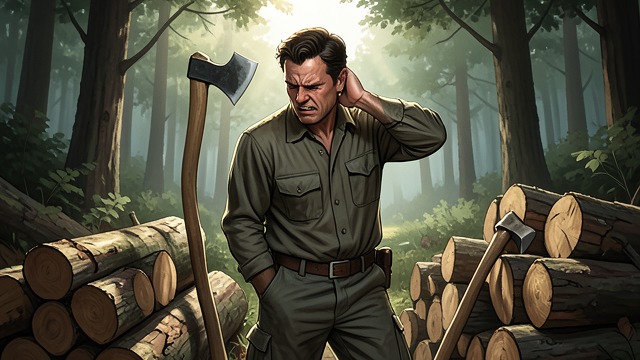
Grainier notices aching knees, cracking elbows, and a shoulder that catches during logging. The seasonal winter rest no longer repairs him.
His body remains useful in the afternoon, but mornings expose the accumulating cost of labor. Endurance becomes a declining resource.
Changing Calculation
He stops going to Washington for the summer and seeks work closer to home. The decision is a practical adaptation to age.
Jaw and Shoulder
Jaw and Shoulder
Repeated Injury
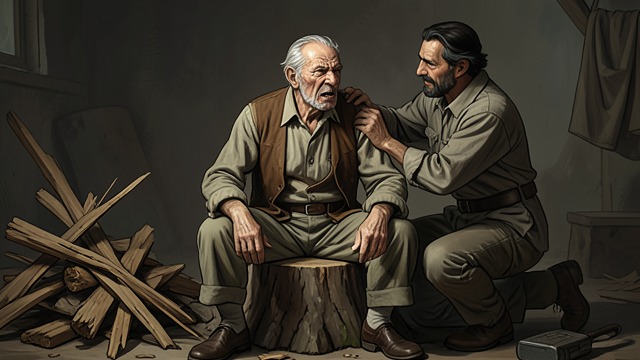
A wild limb knocks Grainier’s jaw crooked, while his shoulder later locks until another person pulls it free. His body becomes dependent on assistance he once avoided.
He describes the required pulling in elaborate terms because language is the only way to manage the pain. Physical independence has become a memory.
Work Reassigned
He is removed from dangerous tasks and assigned to dismantle old shacks. His final labor is salvage, not production.
Quiet Retirement
Quiet Retirement
Wagon Work
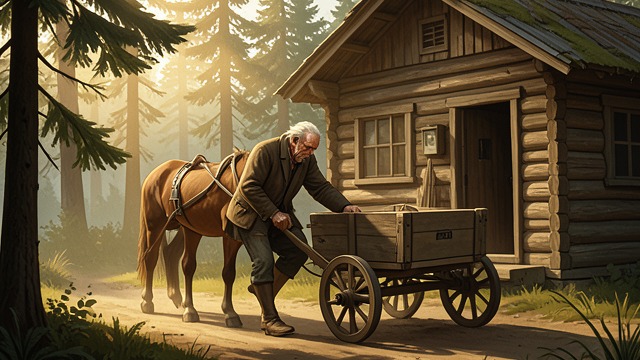
Grainier maintains his horses and wagon, choosing tasks compatible with his damaged joints. He remains active without pretending to be young.
His life narrows, but it does not become empty. Small chores, seasonal movement, and the cabin preserve a workable independence.
Final Frailty
By old age, arthritis and rheumatism make winter cabin life dangerous. He continues returning because identity matters more to him than comfort.
around 1925
the final logging summer
the 1930s-1960s
