
The Influenza Camp
Train DreamsThis flow traces the logging camp epidemic from isolated symptoms to shutdown and dispersal.
increasing Bearing strength in each event
 decreasing
Bearing strength in each eventdecreasingFirst Symptoms

First Symptoms
Harold’s Collapse
Harold, the captain’s twelve-year-old son, becomes dizzy while oiling the skid road. Grainier pulls him away from the horses before he is trampled.
The illness appears first as an individual emergency, but its proximity to Peeples’s death makes the camp suspicious of a larger pattern.
Parental Alarm
The captain abandons normal authority to watch his son. Industrial discipline weakens when the threat enters the family circle.
Billy’s Fever
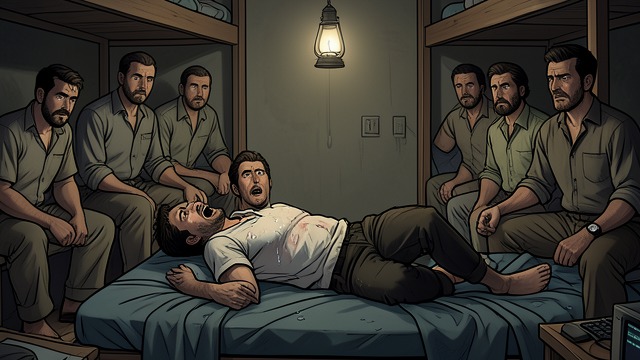
Billy’s Fever
Voice Unleashed
Billy, ordinarily nearly silent, raves through the night after developing chills. His illness releases speech that unsettles even men accustomed to violence and death.
The camp hears his repeated questions as if the sick man has lost the boundary between self and spirit. Silence, once a sign of toughness, becomes impossible to maintain.
Invisible Contagion
Harold improves, but Billy’s fever lingers and more workers fall ill. The danger is no longer located in one body; it has become a condition of the whole camp.
Camp Shutdown
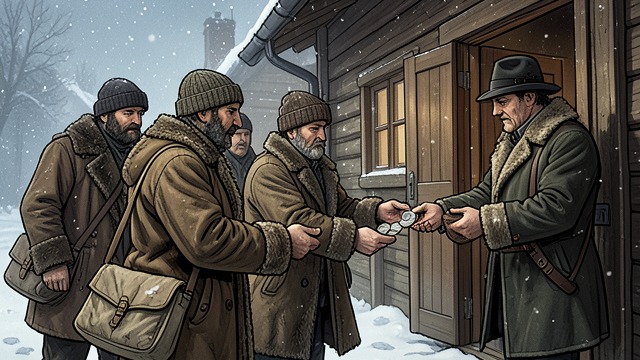
Camp Shutdown
Economic Interruption
The captain closes the operation after several workers develop chills. Grainier still has wages due, but money cannot make the camp safe.
The men are ordered to leave, carrying the epidemic outward or escaping it before it grows. Company schedules yield temporarily to biological uncertainty.
Historical Fear
The captain remembers losing thirteen siblings in an earlier influenza epidemic. His private history makes the shutdown an act of terror as much as management.
two days after Arn Peeples's death
the same week as Harold’s collapse
late summer 1920
