Animal personality
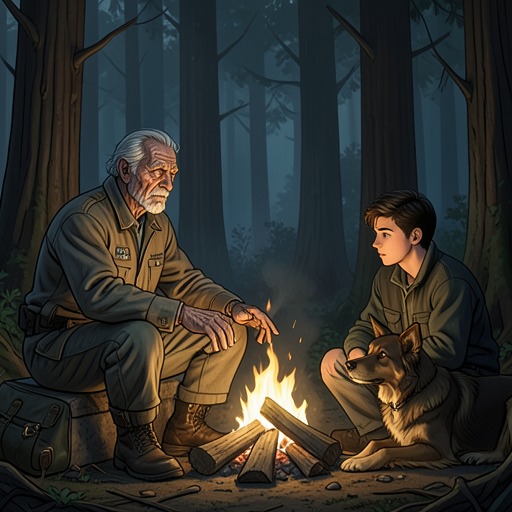
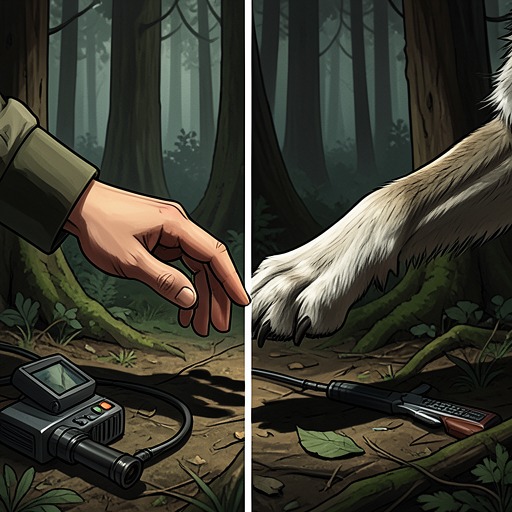
Train DreamsAnimal-person is a Kootenai concept in which animals are addressed as forms of personhood rather than treated as merely lesser creatures. The idea gives names such as Coyote-person and Bear-person to beings occupying a deliberately unstable space between animal and human. It becomes one of the novel’s principal ways of imagining a world in which human identity is not the sole measure of intelligence, agency, or belonging.
Definition and Cultural Framework
The concept is explained during a conversation between Robert Grainier and Peterson about the wolf-girl. Peterson reports that the Kootenai people believe in Christ, angels, devils, and creatures God did not create, including half-wolves. He adds that they call animals persons, using expressions such as Coyote-person and Bear-person. The statement places animal-person within a mixed religious and folkloric vocabulary rather than presenting it as a systematic doctrine. Christian belief, Indigenous knowledge, local superstition, and observations of animal behavior coexist in the same interpretive field.
This framework also changes the meaning of the wolf-girl. Peterson cannot decide whether she is a person or merely a creature, and his uncertainty is intensified by the Kootenai language of animal personhood. The term does not resolve the question by placing her securely on either side of the human-animal divide. Instead, it preserves her as a troubling possibility: an existence whose status cannot be settled by ordinary categories of creation, species, or moral identity.
Animals as Agents
The wider narrative repeatedly gives animals actions that resist their use as passive scenery. After the Moyea Valley fire, wolves answer Grainier’s voice from distant peaks, and their calls pass from pack to pack until the valley seems to sing. Bears travel the road in greater numbers than people, while butterflies rise from bear sign and the returning animals mark the burned landscape’s transformation. Later, the wolves become less audible, the coyotes more numerous, rabbits scarcer, and trout disappear from long stretches of the Moyea River. Animal presence therefore records ecological change independently of human intention.
Domestic animals likewise exceed simple ownership. Grainier’s wandering red dog returns to his camp, stays with him, and produces four pups that appear wolfish. Three leave soon after weaning, while one male remains near its mother but does not answer the distant wolf packs. Grainier tries to teach it to howl, yet the attempt reveals more about the limits of human authority than about successful domestication. His own howling continues because it releases something heavy from his heart, making the boundary between human mourning and animal communication porous.
The belief in animal-person also resonates with stories of extraordinary canine intelligence circulating through the Panhandle and along the Kootenai River. One dog alerts a saloon to its injured master after a dynamite accident, forcing a patron to follow it home. Another dog shoots its owner, according to Peterson’s account, after disappearing into the woods for thirteen days and possibly encountering the wolf-girl. Whether or not Peterson’s explanation is reliable, the story treats the dog as a knowing actor rather than an instrument. Its behavior becomes legible as intention, alliance, and perhaps communication across species.
Folklore and the Wolf-Girl
Kootenai Bob’s account of wolf breeding supplies another foundation for the animal-person idea. He says that only the chief wolf mates within a den and that only one she-wolf bears litters. When Grainier asks whether the red dog might have encountered the king wolf while in heat, Bob allows that it might have produced a dog-of-wolf and that Grainier might have begun his own pack. The explanation turns an apparently ordinary litter into a possible crossing of social and biological orders.
The wolf-girl is surrounded by similar reports. Peterson says that people have seen her and that one account described a bloody mass hanging between her legs, which some interpreted as afterbirth or part of a wolf child torn from her womb. The report is uncertain and hearsay-driven, but it shows how the Kootenai vocabulary gives the community a way to imagine reproduction, kinship, and monstrosity beyond accepted human forms. The wolf-girl is not simply an animal made symbolic; she is the point at which competing accounts of personhood, religion, sexuality, and species meet.
Human-Animal Companionship
For Grainier, the concept is lived through companionship as much as through speculation. In the sterile burn after the fire, he hears wolves across the peaks while grieving Gladys Grainier and Kate Grainier. He later survives on morel mushrooms and trout, keeps a nanny goat, raises hens and a rooster, and shares his camp with the red dog. The animals help convert devastated land into a place of habitation, though none is fully obedient: the dog wanders for days, the wolfish pup disappears, and the surrounding packs remain beyond his command.
Years later, when the red dog is absent and the trains carrying Kootenai traffic pass after Kootenai Bob’s death, wolves and coyotes howl through the night in a vast, seemingly collective disturbance. The chorus becomes so intense that Grainier hears it as a pronouncement from every creature around the Moyea River. The scene makes animal life appear communal and historically responsive, even though the narrative cannot translate the voices into a human message. Animal-person thus names not only a cultural belief but also the limit of human interpretation.
Narrative Significance
Animal-person destabilizes the assumption that humanity is the novel’s unquestioned center. The concept helps explain why dogs can rescue, betray, understand, or ally themselves with beings humans fear; why wolves can appear as a social order with its own rules; and why ecological transformation can be narrated through the movement and disappearance of species. At the same time, the novel does not verify every legend. The dog’s shooting of Peterson remains an account told by a frightened man, and the wolf-girl’s history remains uncertain. That uncertainty is essential: animal-person functions less as a settled answer than as a permission to take nonhuman agency seriously.
The concept also links private grief to a more-than-human world. Grainier’s human losses are not healed by reducing animals to metaphors, but his survival becomes possible through relations with dogs, goats, hens, fish, wolves, and the recovering burn. When he later buys a large northern sled dog that remains his friend for many years, companionship again crosses the boundary that the surrounding folklore continually tests. Animal-person therefore gives the novel a durable vocabulary for mixed belonging: humans and animals remain distinct, yet neither exists as an isolated or fully self-sufficient kind of being.