Bachelorhood
Train DreamsBachelorhood is a central condition in Robert Grainier’s life, not simply the absence of marriage. Before meeting Gladys, it names his social isolation and lack of direction; after her death, it becomes a form of survival; in old age, it describes an established life whose loneliness is balanced by work, property, animals, and the memory of the family he lost.
Early Bachelorhood and Social Inexperience
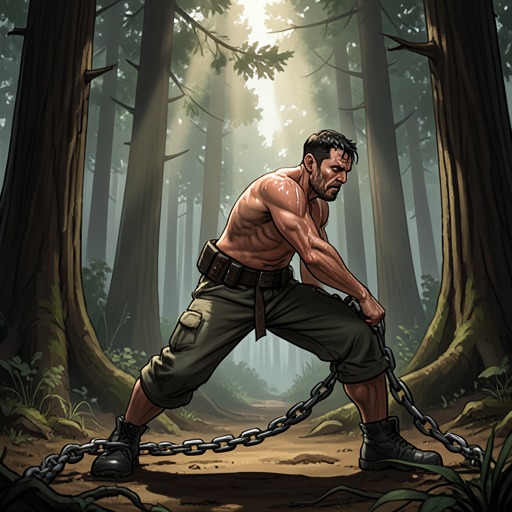
Robert Grainier spent thirty-two years as a bachelor before finding a wife. During his twenties he worked around town as a member of the labor pool, chopping firewood, loading trucks, and joining temporary gangs for railroad and other jobs. At thirty-one he still had little that distinguished him in the eyes of the community, and his life was defined by steady labor rather than romance, ambition, or domestic attachment.
His bachelorhood was partly deliberate avoidance. He stayed away from girls, and his introduction to Gladys came only because a cousin took him to a Methodist church service. There he noticed her singing, then encountered her during the lemonade-and-pastry gathering afterward. Gladys approached him with an ease that was unfamiliar to him, while her rough hands and experience of outdoor work made her seem older than her years. Their relationship gradually drew him out of bachelor isolation through repeated meetings at Sunday services and Wednesday prayer gatherings.
Marriage as the Turning Point
Meeting Gladys changed the practical scale of Grainier’s life. He showed her the acre he had acquired above the Moyea River and described his plans for a cabin and garden. The property became possible as a home partly because the relationship gave him a reason to assume responsibilities he had previously avoided or never imagined: clearing land, building a cabin, and eventually maintaining a household.
The marriage did not erase the underlying pattern of solitude so much as interrupt it. Grainier had already learned to live with few possessions and little public recognition, and his later life retained that plainness. Yet Gladys and their daughter Kate gave the acre a domestic purpose. In retrospect, Grainier understood that he had taken on the land and home because Gladys had remained in his heart and thoughts, making a team, wagon, and household responsibilities feel manageable.
The Return to Solitude
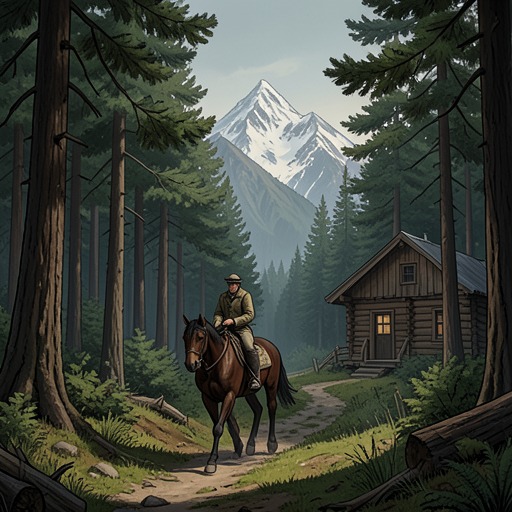
After the 1920 Moyea Valley fire destroyed his home and killed Gladys, Grainier returned to a solitary existence. He lived in a cabin through the winters, in a valley where silence was interrupted by trains, wolves, coyotes, and his own howling, which he adopted as a kind of sport. His wife’s spirit never appeared to him again, although he dreamed of Gladys and of the flames that had taken her; the night trains sometimes surrounded his waking from those dreams with their thunder.
This later bachelorhood was therefore not the same as the first. The young Grainier had been inexperienced and socially withdrawn, whereas the widower’s solitude carried grief, memory, and the knowledge of an extinguished household. He was glad he had not married again, although a Kootenai widow might have been willing and another wife would not have been easy to find. His refusal was not presented as a romantic withdrawal from all human connection; it was a decision to preserve the singular place Gladys occupied in his life.
Work, Property, and Self-Sufficiency
Grainier’s solitary life was supported by a modest but durable economic structure. He had a hauling business, owned an acre of property, and kept two elderly logging horses and a wagon. The horses, boarded in town during winter, were described as being in roughly the same condition and situation as their owner, yet they remained intelligent with the wagon and strong enough for the work. Bachelorhood thus became a material arrangement rather than mere abandonment: Grainier possessed a home, an occupation, animals, and a routine that allowed him to remain independent.
His relation to work also connected the bachelor’s life to his earlier identity as a laborer. He had relished the exhausting timber work of his youth, but after a final summer in the Washington woods he was glad to leave it behind. That summer a wild limb knocked his jaw crooked, and the injury remained painful; his joints deteriorated, and his shoulder could lock until another person freed it by pulling on his arm. The physical costs of labor made his later hauling business both an achievement and a reminder of bodily decline.
Lifelong Independence and Ending
Grainier lived for more than eighty years, into the 1960s, without marrying again or leaving heirs. His life remained unusually narrow in certain measurable ways: Gladys was his only lover, his property consisted of one acre, two horses, and a wagon, and he never became drunk, bought a firearm, or spoke into a telephone. He traveled widely enough to reach within a few dozen miles of the Pacific and as far east as Libby, Montana, rode trains and automobiles, flew once in an aircraft, and watched television during the final decade of his life when he was in town.
His ending gives bachelorhood its starkest form. Although almost everyone in the region knew Robert Grainier, he died alone in his cabin in November 1968 and was not missed through the fall or winter. Hikers found his body in spring, and they returned with a doctor, who certified the death; the three men then dug a grave in the yard with a shovel found beside the cabin. The bachelor’s independence culminated in an anonymity that was both consistent with his life and quietly devastating: he had built a durable existence outside ordinary domestic structures, but no household remained to register his absence.