Bonners Ferry
Train DreamsBonners Ferry is the central town in Robert Grainier’s geography of survival: a place where he first acquires the elementary skills needed to move through the world, returns after the Moyea Valley fire has destroyed his home, endures winter through hired labor, and later passes through on the way to new forms of work and travel. It is neither merely a hometown nor a stable sanctuary. Its significance lies in its repeated function as a social and logistical hinge between the valley, the railway, the forests, and the wider modern world.
Formation and Early Life
Bonners Ferry emerged in 1899 when the towns of Fry and Eatonville were combined under that name. Grainier received his reading and arithmetic at the Bonners Ferry schoolhouse. He was never a scholar, but he learned to decipher writing and numbers well enough to get along in life, a modest education that became part of his practical independence rather than an avenue into professional advancement.
His connection with the town was also shaped by family loss. In his early teens, after the deaths of his aunt and uncle Helen and Robert Grainier, he lived with his eldest cousin Suzanne and her family. Once he left school, and with no parents to discipline him, he became a layabout for a time. The town therefore appears in his background as both a place of limited institutional formation and a setting in which an unanchored young man could drift toward the itinerant labor that would define his adulthood.
Railroad Town and Regional Connector
Bonners Ferry is tied to the infrastructure that organizes the surrounding country. The town is linked by rail to Spokane, Coeur d'Alene, Creston, British Columbia, and the timber country beyond, while roads along the Moyea River connect it to farms, camps, and isolated homesites. Grainier’s work on the Eleven-Mile Cutoff Bridge and later on the Robinson Gorge Bridge belongs to the same world of railway expansion that makes Bonners Ferry a point of departure and return. The Eleven-Mile Cutoff Bridge eliminated a long curve around the gorge and an adjacent pass, saving the Spokane International Railway the cost of maintaining eleven miles of rails and ties. Bonners Ferry consequently stands within a landscape where engineering reduces distance even as laborers remain exposed to remote forests, unstable bridges, disease, and fire.
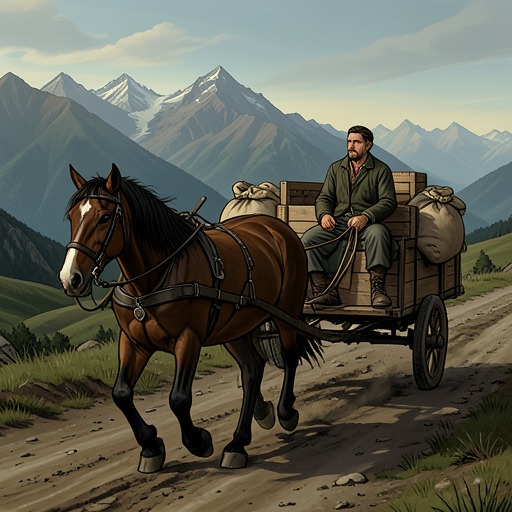
The town also serves as a transfer point between different kinds of transport. After the Robinson Gorge work, Grainier traveled by passenger car as far as Coeur d'Alene and then continued by wagon toward the Panhandle. In another journey, he rode the Great Northern to Spokane. Later, he rendezvoused with Eddie Sauer in Troy, Montana, for a road trip involving Grainier’s wagon and Eddie Sauer’s modified Ford Model T. These movements reveal Bonners Ferry not as an enclosed rural community but as a working junction where railways, wagons, logging teams, and automobiles overlap.
Refuge After the Moyea Valley Fire
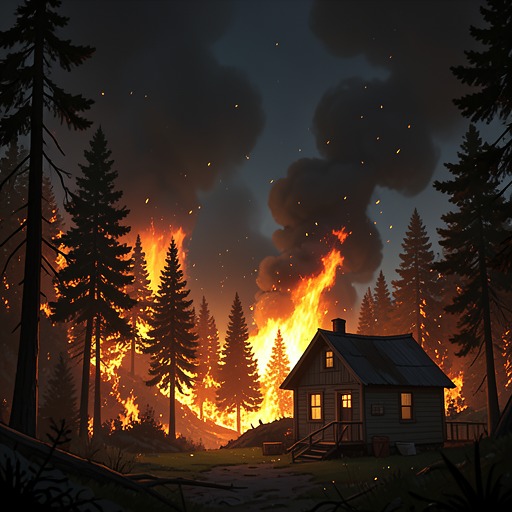
Bonners Ferry becomes most important when the 1920 Moyea Valley fire destroys Grainier’s settled life. Returning from the Robinson Gorge job with four hundred dollars in his pocket, Grainier traveled through thickening smoke and found Bonners Ferry crowded with residents from along the Moyea River who had lost their homes. The town temporarily held the displaced population, while the railroad stood still until the fire subsided and sufficient rain had soaked the Panhandle.
At the fairgrounds, roughly one hundred refugees camped among the waterlogged remnants of their possessions: dolls, mirrors, bridles, and other isolated objects rescued from the conflagration. Grainier searched the crowd for Gladys Grainier and Kate Grainier, questioning everyone and receiving no news. Bonners Ferry thus offers shelter without certainty. It gathers survivors physically, but it cannot restore the missing or resolve whether those who have not arrived are dead or merely elsewhere.
Grainier then walked twenty miles from Bonners Ferry along the Moyea River Road toward his homesite, covering his nose and mouth with a handkerchief that he repeatedly wetted in the river. He passed through Meadow Creek and a forest of charred trees before reaching the burned valley. Ten days later, after the Spokane International Railway resumed service, he rode to Creston, British Columbia, and back through the valley, only to learn in Creston that no escapees from the Moyea Valley fire had appeared there. Bonners Ferry remains the place to which he returns after this failed search: he stayed at his cousin’s home for several weeks, sickened by grief and confused by the possibility that his wife and daughter might somehow have survived.
Winter Economy and Temporary Home
The town becomes a practical refuge rather than an emotional one. In September, Grainier attempted to return to his ruined acre and wait for his family, but the ash-filled landscape forced him back to town. Later, after the first new growth appeared in the burned valley, he spent part of the year at a rebuilt homesite and part of the winter boarding in Bonners Ferry. His seasonal rhythm eventually settled into summers in Washington, spring and fall at his cabin, and winters in town.
Bonners Ferry also supports him through labor. During an exceptionally cold winter, he worked for Williams at twenty cents an hour, helping supply the Great Northern Railway with firewood. Seven other men worked alongside him. The Kootenai River froze hard enough for two hundred cattle to be driven across its ice, the herd disappearing into a snow fog that eventually hid the riverbank, the sun, and the sky. The episode joins the town’s economic function to the severity of its environment: survival depends on repetitive work, transport, and stored fuel while winter transforms the river itself into a road.
When Grainier returned to the Moyea Valley late that March with a wagonload of supplies, Bonners Ferry again served as the logistical base. He raised a canvas lean-to, cut five dozen burned spruce for house logs, and then returned the rented horse to stables in Bonners Ferry before taking the train back to Meadow Creek. The town makes reconstruction possible without becoming the site of reconstruction itself.
Later Passage and Significance
Bonners Ferry remains a recurring point in Grainier’s later life, even as his body and circumstances change. After his joints deteriorated and he abandoned woods work, he returned to town before riding the Great Northern to Spokane, where an airplane ride at the county fair opened another encounter with modern technology. His life repeatedly moves outward through transportation networks and inward toward Bonners Ferry when work ends, money must be stretched, or the forest becomes unmanageable.
The town’s importance is therefore cumulative. It contains Grainier’s childhood schooling, his family connection, his winter employment, his post-disaster refuge, and the practical transactions that sustain his solitary existence. Yet it never fully replaces what the Moyea Valley fire took from him. Bonners Ferry can provide lodging, wages, railway access, and supplies; it cannot provide Gladys Grainier and Kate Grainier, nor erase the burned valley that remains the defining absence behind his returns. As a location, it embodies the limited promise of frontier infrastructure: networks can move a person, shelter survivors, and organize labor, but they cannot guarantee safety, permanence, or the recovery of a lost home.