Forester Camp Captain's Father-Son Relationship with Harold
Train DreamsThe logging-camp captain and Harold’s father-son relationship gives the forest camp one of its clearest human structures: a stern workplace hierarchy is also a fragile household. The captain commands men and machinery, while Harold, only twelve, already performs dangerous industrial labor; when fever brings the boy down among the horses, the captain’s authority gives way to anxious care. Their relationship reveals how the camp’s economic demands press family intimacy into the same hazardous system as the workers’ lives.
Family Inside the Logging Camp
The captain is the middle-aged leader of the logging outfit, a strong and fair employer who traffics little with anyone except his son Harold. The camp is organized around demanding work: more than thirty-five men, sometimes over forty, fell and buck giant spruce, move timber with six-horse teams, and send the logs toward the railway. At the landing, a huge wood-burning steam donkey pays out and winds in cable while the men and horses coordinate the extraction of each log. Harold belongs to this working world not merely as the captain’s child but as its youngest laborer.
Harold’s assigned task is to move ahead of the horse teams with a bucket of dogfish oil, spreading it over the skids with a burlap swab so the massive logs will slide. The work is described as the camp’s real grease-monkey duty, while the older Billy tends the donkey’s engine and cables. This division places Harold directly before the animals and loads whose movement can become fatal in an instant. His position demonstrates both the practical economy of the camp and the captain’s difficult decision to have his son participate in it.
Illness and Immediate Danger
The relationship becomes most visible after Arn Peeples dies and is buried. Two days later, on a Wednesday morning, Harold suffers a dizzy spell and collapses onto his work. The horses shy from the fallen boy and nearly overturn the load as they try not to trample him. The danger is not abstract: the same system that turns timber into railway freight can mutilate a child before anyone has time to stop it.
Robert Grainier happens to be standing aside, waiting to cross the skid road, and saves Harold by hauling him out of the way by the leg of his pants. The rescue makes the father-son bond part of a wider chain of dependence in the camp. Harold survives because a fellow worker notices the moment and acts, while the captain’s role begins after the immediate physical danger has passed. Grainier’s intervention protects the captain’s son, but it also exposes how little separation exists between family life and occupational risk.
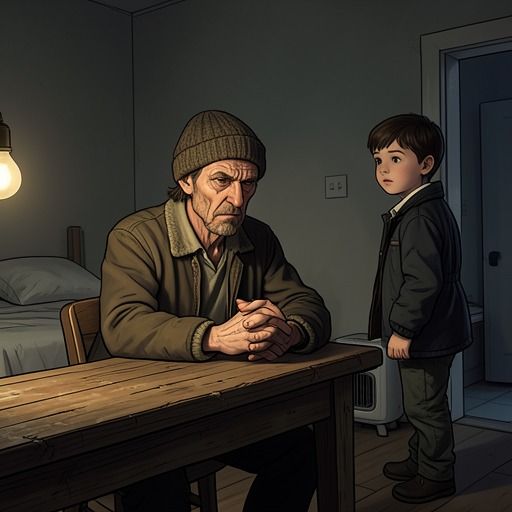
Harold is feverish and delirious, and the captain watches over him through the afternoon, bathing his forehead with spring water. The gesture is intimate and plainly parental, contrasting with the captain’s usual management of men, machinery, schedules, and pay. He cannot command the fever away; he can only remain beside the boy and tend to his body. Harold’s recovery therefore comes as a reprieve rather than a triumph of authority: his fever breaks, while illness continues to threaten the camp.
The Captain’s Fear and the Camp Crisis
Harold’s sickness occurs within a widening outbreak. After his fever begins, old Billy takes a chill and raves through the night, and several additional men fall ill. The captain moves through the camp examining the workers by poking their joints, lifting their eyelids, and prying apart their jaws, behaving like a man haunted by what he expects to find. His concern for Harold is thus joined to a broader fear that the entire operation is becoming medically unsafe.
By Friday night the captain announces that the summer operation is finished, and by Sunday the last logs have been brought down the mountain. Six more men have developed chills. On Monday morning he gives every worker a four-dollar bonus and orders them to leave the place. Billy has survived his illness by then, but the captain remains afraid of an influenza epidemic like the one in 1897, when he had been orphaned after all thirteen of his siblings died in a single week. That concealed history explains the unusual intensity of his response to Harold’s fever: the boy is not only his child but the remaining center of a family life already marked by catastrophic loss.
The captain’s reserve makes this disclosure especially significant. He has never told the men that he grew up without a family, and he normally keeps company chiefly with Harold. His apparent isolation is therefore not indifference. It is a guarded form of attachment, made visible when the child collapses and the possibility of another family death enters the camp. The captain’s fairness toward the workers and his vigilance toward Harold emerge from the same burden of responsibility, though the latter carries the more personal terror.
Meaning of the Bond
The father-son relationship is shaped by the contradiction between protection and exposure. The captain employs Harold in dangerous work, yet he also watches over him when the work injures or endangers him. The boy’s labor helps sustain the camp’s production, but his illness forces the captain to stop that production altogether. Economic necessity initially brings Harold into the machinery of logging; parental fear finally helps close the operation and send the men away.
The relationship also complicates the camp’s masculine code. The men spend their days “fighting” the forest, while accidents, exhaustion, fever, and death continually remind them that neither skill nor command can guarantee control. The captain can organize the gang, calculate each man’s payoff, and distribute a bonus, but his most consequential action is the helplessly concrete care of a sick child: bathing Harold’s forehead with spring water. In that movement, command becomes guardianship, and the logging camp becomes briefly legible as a family threatened by the same forces that threaten its workers.
Harold’s survival does not erase the danger surrounding the bond. The captain’s fear of epidemic, rooted in the mass death of his childhood family, remains the emotional endpoint of the episode. The relationship is therefore presented not as sentimental stability but as a precarious attachment under industrial and historical pressure: a father keeps his son close, brings him into the work that supports them, and then confronts the possibility that the camp’s hazards may take him away.