Grainier's biplane flight
Train DreamsGrainier's biplane flight in 1927 is the most concentrated encounter between Robert Grainier and modernity in his long life. After years of railroad, woods, wagon, and freight work, he pays four dollars at a Spokane county fair for a ride in an experimental-looking airplane. The flight terrifies him, disorients his body, and opens a visionary passage through grief and memory before returning him abruptly to the ground. It becomes not a triumph over technology but an accidental revelation: the machine carries him briefly above the world while bringing him closer to the lives and origins he cannot recover.
Circumstances and Decision
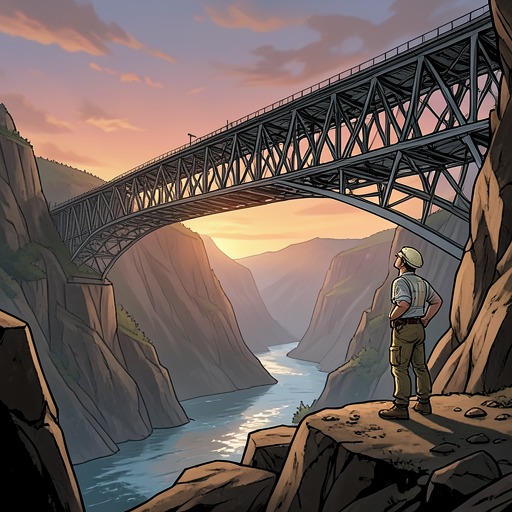
Robert Grainier reaches the flight after deciding that his life as a woodsman is over. His body has become unreliable: a wild limb has knocked his jaw crooked, his joints have deteriorated, his right shoulder can lock until someone pulls it free, and his knee increasingly wobbles beneath him. He therefore leaves the Washington woods, rides the Great Northern Railway to Spokane with nearly five hundred dollars, and stays at the Riverside Hotel while visiting the county fair.
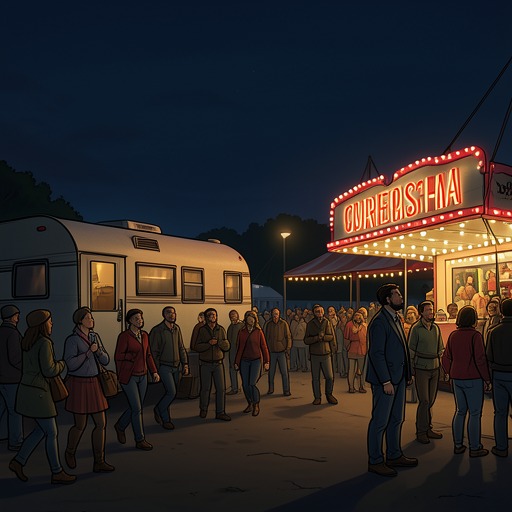
The fair offers a sharp contrast to the work he has known. In the middle of a field, two men from Alberta have parked an airplane and are selling rides for four dollars a passenger, a substantial price that discourages most visitors. Grainier's first decision at the fairgrounds is to buy a ticket. The choice is characteristic of him: a man with little appetite for display or luxury nevertheless feels compelled to test an unfamiliar wonder directly, even when the price is high and the device looks fragile.
The Ride and Its Physical Terror
The young pilot, no more than about twenty, wears a brown oversuit with metal buttons and gives Grainier goggles before helping him aboard. Grainier sits on a bench behind the pilot, only six feet above the ground, yet that height already seems excessive. The two wings appear to be made of the frailest material, and their refusal to flap makes flight difficult for him to understand. The pilot's grim father turns the propeller by hand to set it spinning, making the aircraft seem less like a secure instrument than a contraption assembled at the edge of possibility.
Once airborne, Grainier experiences amazement before he can organize it into understanding. He rises high above the fairgrounds while his stomach seems to remain below. The earth turns sideways; the distinctions between up and down disappear. The plane climbs slowly and noisily, like a wagon winding around a mountain, and Grainier begins to adjust to the height until the pilot looks back at him in cap and goggles and shouts.
The next movement converts wonder into panic. The aircraft plunges like a hawk, its engine nearly silent as Grainier's organs press against his spine. He does not experience the descent as an exhilarating spectacle but as an assault on the body, a moment when the new technology strips away ordinary orientation. The pilot later explains that he had been warning him, “This is a nosedive!” Grainier's response—“What was all that durn hollering about?”—turns terror into blunt comic incomprehension. After the plane circles the fairgrounds and lands so abruptly that his throat nearly seems to jump out of his mouth, Grainier rolls over the fuselage and steadies himself against an unsteady wing. He thanks the pilot, shakes his hand, and leaves.
Vision, Memory, and Hidden Origins
The nosedive produces the flight's deepest change. During the descent Grainier sees the remembered scene of Gladys Grainier and their child drinking Hood's Sarsaparilla in their cabin on a summer evening. The vision then moves beyond his known family history to another cabin he has never remembered before, places belonging to his hidden childhood, a vast golden wheat field, heat shimmering over a road, arms encircling him, and a woman's crooning voice. For an instant, the mysteries of his life appear answered.
The revelation is powerful precisely because it cannot become a recovered biography. Grainier began life without reliable knowledge of where he came from or who his parents were, and the flight does not provide names, documents, or a verifiable history. Instead, bodily danger unlocks images that feel more complete than his conscious memory. The aircraft's sudden plunge temporarily collapses the distance between his lost childhood and his lost household, placing both within one chain of sensation. The past arrives as fragments of shelter, landscape, touch, and voice rather than as an explanation.
When the engine roars and the plane levels off, the present world returns before him. The vision therefore has no lasting material consequence, but it changes the meaning of the ride. What began as a paid fairground attraction becomes a passage through family grief and orphaned identity. The aircraft lifts Grainier away from the ordinary world only to return him to it carrying an experience that cannot be proved and cannot be entirely dismissed.
Aftermath and Place in His Life
Grainier spends the afternoon sitting on the broad porch of the Riverside Hotel before finding an excuse to head back toward the Panhandle. The return is tied to Eddie Sauer, his longtime friend from Bonners Ferry, who has lost his summer wages in disreputable surroundings and has decided to walk home in shame. Grainier's flight is thus followed not by a new career, public recognition, or sustained fascination with aviation, but by a return to friendship, embarrassment, and the familiar roads of working life.
The ride remains exceptional because it is never repeated. Grainier later rides trains regularly and automobiles many times, but he flies in an aircraft only once. He never sees the ocean, never purchases a firearm, never speaks into a telephone, and in his final decade watches television when he is in town; the biplane therefore occupies one position in a personal history of uneven technological contact. New machines enter his life without replacing the older forms of labor, travel, and solitude that define him.
Narrative and Thematic Significance
The flight is one of several astonishing episodes through which Grainier's life acquires the shape of an episodic modern legend. He has seen a wonder horse and a wolf-boy, and he will stand outside a train carrying Elvis Presley after missing the famous youth's brief wave. These encounters place him near spectacles of mass culture and technological change while keeping him at their edge: he pays to enter the airplane, arrives too late to see Presley, and remains an observer rather than a participant in fame.
Its imagery also links mechanical modernity to the animal world. The plane ascends like a wagon climbing a mountain and plunges like a hawk; the pilot's goggles make him resemble a raccoon. Grainier understands the machine through comparisons drawn from roads, weather, and animals, not through technical mastery. The flight consequently does not establish a clean opposition between the old rural world and the new technological one. It makes the unfamiliar legible through older bodily and environmental knowledge, while the machine in turn releases memories that ordinary ground-level life has kept inaccessible.
The biplane flight also anticipates the book's larger pattern of unstable boundaries between fact, memory, vision, and legend. Grainier's life extends beyond eighty years, but its most important truths do not always appear as reliable chronology. In the air, physical terror, bereavement, and childhood uncertainty converge; the result is a moment of ascent that becomes an inward descent. The aircraft returns safely, yet the experience leaves Grainier with no conquest, only a fleeting sense that the scattered mysteries of existence have briefly formed a pattern.