Kootenai Bob
Train DreamsKootenai Bob is a Kootenai man who works steadily at jobs in town, refuses liquor for most of his life, and maintains a long friendship with Robert Grainier. He is more than a minor acquaintance: through his conversations about wolves, dogs, and the wolf-girl, he becomes one of the novel’s principal mediators between settler experience and Kootenai understandings of animal and human nature. His death beneath successive trains turns that mediating presence into one of the book’s starkest images of bodily fragmentation and communal remembrance.
Identity and Place
Kootenai Bob lives and works around Meadow Creek and the surrounding Kootenai River region. Grainier has known him for many years, and their relationship is grounded in repeated encounters at ordinary places such as the Meadow Creek store. Bob is described as steady and as someone who has always refused liquor, while also working frequently in town in much the same way Grainier does. His social position is practical rather than official: he is a laboring man with local standing, familiar enough to settlers and connected enough to his own people to move between different communities.
That position gives Bob a distinctive authority in the narrative. He does not appear as an abstract representative of the Kootenai people, but as a person whose explanations and warnings are embedded in daily work, trade, and conversation. The surrounding world is already shaped by racial violence and displacement. Grainier’s earliest memory includes the forced removal of Chinese families from Fry, and decades later he nearly participates in killing a Chinese railroad laborer. Against this history, Bob’s presence shows another Indigenous perspective within the same railroad and frontier landscape, though the story also records how that perspective is filtered through settler curiosity, fear, and stereotype.
Knowledge of Wolves and Dog-of-wolf
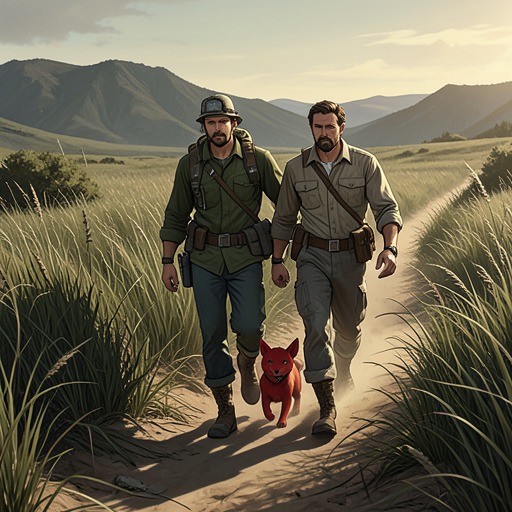
After the 1920 Moyea Valley fire, Grainier builds a second cabin in the burned country. A red dog appears there, takes up residence, and gives birth to four pups that look strikingly wolfish. Grainier discusses the matter with Bob at the Meadow Creek store. Bob explains the Kootenai wolf-pack breeding rule: only one pair in a wolf den produces pups, the chief male being the only he-wolf allowed to mate, and the chief’s chosen she-wolf being the only female in the pack to come into heat. On that account, Bob rejects the idea that a wandering dog simply produced a litter of wolves.
When Grainier proposes that the dog may have encountered a wolf pack at the precise moment she came into heat, Bob leaves the possibility open. His answer is cautious rather than dogmatic: perhaps she had produced a dog-of-wolf, and perhaps Grainier had begun his own pack. The suggestion alters the meaning of Grainier’s lonely homestead. The cabin is no longer merely a rebuilt shelter in a fire-scarred valley; it becomes a possible meeting point between domestic animals, wolves, and the human inhabitant who listens to them.
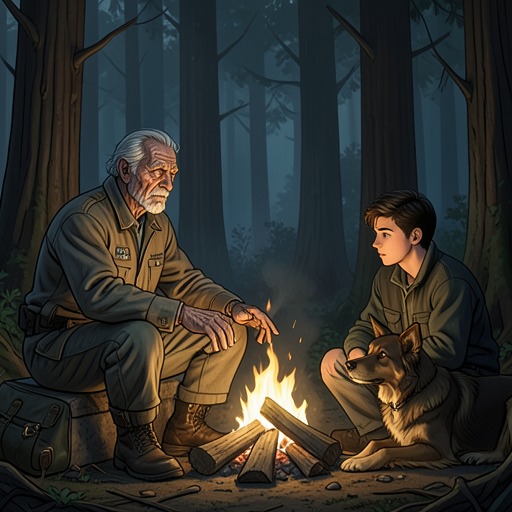
One malformed male pup remains with its mother, although it never answers the distant wolves that sing at dusk, including packs far away in the Selkirks on the British Columbia side. Grainier tries to teach it its supposed nature by howling beside it. The pup remains silent, but Grainier continues howling because the act relieves the heaviness in his heart and leaves him feeling warm and buoyant. Bob condenses this reversal into a proverb: “There’s not a wolf alive that can’t tame a man.” The line makes animal life a force capable of changing human conduct. Grainier does not tame the pup; instead, the wolves and the failed pup draw him into a ritual that gives shape to his grief.
The Wolf-girl Tradition
Bob also helps transmit the local stories surrounding the wolf-girl. According to the account later repeated by Peterson, Bob visits Peterson’s home periodically and tells him that the wolf-girl has been seen nearby. After Peterson’s dog disappears for thirteen days and returns almost wild, Bob studies the animal’s face and warns that it has been with wolves. He advises Peterson to shoot it before the dog calls the wolf-girl into the house and exposes Peterson to the wolves.
The warning is presented through Peterson’s frightened and prejudiced retelling, not as an objective statement of supernatural fact. Bob’s alleged words connect the wolf-girl with a blood-drunk creature who might run along the roads speaking in a victim’s own voice and reveal that person’s wrongdoing. The tale therefore joins animal transformation to moral exposure: the nonhuman world becomes a medium through which concealed human violence may return.
The same conversation links Bob’s ideas to a broader Kootenai vocabulary in which animals can be treated as people, including coyote-persons and bear-persons. The narrative does not reduce this material to a stable doctrine. It moves through rumor, fear, racialized commentary, and uncertain testimony, while showing that such stories give the community a language for beings who cross the boundary between human and animal. Bob’s role is consequently double. He is treated by white characters as a source of strange lore, yet his knowledge also challenges the assumption that human beings occupy an unquestioned position above other forms of life.
Death Under the Trains
In 1930, after the United States has entered Prohibition, Bob drinks for the first time in his life. Ranch hands from British Columbia persuade him to drink shandy, claiming that lemonade will cancel the effects of the beer. Bob believes them because Canadians are regarded as experts about liquor, but the lemonade disappears from the eight-quart canning pan, leaving him lapping beer from it like a thirsty dog. He drinks throughout the afternoon, repeatedly urinates on himself, and loses the power of speech.
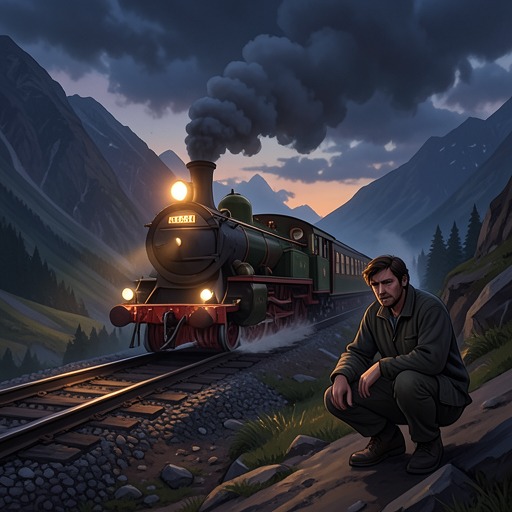
After dark, Bob wanders about a mile up the tracks and lies unconscious across the ties. A succession of four or five trains passes over him before late the following afternoon, when a gathering multitude of crows prompts someone to investigate. His remains are scattered for a quarter mile along the right-of-way. The death is at once grotesque and impersonal: alcohol, false reassurance, the railroad, and delay combine to erase the bodily integrity of a man who had been a recognizable presence in the region.
Yet the aftermath refuses to leave Bob as mere wreckage. For several days, members of his people move along the bare ground beside the rails, searching for fragments of flesh, bone, and cloth that the crows have missed. They place the recovered tokens in brightly painted leather pouches and take them away for burial in a fitting ceremony. The communal labor restores a measure of dignity and continuity that the trains have destroyed. Bob’s body is dispersed by industrial modernity, but his people gather what can be gathered and make remembrance into an act of care.
Relationships and Narrative Significance
For Grainier, Bob’s death is inseparable from the landscape’s animal voices. In the evenings after the killing, the Great Northern train sounds a series of long whistles as it moves slowly through the area, allowing Bob’s tribe time to search the tracks. The whistles set off the coyotes and then the wolves; Grainier’s red dog is also somewhere outside, unseen for days. The resulting chorus is raucous, hysterical, and pitiable. The railroad’s mechanical sound and the animals’ answering cries form a funeral atmosphere in which Bob’s human death is echoed by the nonhuman world he helped Grainier understand.
Bob also remains present in Grainier’s later guilt. While freighting along the Kootenai River, Grainier thinks of William Coswell Haley, the dying boomer whom he once failed to help, and of the Chinese railroad worker he nearly helped kill. Bob’s teachings about wolves and the wolf-girl occupy the same moral landscape, where human cruelty, animal intelligence, and unexplained forces cannot be cleanly separated. Even after Bob is gone, his words continue to organize Grainier’s interpretation of solitude and loss.
Kootenai Bob’s significance lies in this combination of ordinary labor, cultural knowledge, and violent historical vulnerability. He is neither a mystical emblem nor merely a comic victim of drink. His conversations give Grainier a way to imagine animal life as relational and morally potent, while his death exposes the destructive scale of the railway that connects the region. The community’s painstaking recovery of his scattered remains provides the clearest counterforce to that destruction: where the trains reduce a person to fragments, collective memory gathers the fragments and insists that the dead still belong to a people.