Robert Grainier
Train DreamsRobert Grainier is the novel’s durable but radically unheroic center: a man of uncertain origins who survives through physical labor, loses his wife and daughter in the 1920 Moyea Valley fire, and gradually turns solitude into a way of inhabiting the ruined landscape. His life crosses the construction of the Eleven-Mile Cutoff Bridge, the logging economy around the Robinson Gorge Bridge, roadside freighting, and the ecological afterlife of industrial expansion. What gives his existence its force is not public achievement or family continuity, but the stubborn persistence with which he remains present after nearly every structure that once gave his life meaning has disappeared.
Identity and Early Displacement
Robert Grainier’s beginnings are obscure even to himself. He may have been born in 1886, either in Utah or Canada, and arrived as a child in Fry by the Great Northern Railroad with his destination pinned to his chest on the back of a store receipt. His relatives offered incompatible accounts: one said he had come from northeastern Canada and spoken only French, while two others called him a Mormon from Utah. By the time he thought to ask his aunt and uncle who he was, both had died. His identity is therefore formed less by ancestry than by movement, fostered kinship, and the practical knowledge needed to get along in the world.
His earliest remembered scene places him within a history of organized racial violence. Standing beside his uncle Robert Grainier, the First, he watched more than a hundred Chinese families being forced out of Fry. Men carrying axes, pistols, and shotguns supervised their loading onto three flatcars, while the families gathered their children away from the open edges. Decades later, when Grainier nearly helped kill a Chinese railroad laborer, this childhood deportation returned to his memory. The community later known as China Basin, between Troy and Libby along the Kootenai River, had received many of the expelled families, but by the time Grainier worked on bridges that settlement had dispersed and the local fear of its residents had diminished. His biography thus begins inside a social order that teaches him both belonging and exclusion.
After Fry and Eatonville were combined as Bonners Ferry in 1899, Grainier learned reading and numbers at the local schoolhouse. He was never a scholar, but literacy gave him enough independence to manage the world around him. He left school in his early teens and, after the deaths of his aunt and uncle Helen and Robert Grainier, lived with his cousin Suzanne and her family. Without parents to discipline him, he became a layabout before entering the unstable laboring life that would define him. The narrative’s statement that he could recall one particular childhood moment all his life makes memory, rather than documented family history, the most reliable continuity available to him.
Work, Violence, and Marriage
In the summer of 1917 Grainier took part in an attempt to kill a Chinese laborer accused of stealing from the Spokane International Railway’s company stores in the Idaho Panhandle. Three railroad workers restrained the man and dragged him toward the bridge then under construction above the Moyea River. Grainier joined them almost accidentally, first grasping one of the prisoner’s bare feet while the railroad manager Mr. Sears struggled with him. The laborer’s resistance, rapid speech, and desperate physical agility unsettled the group, and their original intentions hardened into a collective impulse to throw him from the trestle.
On the completed span, sixty feet above the rapids, Grainier held both of the laborer’s feet as the men tried to cast him over. He even declared, “Well, I’ve got him!” and claimed that he was their man. Yet the attempted execution collapsed when the prisoner seized the beam beneath him, swung out over the gorge, and moved hand-over-hand along the unfinished span. One worker kicked at his fingers; Mr. Sears fired a four-shot black-powder revolver four times without effect; and the laborer vanished. Grainier’s participation is morally important precisely because it is neither presented as a planned personal vendetta nor erased as mere crowd behavior. He is carried by the group’s panic, then left with the knowledge that he wanted to help kill a man.
Forty-one days later, Grainier stood with the railroad gang to watch the first locomotive cross the 112-foot gap over the sixty-foot-deep gorge on the finished bridge. Mr. Sears raised his revolver as a signal, the engine crossed slowly, and the workers shouted and celebrated. The structure became the Eleven-Mile Cutoff Bridge because it eliminated a long curve and an adjacent pass, saving the Spokane International Railway the responsibility of maintaining eleven miles of track and ties. Grainier cheered with the others but felt inexplicably sad. The bridge’s inaugural crossing therefore joins technological triumph to the memory of the violence enacted during its construction.
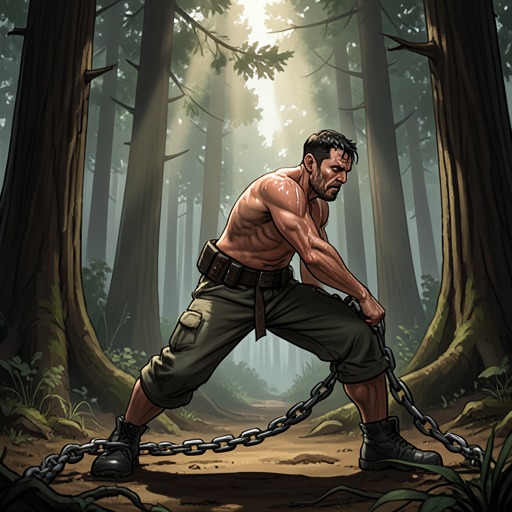
The work awakened in him a desire to stand near still larger undertakings. In 1920 he went to northwestern Washington to repair the Robinson Gorge Bridge, a structure 208 feet deep and 804 feet wide that carried an engine and two flatcars of logs. After the repairs, he moved higher into the forest with the Simpson Company. More than forty men used six-horse teams to bring logs within cable range of the railway landing, where an old wood-burning Steam donkey paid out and rewound cable, drew logs toward the landing, and sent its hook toward the next choker. Grainier worked as a choker in the woods, looping cables around spruce after sawyers felled the trees, limbers cleared them, and buckers cut them into eighteen-foot lengths. He relished the strain, exhaustion, and immense scale of the forest, even as Arn Peeples warned that a tree became an enemy once the blade entered it.
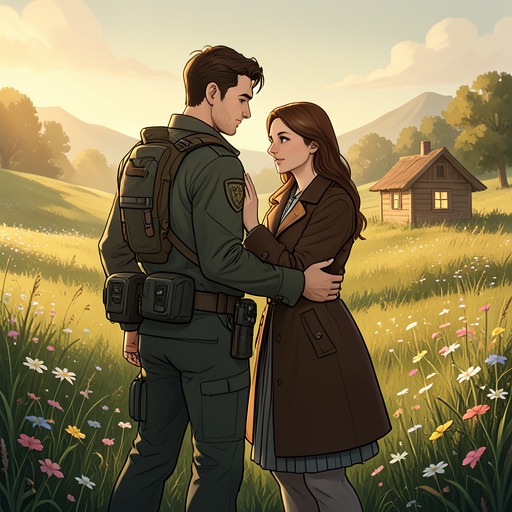
Before this working life, Grainier had found a wife in Gladys Grainier. He had spent thirty-two years as a bachelor before marrying, and the marriage gave him an acre, a home, and a family consisting of Gladys and their infant daughter, Kate Grainier. On his way home from bridge work he detoured to Meadow Creek for a bottle of Hood’s Sarsaparilla for them. The small errand captures the ordinary domestic attachment that later makes its destruction so devastating: his family is carried in his mind through a bottle, a walk home, and the expectation of returning to the cabin.
Fire, Grief, and the Rebuilding of a Life
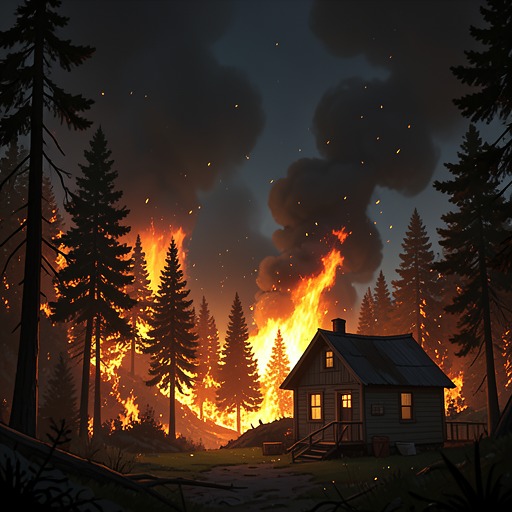
When Grainier returned from the Robinson Gorge job in the summer of 1920 with four hundred dollars, the Moyea Valley fire was consuming the valley. He traveled through thickening smoke into Bonners Ferry, where residents from along the Moyea River crowded the town because they had lost their homes. At the fairgrounds, roughly a hundred refugees sheltered among waterlogged remnants such as dolls, mirrors, and bridles. Grainier searched the crowd repeatedly for Gladys and Kate, but nobody had news of them. Those who had escaped seemed strangely happy to be alive and largely unable to attend to those who had not escaped.
He eventually learned in Creston that no escapees from the fire had appeared there. For weeks he stayed with a cousin, sickened by grief and confused by the finality of his situation. He understood that he had lost his wife and daughter, yet a recurring hope urged him to search for them everywhere. Nightmares showed Gladys returning to the burned homesite in smoking rags while carrying Kate, only to find the place empty and stand crying in the waste. His mourning therefore oscillates between knowledge and refusal: the mind repeats the family’s survival as an impossible obligation even while the landscape denies it.
Thirty days after the fire, Grainier rented horses and a wagon, carried supplies up the river road, and intended to build a shelter on his acre in expectation that his family might return. The plan ended when he entered the burned remains. Ash lay so deeply over parts of the road that it resembled winter snow, and the reek made breathing difficult. The sight transformed his grief, burning away the last of his hopeful, irrational thinking. He concluded that only the fastest animals and those with wings could have escaped the flames, abandoned the shelter project, and returned to town.
He later leased the Pinkhams’ horses and wagon and worked as a freighter along Highway 2, serving small communities without close railway access. The work gave him both income and a new social vantage point. Beside the Kootenai River, however, he repeatedly remembered William Coswell Haley, the dying boomer whom he had failed to help, and the Chinese laborer he had nearly helped kill. He came to believe that the laborer had called down a curse that incinerated Gladys and Kate, and he judged the punishment excessive. This belief turns historical guilt into private superstition, but it also shows how Grainier’s conscience preserves connections that the surrounding society prefers to forget.
Solitude, Memory, and Bodily Decline
Not four years after his wedding, Grainier was already a widower living in a lean-to beside the river below the former homesite. He kept a campfire burning late into the night and feared sleep because his dreams first contained both Gladys and Kate, then Gladys alone, and finally only the fire itself. In the morning he found the fire reduced to gray ash and charred lodgepole ends, despite having watched it burn all night in his dreams. The progression marks a change in mourning: family images recede, while the elemental routine of tending fire becomes the remaining object of attention.
Three years later he lived in a second cabin on the exact site of the first. He slept more soundly and often dreamed of trains, especially one carrying him through a world that seemed faintly familiar from childhood. The sound of the Spokane International Railway sometimes entered the dream from outside, so that waking and remembering became inseparable. After one such dream, he sensed Gladys moving through the cabin before she appeared to him in spirit form. The rebuilt cabin, with its roof, windows, benches, table, and barrel stove, had become as much a home as the one he had shared with Gladys and Kate. Solitude does not erase domestic life; it preserves its shape in altered materials.
Grainier’s isolation is repeatedly tested by friendship and by the social world beyond his cabin. His long friendship with Kootenai Bob connects him to a man whose death later changes the soundscape of the valley. In the two or three days after Kootenai Bob was killed beneath trains, the Great Northern Railway slowed its trains and sounded long whistles so that the Kootenai people could search the tracks for his remains. The whistles set off the coyotes and wolves, while Grainier’s red dog was also absent. The resulting chorus seemed raucous, hysterical, and pitiable, and it helped convince Grainier to remain in the valley. His vow to stay is therefore born not simply from attachment to his own property, but from witnessing a community’s care for the fragments of a dead man.
His body eventually records the dangers of the work he had embraced. During his final summer in the Washington woods, a wild limb struck his jaw and left it crooked, making chewing painful. His joints deteriorated; his right shoulder could lock until someone braced a foot against his ribs and pulled at his arm, and his right knee increasingly buckled sideways. He eventually told his employer that he had become too mechanically unreliable to be paid as a woodsman. After salvaging lumber from old laborers’ shacks, he returned to Bonners Ferry. The industrial forest had given him purpose, but it also converted accumulated risk into permanent disability and ended his career as a woodsman.
Later Years and Ending
Even when arthritis and rheumatism made ordinary chores nearly impossible, Grainier spent every summer and fall at his remote home. The burned valley never returned to its former condition. Spruce gave way mainly to scraggly jack pine; wolves became less frequent and more distant; coyotes increased, rabbits became scarce, and trout disappeared from long stretches of the Moyea River. His persistence thus unfolds within an altered ecology. Remaining in the cabin means accepting that the landscape he remembers is gone while continuing to inhabit the place created by its destruction.
Grainier’s life remains materially spare. He owned one acre, two horses, and a wagon, and he had one lover, his wife Gladys. He never became drunk, never bought a firearm, and never spoke into a telephone. He traveled within a few dozen miles of the Pacific without seeing the ocean, reached as far east as Libby in Montana, rode trains regularly, traveled many times in automobiles, and flew once in an aircraft. During the last decade of his life he watched television when in town. These details make his existence neither wholly isolated nor conventionally modern: the expanding technologies of the region pass around him, while his intimate world remains bounded by animals, roads, cabins, and remembered losses.
Grainier lived more than eighty years, into the 1960s, but left no heirs. Almost everyone in the area knew of him, yet when he died in his sleep sometime in November 1968, he lay undiscovered through the rest of autumn and winter. Two hikers found his body in spring and returned the next day with a doctor. Using a shovel found leaning against the cabin, the three dug his grave in the yard, where Robert Grainier remains. The ending is a final irony of recognition without attendance: he is broadly known but privately missed by no one. His grave, made by chance visitors with an abandoned tool, completes a life in which survival is less a triumph over history than a quiet persistence within its ruins.
Narrative Significance
Grainier’s episodic life offers a marginal view of the American Northwest’s transformation. Railway construction, timber extraction, wagon freighting, and changing transportation systems appear not as abstract progress but as labor performed by vulnerable bodies. He helps build a bridge whose inaugural crossing serves corporate efficiency, works beneath a Steam donkey that turns forests into rail cargo, and eventually carries goods to communities bypassed by the railway. His mobility is therefore both personal freedom and dependence on infrastructures controlled by companies and towns.
The novel also places his private losses beside histories of racialized removal and Indigenous presence. His childhood witnesses the deportation of Chinese families; his adulthood nearly reproduces that violence against a Chinese railroad laborer; and his later life is shaped by Kootenai Bob’s death and by the Kootenai people’s painstaking collection of his remains. Grainier is not outside these histories. He is implicated in them, haunted by them, and finally kept in the valley by an act of collective mourning that exceeds his own household.
His return to the burned homesite can be read as a form of endurance rather than restoration. He does not recover Gladys Grainier or Kate Grainier, and the valley does not recover its spruce, wolves, rabbits, or trout. Instead, Grainier builds a smaller life from ash, a cabin, a campfire, a wagon, horses, a dog, and recurring train dreams. His story’s decisive image is therefore not heroic conquest but continued inhabitation: a man whose origins are uncertain, whose family line ends with him, and whose long presence gives damaged land a human witness.