Ambush at the Treasure Pit
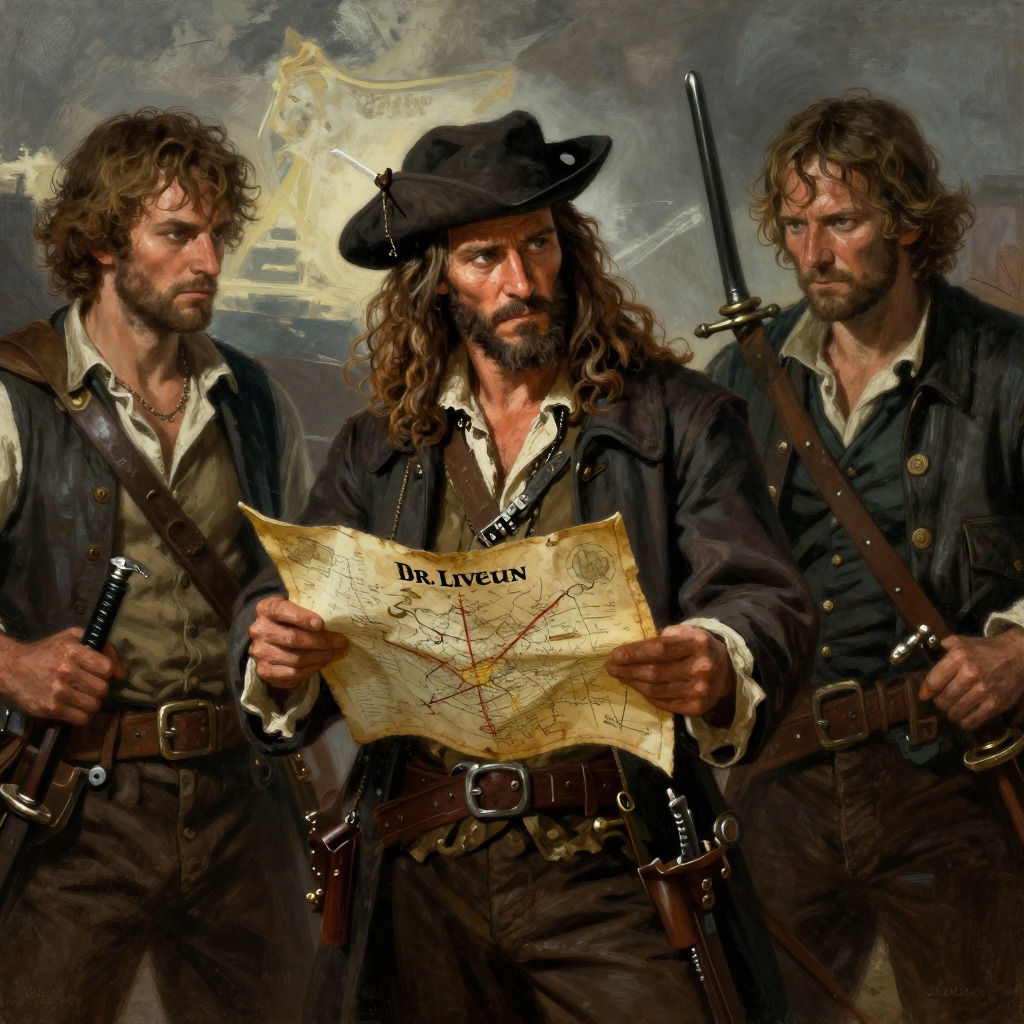
Treasure IslandThe Ambush at the Treasure Pit is the pivotal scene of Treasure Island where the long-sought treasure, the object of the entire voyage, is discovered to have been already dug up and carried away, shattering the mutineers' hopes and precipitating the final, decisive confrontation between the loyal party and the pirates. It is the moment when the central promise of the quest—the seven hundred thousand pounds in gold—is revealed as hollow, and when the shifting allegiances and concealed plans of the story's key figures, particularly Long John Silver, are laid bare in a sudden, violent turn. The scene marks the fall of the pirate chieftain George Merry and the effective end of the mutiny, as the loyal party, led by Dr. Livesey, springs an ambush that leaves the surviving mutineers routed and the treasure secured for the rightful owners.
The Discovery of the Rifled Cache
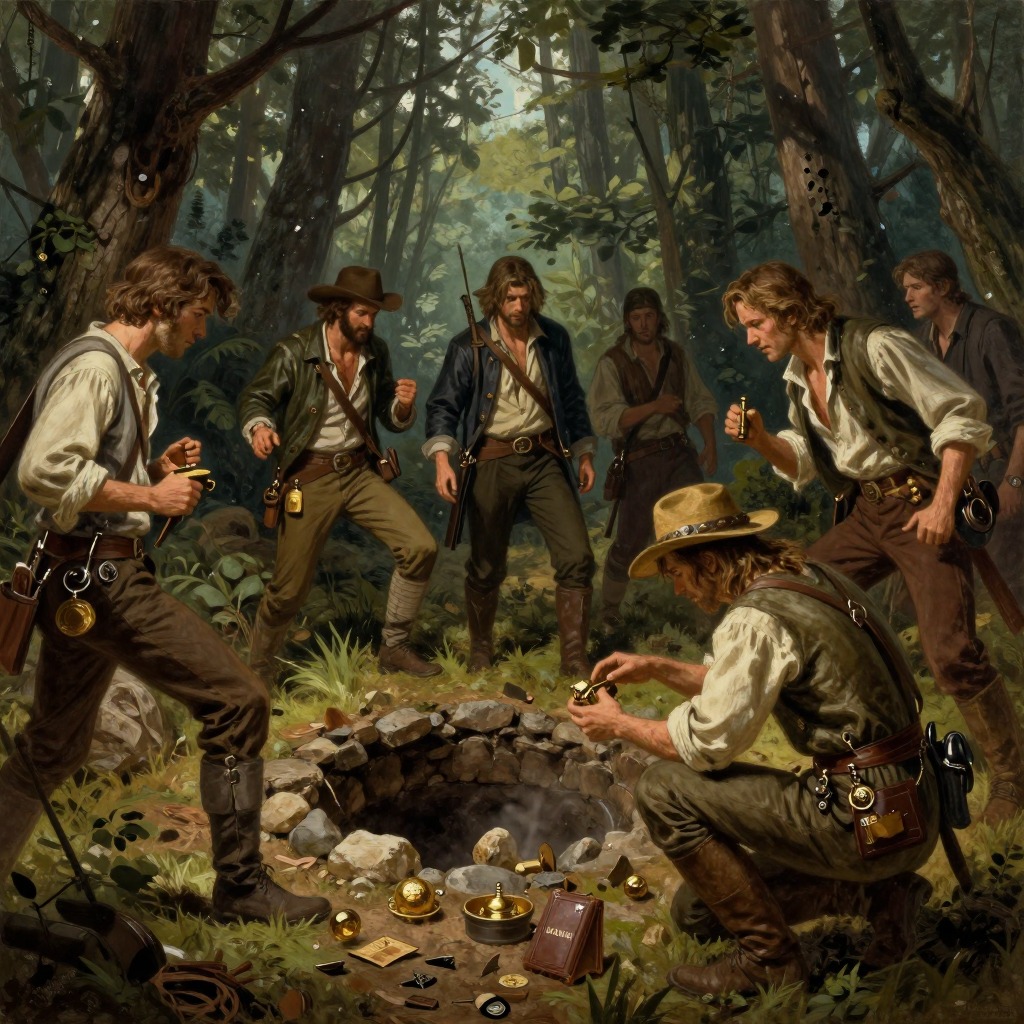
The treasure-hunters, a party of six mutineers led by Long John Silver and accompanied by the captive Jim Hawkins, had followed the map's directions to a tall pine tree on the plateau beneath the Spy-glass. The red cross on the chart, too large to be a precise guide, had been supplemented by the cryptic notes on the back, and the party had already been unnerved by the discovery of a human skeleton, which Silver identified as a pointer left by Captain Flint, the infamous buccaneer who had buried the treasure. As they approached the designated spot, the men, their fears momentarily forgotten in the anticipation of wealth, broke into a run. But what they found was not a cache of gold but a great excavation, its sides fallen in and grass sprouting at the bottom, containing the broken shaft of a pick and the boards of several packing-cases. On one of these boards was branded the name WALRUS—the name of Flint's ship. The cache had been found and rifled; the seven hundred thousand pounds were gone. The revelation struck the six men as though each had been physically struck, but Silver, whose every thought had been set on the money, recovered almost instantly, keeping his head and changing his plan before the others had even realized the full extent of their disappointment.
The Turn Against Silver and the Ambush
As the mutineers, with oaths and cries, leaped into the pit and began digging with their fingers, Tom Morgan found a single piece of gold—a two-guinea piece—which was passed from hand to hand. George Merry, seizing on this meager find, turned on Silver, accusing him of knowing all along that the treasure was gone, and the other mutineers, now entirely in Merry's favor, scrambled out of the excavation on the opposite side from Silver, leaving the two of them—Silver and Jim Hawkins—alone on one side of the pit, with the five mutineers on the other. Merry, raising his arm and voice, plainly meant to lead a charge against them, but at that instant three musket-shots flashed out of the thicket. Merry tumbled head foremost into the excavation, and the man with the bandaged head spun round and fell dead, while the other three turned and ran. Long John Silver, with a pistol in each hand, fired two barrels into the struggling Merry, and as the man rolled up his eyes in his last agony, Silver remarked, "George, I reckon I settled you." At the same moment, Dr. Livesey, Abraham Gray, and Ben Gunn emerged from among the nutmeg-trees with smoking muskets, having laid the ambush that would finally break the mutiny.
The Aftermath and the Fate of the Treasure
The ambush was the culmination of a carefully laid plan by Dr. Livesey, who had learned from Ben Gunn that the treasure had already been removed. Ben Gunn, in his long, lonely wanderings about the island, had found the skeleton, rifled it, discovered the treasure, dug it up, and carried it on his back in many weary journeys to a cave he had on the two-pointed hill at the north-east angle of the island, where it had lain stored in safety for two months before the arrival of the Hispaniola. When the doctor had wormed this secret from him on the afternoon of the attack, and when the next morning he saw the anchorage deserted, he had gone to Silver, given him the now-useless chart, and given him the stores, all to get a chance of moving in safety from the stockade to the two-pointed hill, there to be clear of malaria and keep a guard upon the money. On the morning of the treasure-hunt, finding that Jim was to be involved in the horrid disappointment he had prepared for the mutineers, the doctor had run all the way to the cave, and leaving the squire to guard the captain, had taken Gray and the maroon and started, making the diagonal across the island to be at hand beside the pine. Ben Gunn, being fleet of foot, had been dispatched in front to work upon the superstitions of his former shipmates, and he was so far successful that Gray and the doctor had come up and were already ambushed before the arrival of the treasure-hunters. After the ambush, the doctor, with a pick-axe, demolished one of the gigs, and the party, including Silver, set out by sea for North Inlet, where they met the Hispaniola cruising by herself, and then proceeded to Ben Gunn's cave, where the squire met them and where Captain Smollett lay before a big fire, with great heaps of coin and bars of gold in a far corner—Flint's treasure, which had cost already the lives of seventeen men from the Hispaniola.
The Significance of the Ambush
The Ambush at the Treasure Pit is the decisive turning point of the novel, the moment when the mutiny is effectively crushed and the loyal party's victory is secured. It is also the scene of Silver's final, most cynical betrayal, as he switches sides once more, killing his own accomplice George Merry to save himself and Jim. The ambush reveals the extent of Dr. Livesey's cunning and the value of Ben Gunn's secret, and it sets the stage for the final departure from the island, leaving the three surviving mutineers marooned. The scene underscores the novel's themes of greed, treachery, and the futility of the pirates' quest, as the treasure they sought had been in the hands of a half-mad maroon all along. It is a masterful piece of plotting, where the expectations of both the characters and the reader are overturned in a single, violent instant, and where the moral order of the story is restored through the defeat of the mutineers and the recovery of the treasure for the honest men.