Billy Bones's sea-chest
Treasure IslandBilly Bones's sea-chest is far more than a sailor's storage trunk; it is the narrative engine of Treasure Island, the locked container that holds the key—both literal and figurative—to Captain Flint's buried treasure and that draws the forces of piracy and adventure into collision at the Admiral Benbow Inn. From the moment the brown old seaman with the sabre cut first takes up lodging under the Hawkins family roof, the chest sits in his room as a silent, unopened monument to his hidden life, its contents unknown to all until his sudden death forces it open and releases the map that will carry Jim Hawkins, Squire Trelawney, Dr. Livesey, and a crew of honest men and mutineers across the ocean to Treasure Island.
Identity and Appearance
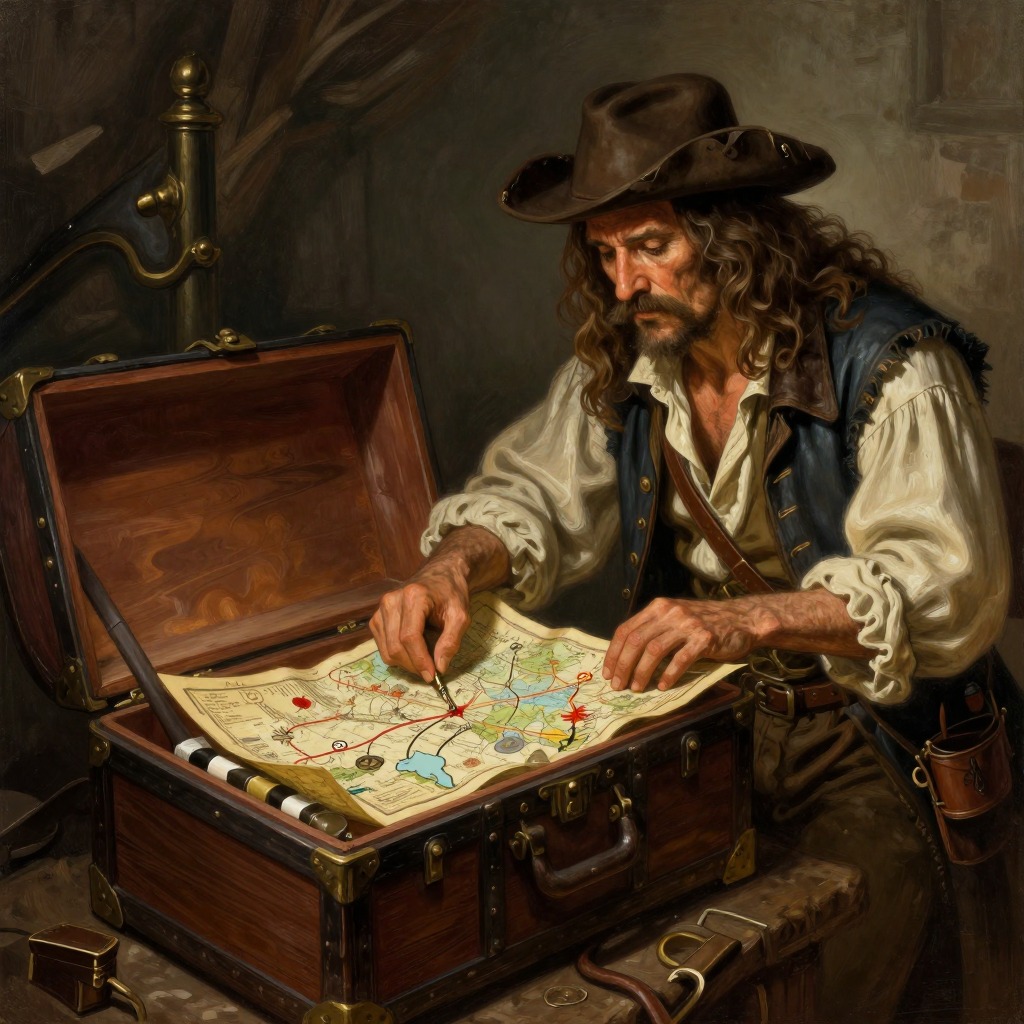
The chest is introduced as an ordinary seaman's chest on the outside, with the initial "B" burned into the top with a hot iron and its corners somewhat smashed and broken from long, rough usage. It is the same chest that Billy Bones had brought with him on a hand-barrow when he first arrived at the inn—a tall, strong, nut-brown man with a tarry pigtail, ragged hands, and a sabre cut across his cheek. The chest accompanies him throughout his stay, and none of the inn's inhabitants ever see it opened during his lifetime. Its exterior bears the marks of a hard maritime life, but its interior, when finally forced open by Jim's mother after the captain's death, reveals a far richer and more telling collection.
Contents and Their Significance
When Jim and his mother open the chest, a strong smell of tobacco and tar rises from within. On top lies a suit of very good clothes, carefully brushed and folded, never worn according to Mrs. Hawkins. Beneath this begins a miscellany: a quadrant, a tin canikin, several sticks of tobacco, two brace of very handsome pistols, a piece of bar silver, an old Spanish watch and other trinkets of little value and mostly foreign make, a pair of compasses mounted with brass, and five or six curious West Indian shells. Jim later wonders why the captain carried these shells with him through his wandering, guilty, and hunted life. Underneath an old boat-cloak whitened with sea-salt lie the last two items: a bundle tied up in oilcloth, looking like papers, and a canvas bag that jingles with gold. The oilskin packet proves to contain the book and sealed paper that together form the treasure map—the document that will drive the entire voyage. The chest thus holds not only the material traces of Billy Bones's piratical career but the very object that will determine the fate of everyone who sails on the Hispaniola.
The Key and the Black Spot
The chest's lock is stiff, but Mrs. Hawkins turns the key and throws back the lid in a twinkling. The key itself had been found hanging around the dead captain's neck on a bit of tarry string, cut free with his own gully. The discovery of the key comes only after the captain has been struck dead by apoplexy, triggered by the delivery of the Black Spot—a round of paper, blackened on one side, bearing the message "You have till ten tonight." The chest thus becomes the prize that the pirates, led by Blind Pew and Black Dog, have come to seize, and its opening by Jim and his mother sets off the chain of events that leads to the death of Pew, the flight of the Hawkins family, and the eventual delivery of the map to Dr. Livesey and Squire Trelawney.
Narrative and Thematic Role
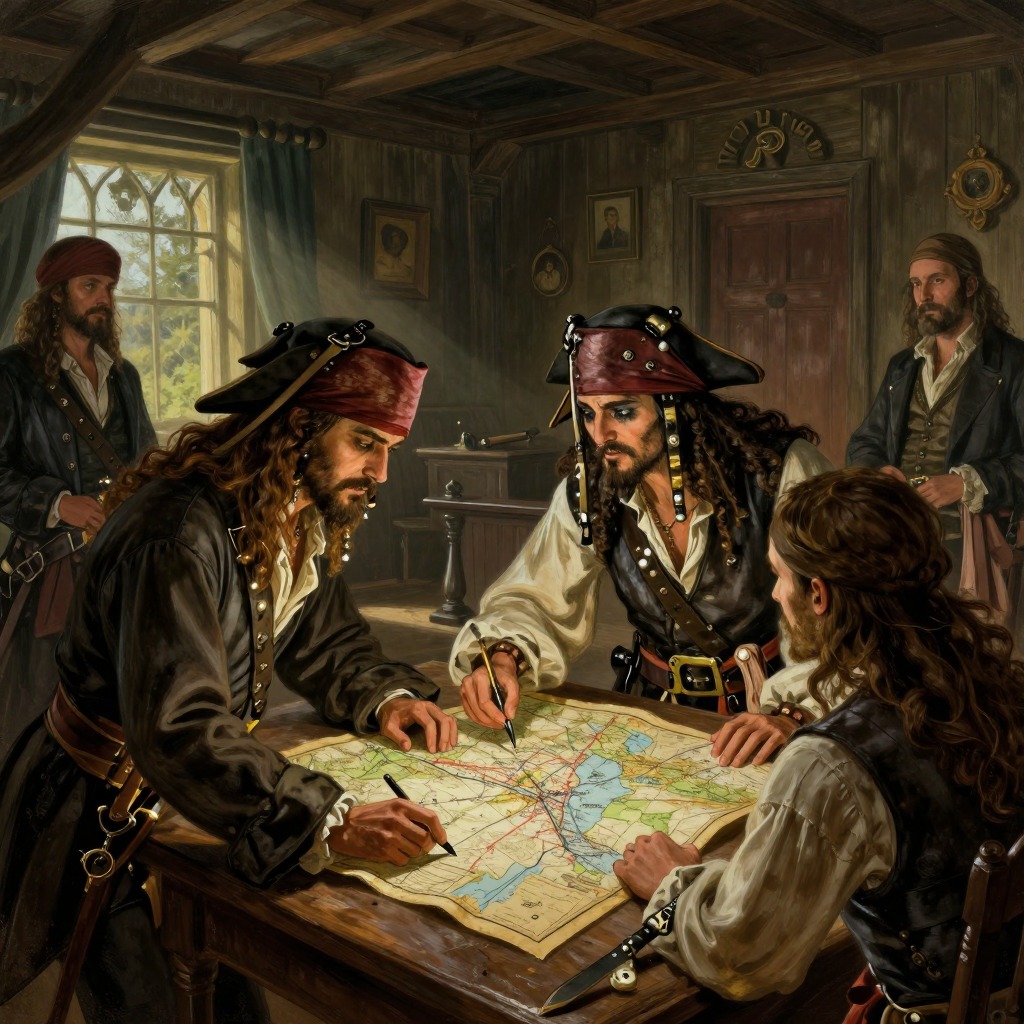
The chest functions as a narrative fulcrum: it is the object that the pirates seek, the object that the Hawkins family opens in desperation, and the object that yields the map that transforms a quiet country boy into an adventurer. Its contents—the gold, the trinkets, the shells, and above all the oilskin packet—trace the arc of Billy Bones's life from a common seaman to a trusted mate of Captain Flint, and finally to a hunted man hiding in a lonely inn. The chest also embodies the tension between the ordinary and the extraordinary that runs through the novel: outwardly a battered piece of sailor's gear, inwardly it holds the promise of immense wealth and the record of a life of crime. When Dr. Livesey later opens the oilskin packet with his medical scissors, he finds the book with its cryptic entries and the map with its red crosses and the words "Bulk of treasure here," and the adventure truly begins. The chest, once opened, is never again a mystery; its secrets are dispersed, but its role as the catalyst for the entire treasure hunt remains central to the story's structure and meaning.