
Chance, Causality and Responsibility
TrespassesCushla repeatedly searches for the point where ordinary choices became connected to murder, while the novel refuses a single, comforting cause.
increasing Bearing strength in each event
 decreasing
Bearing strength in each eventdecreasingThe Separate Threads
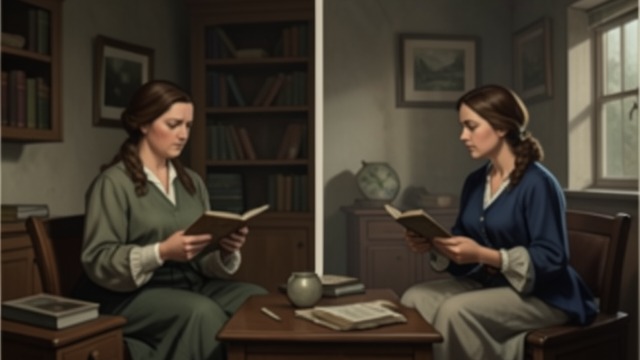
The Separate Threads
Two lives in parallel
Cushla helps Davy and visits Michael, believing the relationships belong to separate worlds. Their overlap seems slight: a phone call, a name spoken, a notebook kept.
The reader sees the pattern
After Michael’s death, each ordinary detail acquires possible significance. The narrative shows how hindsight can make coincidence look like a plan.
A Name on the Phone

A Name on the Phone
A careless response
Cushla answers Tommy’s call expecting Michael and says his name before realizing who is there. Tommy notices and later records the moment.
A clue without intention
The utterance is accidental and offers no clear explanation of the murder. It nonetheless becomes one link in the chain that makes Cushla fear she helped connect the men.
A Stranger Invited In
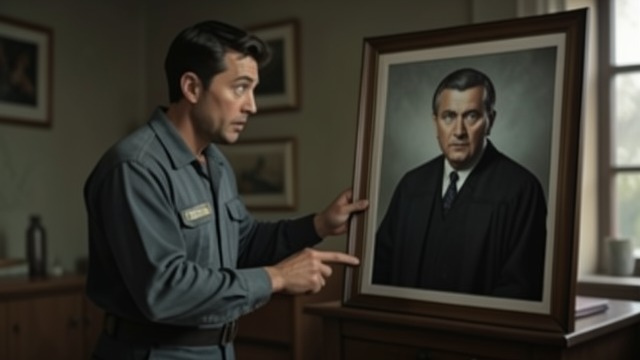
A Stranger Invited In
A mundane encounter
Tommy works outside Michael’s home and is invited inside for tea. He sees a photograph of Michael in legal dress and mistakes him for a judge.
Violence takes its opening
The ordinary hospitality offers Tommy access to the man he will later kill. The novel does not make the invitation a cause in itself, but shows how fate can turn on an unremarkable encounter.
Cushla as Conditional Clause
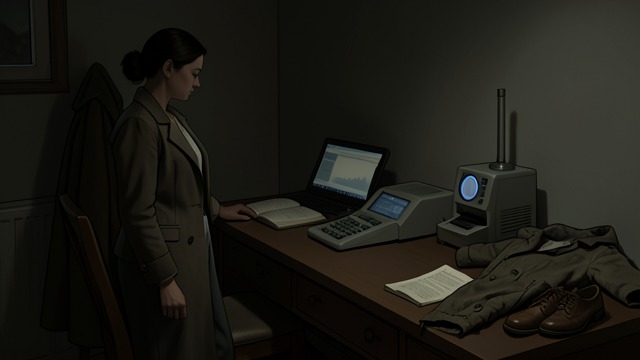
Cushla as Conditional Clause
Replaying the past
Cushla imagines changing every decision: Davy wearing a coat, Seamie keeping his job, Tommy staying at school, Michael not entering the pub. She asks whether she herself was the condition that changed the outcome.
Responsibility without control
Her question expresses grief, not proof. The chain contains political structures, individual actions and accidents, none of which can be reduced to her presence alone.
A Reunion Without an Answer
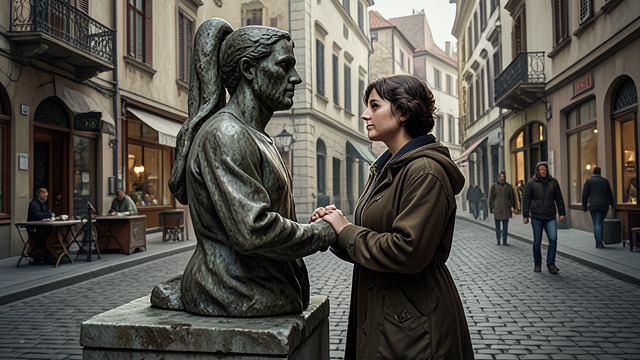
A Reunion Without an Answer
Chance brings them together
Cushla and Davy meet beside a sculpture representing Michael, years after the events that linked them. Their encounter feels meaningful but is, as Cushla knows, another happenstance.
Living with uncertainty
Davy holds Cushla’s hand, and they decide to look at paintings together. Their warmth does not solve the past; it shows that life can continue without a final explanation.
Spring 1975, before the murder
Easter 1975, when Tommy calls Cushla
Late spring 1975, before Michael’s assassination
After Tommy’s conviction, during Cushla’s isolation
2015, beside the sculpture
