
A Town’s Boundaries
TrespassesCushla’s movements between Catholic, Protestant, working-class and elite spaces reveal how belonging is monitored and punished.
increasing Bearing strength in each event
 decreasing
Bearing strength in each eventdecreasingThe Mixed Town
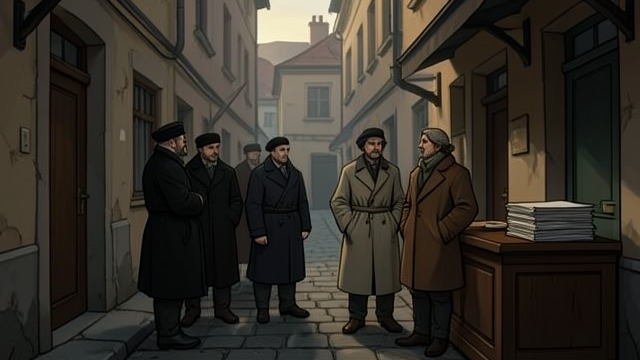
The Mixed Town
Coexistence under suspicion
Cushla’s town is described as mixed, but Catholics are a small minority and every choice can be read as a political signal. Even which newspaper the pub stocks matters.
A conditional welcome
The community shares streets and business while guarding boundaries. Ordinary interactions carry the pressure of proving loyalty or avoiding offence.
Crossing to the Falls
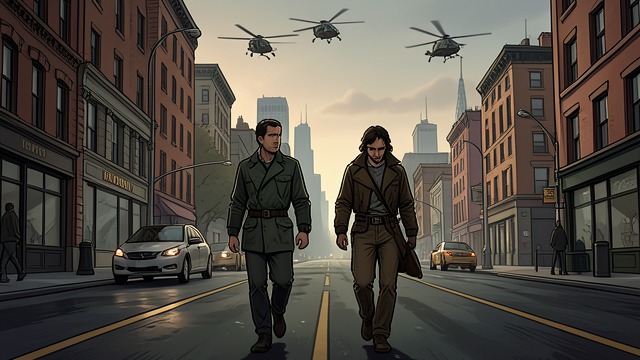
Crossing to the Falls
Two views of the city
Cushla recalls studying near The Falls and seeing army helicopters over housing estates. Michael listens, recognizing that his view of Belfast has been shaped by different access and safety.
Unequal mobility
Their intimacy crosses a political geography that remains sharply divided. They can travel together, but they do not experience the same streets in the same way.
The Estate Wall
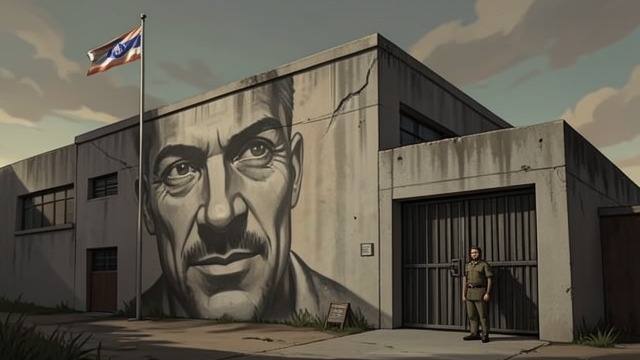
The Estate Wall
A message on the house
The McGeown home bears a sectarian slogan on its garden wall. Flags, painted kerbs and hostile neighbours make the family’s identity impossible to conceal.
Belonging made coercive
The slogan is not merely speech; it defines who is welcome to live there. Betty’s mixed marriage leaves the household exposed to hostility from both sides.
The Gallery’s Social Code
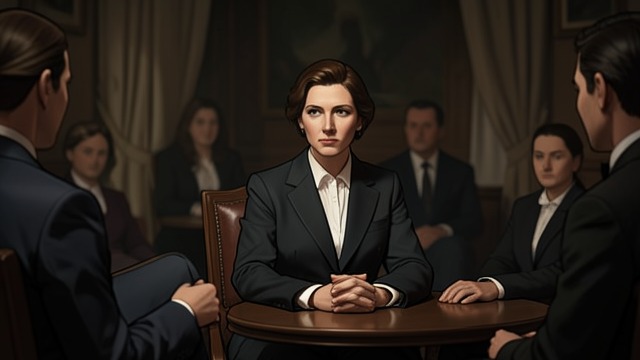
The Gallery’s Social Code
An outsider among friends
Cushla sits with university, media and artistic figures who make her feel like a visitor. Their conversation and manners place her at a distance even when Michael includes her.
Class meets sectarian identity
She is conscious of both her Catholic background and her working-class life. The room’s apparent sophistication does not erase its quiet exclusions.
Belonging Reconsidered
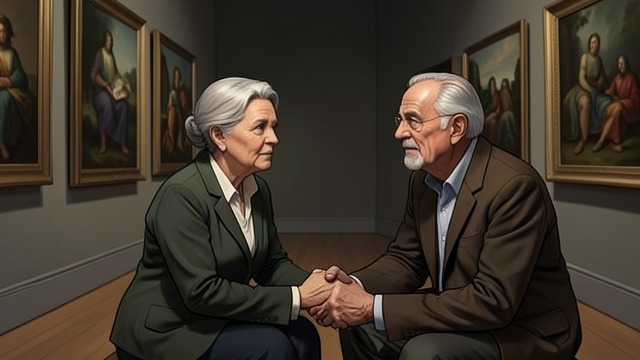
Belonging Reconsidered
A changed social world
Cushla meets Davy decades later in a gallery where Michael’s death is represented as art. She is no longer a young teacher confined to the town’s judgements.
Connection without permission
Davy’s affection and invitation to see paintings offer a form of belonging that does not depend on the old community’s approval. Their shared past becomes a bridge rather than an accusation.
February 1975, during Cushla’s first shifts at the pub
Spring 1975, during Cushla’s conversation with Michael
Spring 1975, during Cushla’s first visit to the McGeowns
Spring 1975, at Penny’s Irish evenings
2015, during the meeting with Davy
