
The Korea Decision
TrumanThis flow traces Truman’s response to the invasion of South Korea and his effort to keep the conflict limited.
increasing Bearing strength in each event
 decreasing
Bearing strength in each eventdecreasingInvasion Report
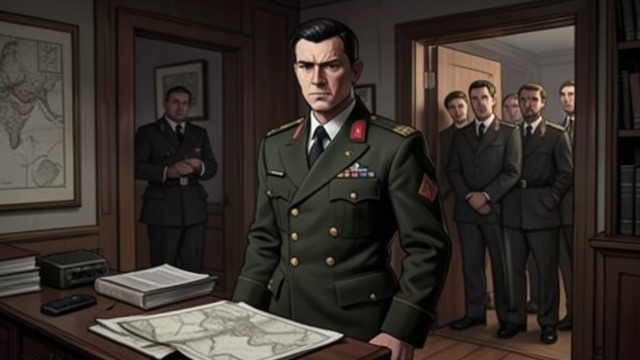
Invasion Report
A Sudden Crisis
Truman learned that North Korean forces had crossed the 38th parallel. Reports soon described the collapse of South Korean defenses and the danger to Seoul.
Decision Context
The invasion appeared to challenge the postwar order and the authority of the United Nations.
U.N. Response
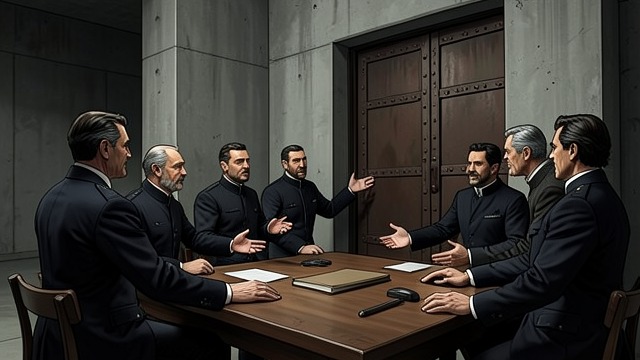
U.N. Response
Collective Action
Truman’s administration secured United Nations support for force against North Korea and committed American air and naval power.
Escalation
When MacArthur reported that air and sea power alone could not hold the line, Truman authorized ground troops.
The Pusan Perimeter
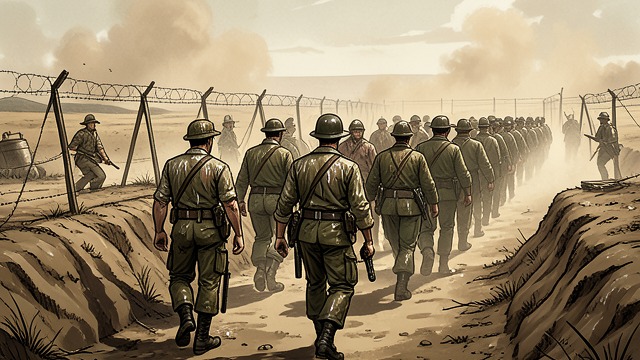
The Pusan Perimeter
Retreat
Outnumbered American and South Korean troops fell back through intense heat, disease, and heavy fighting. They established a defensive line around Pusan.
Resolve
Truman continued the commitment despite rising casualties and doubts about whether the line could hold.
Inchon and the Northward Advance
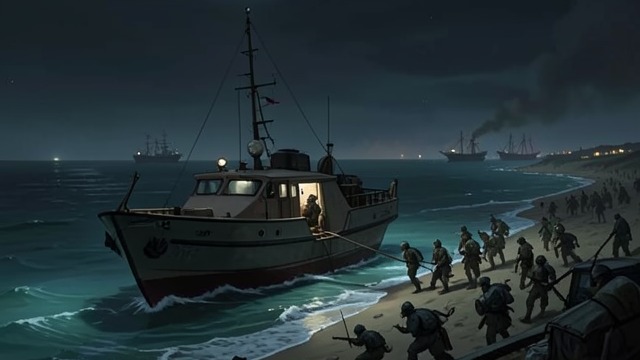
Inchon and the Northward Advance
Reversal
Truman backed MacArthur’s risky landing at Inchon. Its success reversed the campaign and led U.N. forces north across the 38th parallel.
New Danger
The advance brought the possibility of Chinese intervention into immediate focus.
Choosing Limited War
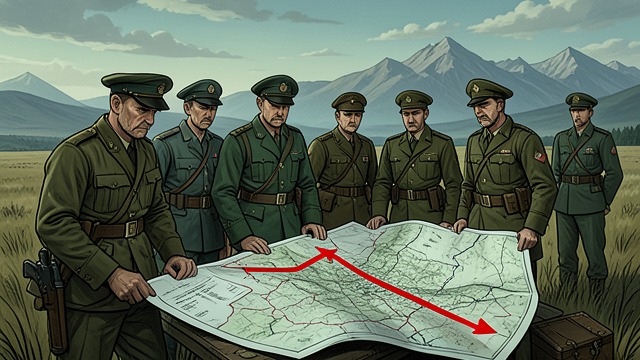
Choosing Limited War
Chinese Intervention
A massive Chinese counteroffensive forced U.N. forces into a difficult retreat. Truman rejected calls to expand the war onto Chinese territory or use nuclear weapons.
Principle
He chose to limit the conflict, protecting civilian control and avoiding a wider war despite fierce criticism.
June 25, 1950
June 25–30, 1950
July–August 1950
September–October 1950
November 1950–1951
