
The Limits of Presidential Power
TrumanThis flow traces Truman’s understanding that presidential responsibility is immense but constitutionally bounded.
increasing Bearing strength in each event
 decreasing
Bearing strength in each eventdecreasingLearning the Office
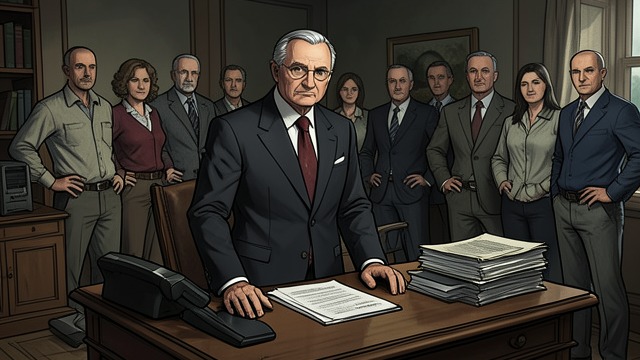
Learning the Office
Inheritance
Truman became President suddenly and was overwhelmed by responsibilities Roosevelt had not shared with him. He asked experienced officials and congressional leaders for help.
Principle
He also understood that he alone would make the final decisions.
Congressional Partnership
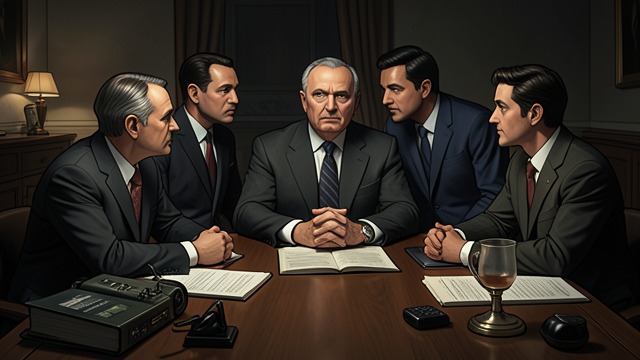
Congressional Partnership
Approach
Truman sought friendly relations with Congress, drawing on his Senate experience and personal ties across the aisle. He preferred discussion to public confrontation.
Tension
His familiarity could help cooperation but sometimes obscured the conflict between branches.
Civilian Control
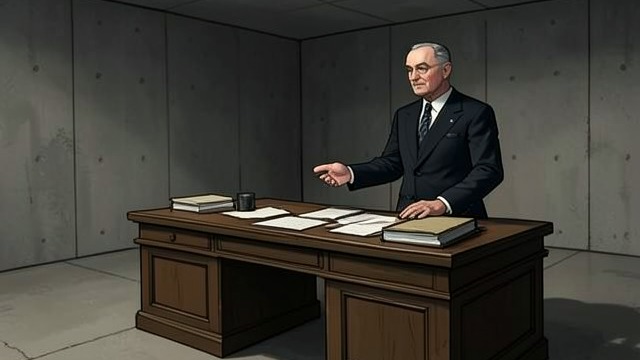
Civilian Control
Wartime Oversight
Through the Truman Committee, he scrutinized the defense effort while avoiding military strategy. He believed elected officials had a duty to oversee spending.
Principle
He resisted the idea that military urgency should place government beyond civilian control.
Steel Seizure and the Court
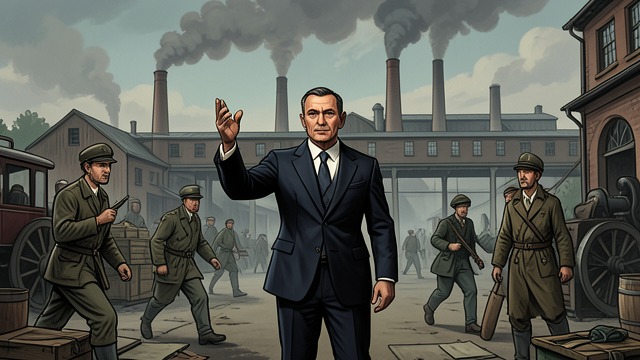
Steel Seizure and the Court
Emergency Action
Facing a nationwide steel strike during the Korean War, Truman seized the mills to protect production. He believed the crisis demanded immediate executive action.
Constitutional Limit
The Supreme Court ruled the seizure unconstitutional, defining a limit on presidential power that Truman respected despite his disagreement.
Responsibility Without Certainty
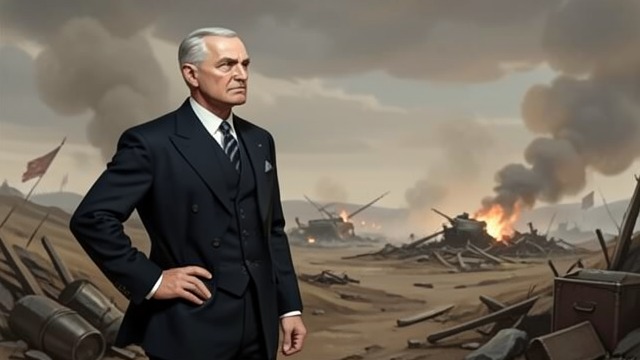
Responsibility Without Certainty
Decisions
Truman faced Korea, nuclear escalation, and conflict with General MacArthur. He sought advice but accepted responsibility for the outcome.
Legacy
His presidency emphasized that authority carried both constitutional limits and personal accountability.
April 1945
1945–1947
1941–1945
April–June 1952
1950–1953
