
The Struggle over Korea’s Future
TrumanThis flow traces the war from invasion through retreat, renewed resistance, and the eventual armistice.
increasing Bearing strength in each event
 decreasing
Bearing strength in each eventdecreasingThe Initial Invasion
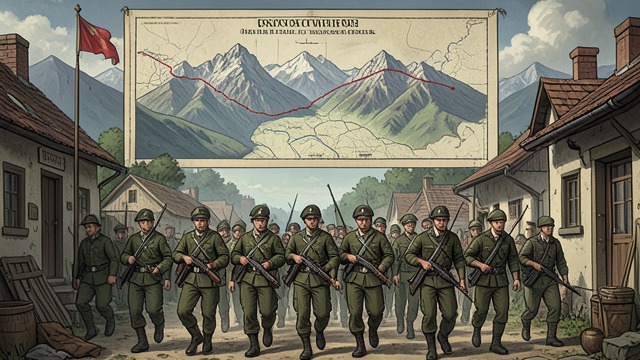
The Initial Invasion
Attack
North Korean forces crossed the 38th parallel and drove South Korean forces south. Truman ordered U.S. intervention under United Nations authority.
Stakes
The initial commitment aimed to stop aggression without converting Korea into a general war.
A Desperate Retreat
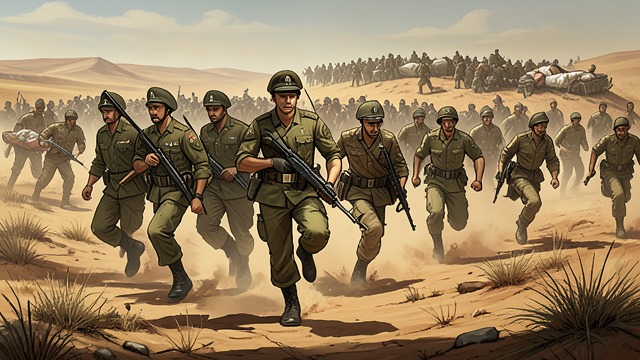
A Desperate Retreat
Pusan
American and South Korean forces retreated through severe heat and heavy casualties before forming the Pusan Perimeter. Truman remained committed as the military situation worsened.
Test
The retreat tested both the Army’s ability to hold and the President’s resolve.
Inchon Reverses the War
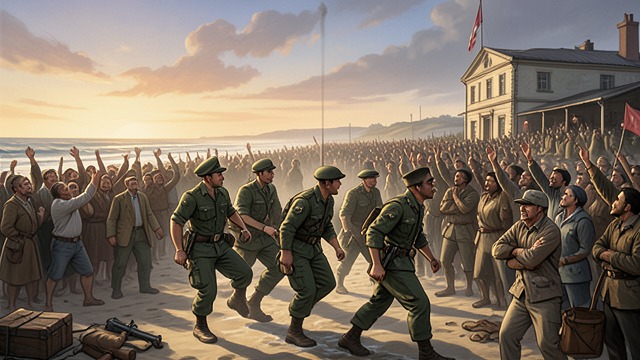
Inchon Reverses the War
Amphibious Surprise
Truman backed MacArthur’s plan for a landing at Inchon despite military doubts about tides and exposure. The operation succeeded spectacularly.
Momentum
Seoul was retaken and U.N. forces advanced north, raising hopes that the war could end quickly.
Chinese Intervention
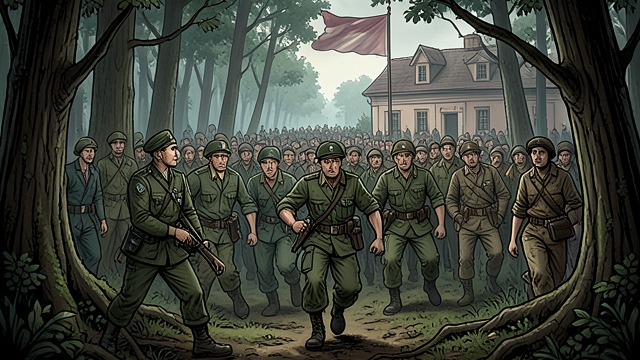
Chinese Intervention
Counteroffensive
Chinese forces entered the war in large numbers and drove U.N. forces south. The retreat renewed fears of escalation and defeat.
Truman’s Choice
He rejected calls to attack China or use nuclear weapons, choosing to limit the conflict.
Stalemate and Armistice
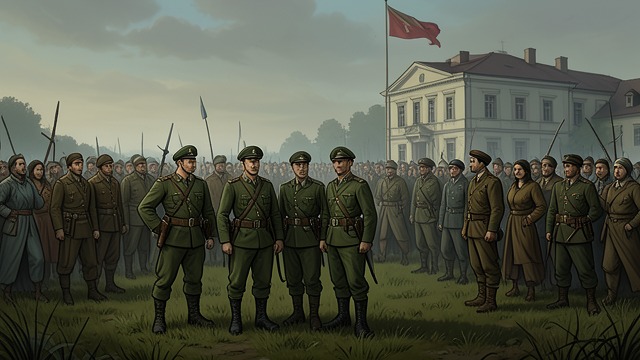
Stalemate and Armistice
Fighting Around the Line
The front stabilized near the 38th parallel while negotiations over prisoners and terms dragged on. Casualties continued despite little movement.
End
The Korean Armistice stopped the fighting without unifying Korea, leaving Truman’s limited-war policy as a contested but consequential legacy.
June 25, 1950
July–August 1950
September 1950
November–December 1950
1951–1953
