Applebee’s(86th and Ditch)
Turtles All the Way DownApplebee’s(86th and Ditch) is the familiar restaurant where Aza Holmes and Daisy Ramirez repeatedly meet, turning an ordinary chain restaurant into a practical base for friendship and investigation. Its booths and bargain meals frame conversations that move from everyday concerns to the Pickett case, while the restaurant’s routine atmosphere contrasts with the money and uncertainty that increasingly surround Aza and Daisy.
A Familiar Meeting Place
Aza first proposes meeting Daisy at Applebee’s(86th and Ditch) after school, describing it as their usual place to study together. Daisy cannot come immediately because she is working until eight, so Aza offers to give her a ride. The arrangement is characteristic of the location’s role: it is not a dramatic destination but a dependable point of coordination in the girls’ ordinary routines. Aza waits for the school crowd to thin before leaving, changes the Band-Aid on her finger, and later returns home to eat dinner with her mother before heading out again in Harold.
The restaurant is tied to an ongoing bargain as well as to habit. The previous year, a child selling a Boy Scout coupon book persuaded Aza’s mother to buy one. It contained sixty Applebee’s coupons, each offering two burgers for eleven dollars, and Aza and Daisy had been gradually using them. The detail gives their repeated visits a material explanation: studying together is made affordable through a supply of discounted meals. The restaurant is described as a mid-quality chain serving a broad version of American food, with cheese appearing across much of the menu. That dependable, unexceptional food is part of the place’s function in their lives: it is accessible, familiar, and easy to return to.
Friendship and Everyday Conversation
When Daisy eventually arrives after work, she has changed out of her work shirt into a turquoise scoop-neck top and is looking at her phone in a booth. She has no computer and does nearly everything on the phone, including texting and writing fan fiction; her typing is faster than Aza’s on a regular keyboard. The setting holds this ordinary exchange alongside their investigative partnership. Daisy opens the conversation with a question about unsolicited sexual images, and Aza responds awkwardly before Daisy asks to change the subject. Their talk begins with the bluntness of close friends, not with the case they have come to discuss.
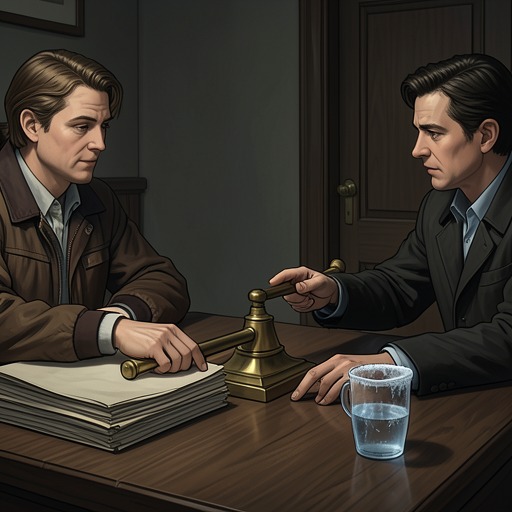
Applebee’s also accommodates Daisy’s impatience with Aza’s attention wandering away from their shared work. While Daisy taps at her phone and holds a glass of water, Aza searches online for Davis Pickett and encounters unrelated people with similar names, including a Wisconsin truck driver, a deceased blogger who used eye-tracking software, and a user whose blog contained threats against members of Congress. A possible account connected to Davis had gone silent since his father disappeared. Daisy calls herself close to a discovery, then redirects Aza from her impressions of Davis’s blog toward information about the case. The noisy, bright restaurant—with sports fans shouting at the bar—makes a vivid counterpoint to the focused online searching on their phones.
The Investigation at the Table
One of the restaurant’s most consequential conversations begins with Daisy explaining what she learned about wills during a work break. Indiana law, as she understands it, does not allow a person to leave money directly to a nonhuman animal, but does allow a will to provide for a corporation established to benefit one. She connects that distinction to Russell Pickett’s money and the tuatara, and adds that a parent does not have to leave an inheritance to their children. When Aza asks what would happen if their father went to prison, Daisy says the children could receive a guardian—perhaps a house manager or family member—with funds to cover their expenses. Her joking interest in becoming a guardian to billionaire children sits beside the serious legal and financial questions raised by the Pickett family’s circumstances.
At another meeting, Daisy turns the restaurant into a temporary newsroom. She explains that an early article about Russell Pickett’s disappearance cited a police report obtained by the Indianapolis Star. Daisy identifies the reporter who wrote the story and a junior colleague who contributed to it, then describes how she created an email address resembling the lead reporter’s and persuaded the colleague to retrieve scans of the report from his office on a Friday night. Her method is not computer intrusion but pressure applied to a person. By the time she tells Aza the report is in her email, the familiar study booth has become the setting for a concrete breakthrough in their investigation.
Plans, Money, and the Restaurant’s Changing Meaning
The restaurant is also proposed as a meeting place beyond the girls’ established friendship. When Daisy explains that she wants Aza present for a first and likely only date with Mychal Turner, she lists her reasons: she does not want to be alone with him, has already told him that Aza has a crush on a boy from Aspen Hall, and feels nervous about dating. Daisy says she is not concerned about whether the outing involves a picnic and is happy to move it to Applebee’s. Aza texts Davis to invite him to dinner there with the couple on Friday. Davis replies that he is free and asks whether to pick them up or meet them there; Aza chooses to meet and asks whether seven works. The exchange shows the restaurant’s usefulness as neutral, familiar ground for a proposed group date, although the invitation alone does not establish what ultimately happens that evening.
Later, Daisy agrees to meet Aza at Applebee’s after work, even though she warns that she may need to multitask because she is trying to finish a story. Before Daisy arrives, Aza puts away her father’s phone and its charger. Daisy approaches the restaurant while Aza waits in Harold, then gets into the passenger seat and asks for a ride home. Aza points out a bag under the seat and tells her not to panic. The cash changes the emotional stakes of their familiar outing: at their usual table, they order two sodas, and Daisy reacts to the money as a reason to celebrate by asking for the restaurant’s best steak. Their exchange makes the place a witness to the uneasy overlap between friendship, sudden wealth, and the choices that follow the Pickett investigation. Applebee’s remains recognizable as the coupon-funded study spot, but now an ordinary meal also carries the weight of money Aza and Daisy have acquired.