Bandage on the finger
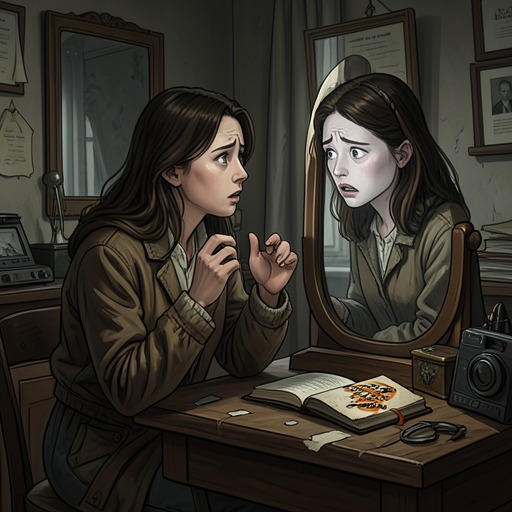
Turtles All the Way DownThe Bandage on the finger is both a practical covering for Aza Holmes’s repeatedly reopened skin and a visible measure of how her obsessive-compulsive disorder turns uncertainty about infection into an exhausting ritual. Its ordinary purpose—to protect a small wound—becomes entangled with checking, cleaning, and the brief relief that only lasts until doubt returns.
Material and Habit
Since childhood, Aza has pressed her right thumbnail into the pad of her middle finger, leaving a callus over her fingerprint. The skin splits easily; she covers it with a Band-Aid in an effort to prevent infection, but fear that infection is already present can lead her to reopen the crack and squeeze out blood. The covering therefore protects the wound while also marking a cycle that can undo that protection: worry prompts inspection and manipulation, and the newly opened skin gives her another reason to worry.
The bandage follows Aza through school, home, and visits to Davis’s house. After worrying that river water may have reached the wound, she removes it in a bathroom and examines its pad under yellow light, where a trace of moisture might be sweat, river water, or drainage. She applies hand sanitizer, washes for the recommended twenty seconds while singing the alphabet, then digs her thumbnail into the callus until the wound bleeds. After blotting it dry, she takes a replacement Band-Aid from her jeans pocket and covers the finger again. The sequence brings a shivering release of tension, but the relief proves temporary: later, she wonders whether she removed all the pus, or whether there was pus at all.
Escalation and Recurrence
The bandage becomes a trigger again after Aza kisses Davis. She searches for information about the microbes exchanged in a kiss, then recoils from the idea that they might remain in her body. In the guest bathroom, she removes the covering, opens the cut with her thumbnail, washes her hands, and reapplies a clean bandage. Unable to find mouthwash, she rinses her mouth with cold water instead, repeating the rinse to make sure. The bandage is caught in a wider attempt to manage contamination: tending the finger does not settle her fear about what has entered her body.
Later, after reading about the gut-brain connection, Aza checks the bandage again in the bathroom while her mother sleeps. A little blood on the old pad starts another round of questions about whether the wound is infected and whether she cleaned it properly. She washes her hands and replaces the covering, but then drinks aloe-scented hand sanitizer, believing she might need to make herself clean. The act makes her dizzy and sick; her stomach hurts, and the fear that the sanitizer could damage her health immediately feeds the same spiral it was meant to stop. The small dressing has become part of a dangerous ritual whose promise of certainty cannot hold.
The pattern persists beyond that crisis. Back at school, Aza feels something seeping from her fingertip beneath her coat and anticipates having to change the bandage and repeat the ritual. Much later, after hearing that Davis and Noah have returned to the place where their father’s body was found, she again opens the skin with her nail, this time breaking a cut that had finally healed. She washes and covers it once more, recognizing that the compulsion has not been defeated: the wound can close, but closure does not end the cycle.
The Bandage as a Measure of Uncertainty
The dressing makes an otherwise unseen cycle materially visible. Aza can look at its pad for evidence—moisture, blood, perhaps pus—but what it shows cannot settle what she fears: moisture might have several causes, and blood can mean either an infected wound or simply skin that has not healed. Replacing the bandage restores a covering, not certainty. Its repeated appearance therefore records the gap between what can be observed and what Aza feels compelled to know.
That gap is part of the difficulty Dr. Karen Singh identifies in describing psychic pain. Aza habitually approaches her experience through metaphors, while Dr. Singh explains that pain cannot be represented like an ordinary physical object and that familiar labels can flatten its particular terror. The bandage supplies a concrete, recurring image for a distress that resists such simple naming: a small piece of adhesive fabric can be removed, inspected, and replaced, but it cannot make the intrusive doubt disappear. The story’s attention to the act of changing it gives the compulsion duration and physical texture rather than treating it as an abstract trait.
When Aza later reopens a cut that had finally healed, she recognizes that she cannot simply defeat the condition as if it were separate from herself. The bandage can cover the injury, and the skin can close, but neither marks a final cure. Its significance lies in that unresolved distinction: it is both useful wound care and an element in a ritual that renews the wound, making the ordinary work of protection inseparable from the uncertainty it is meant to contain.
The Bandage Within the Thought Loop
Aza’s bandage also marks the point where an intrusive thought can seize an ordinary moment. After she remembers Davis holding her hand and looking at her finger, the idea of checking the wound intrudes while she is watching television with her mother. Aza has learned in cognitive behavioral therapy to remind herself that she is not her thoughts, yet she is unsure what that separation means; trying to dismiss the thought does not prevent it from returning with a new possibility to investigate. The bandage gives the doubt a physical target, but checking it cannot settle the questions that keep multiplying around it.
Aza’s preferred word for these thoughts comes from a mishearing: Dr. Karen Singh calls them intrusives, and Aza hears invasives, a term that suggests something arriving from elsewhere and spreading through its surroundings. That image captures the experience of the bandage as more than a dressing. It is caught in a contest between the evidence Aza can inspect and the escalating interpretations that inspection cannot silence. Its recurring presence makes visible how a small, practical object can become part of a mental loop without ever providing the certainty the loop demands.