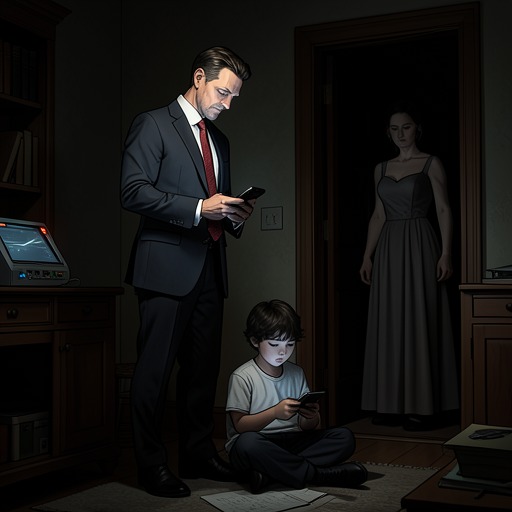
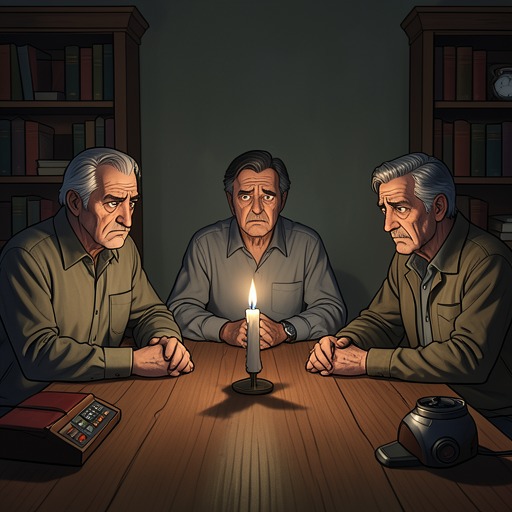
Davis and Noah report Russell Pickett’s location
Turtles All the Way DownDavis and Noah’s decision to tell police where to look for Russell Pickett turns a hidden family truth into a public discovery, and makes knowledge more important to the brothers than the estate they could have kept. The report ends their uncertainty about their father at the cost of the house and wealth that might otherwise have remained theirs for years.
Background and Stakes
Russell’s disappearance left his sons in a legal and personal limbo. Indiana law treated a missing person as alive until evidence of death emerged or seven years passed without evidence of life. Before those conditions were met, Davis had been declared an emancipated minor and made Noah’s legal guardian. A representative of the estate handled its finances, while a house manager handled the home; those arrangements answered the lawyer’s legal questions but did not resolve Aza’s concern about who would actually care for the boys.
The estate’s unusual beneficiary gave the search an additional consequence. Russell had publicly announced that his wealth would benefit his pet tuatara, Tua, for the animal’s lifetime, with the remainder going to a trust for tuatara everywhere after Tua’s death. The possibility that Russell’s death would transfer the estate to an animal was no abstract technicality: Aza understood that if she told police her suspicion and Russell was found dead, Davis and Noah could lose their home. She therefore chose not to report the lead herself.
The Decision to Tell Police
Aza had told Davis about the location known as the jogger’s mouth, a lead connected to the unfinished Pogue’s Run tunnel. The brothers, rather than Aza and Daisy, ultimately supplied the information that brought police to the site. When Aza asked Davis why he had told them, he explained that not knowing what had happened was eating away at Noah. Together they decided that Noah needed to understand why their father was no longer in contact more than they needed the money.
The choice was shared, not an action Davis took solely as Noah’s guardian. Davis described being a big brother as his full-time occupation and as who he was now. His explanation recasts guardianship from a legal designation into a demanding relationship: he acts for Noah not to preserve their inheritance, but to answer the question that has been hurting him. The brothers accept the material consequence together because continued uncertainty has become the more immediate cost.
Discovery and Disclosure
A month after Christmas vacation ended, Aza learned of the search’s outcome at home. A breaking-news band appeared while she was watching television, and the reporter stood outside the gates of the Pickett compound. According to sources cited by the broadcast, authorities believed that a body found in an offshoot of the Pogue’s Run tunnel was Russell’s, although he had not yet been positively identified. Sources close to the investigation said he likely died of exposure within a few days of disappearing; the report also said police found him after receiving an anonymous tip.
Aza immediately texted Davis to express her sympathy and to make clear that she and Daisy had not tipped off the police. Davis replied that he and Noah had done it together. That disclosure changes the meaning of the news: the anonymous tip was not the act of Aza or Daisy, but the brothers’ deliberate decision to end their own uncertainty. The public report remains cautious about identification and cause of death, while Davis’s message establishes who gave police the information.
Consequences and Significance
Aza’s mother recognized that the discovery would make the day especially painful for Davis and urged Aza to reach out. Aza, already in contact with him, felt responsible because she had told him about the jogger’s mouth. She feared that her lead had forced the brothers to choose between their father and their lives. Her mother urged her to be kinder to herself, observing that the boys had chosen the truth and would not simply be left on the streets.
The estate’s disposition sharpens the consequence. Had the brothers waited, they might have kept the house and its advantages during the seven-year period before Russell could be presumed dead under the law. Instead, by helping authorities find the body, they made the estate’s transfer to Tua and, after Tua’s death, the tuatara trust a real prospect. The decision does not erase the legal and financial pressures surrounding them; it shows those pressures yielding to Noah’s need to know what happened to his father.
Later, beneath the night sky, Davis tells Aza that the uncertainty had been eating at Noah and that he had to be a big brother. Aza squeezes his hand and tells him he is a good brother. He is crying, and says he wants to stay in that particular instant for a long time. The quiet exchange gives the police report its intimate measure: the boys surrender a possible claim on the estate, but Davis’s choice affirms his responsibility to Noah, while the discovery allows their family’s unanswered absence to become a known loss.