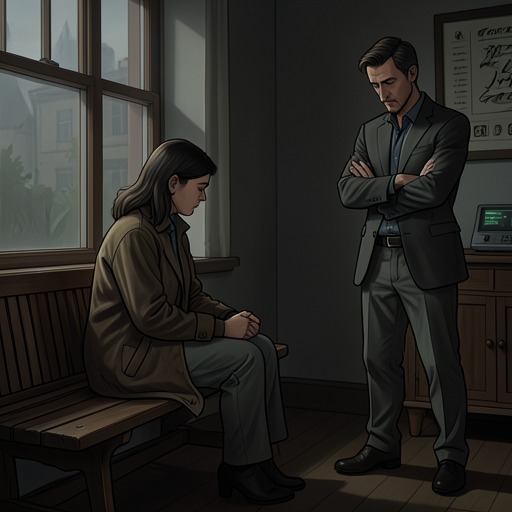
Davis’s blog
Turtles All the Way DownDavis’s blog is the private-feeling but publicly accessible journal Aza Holmes finds while searching for signs of Davis after he withdraws from his familiar online life. Written under the username isnotid02, it becomes an indirect channel between them: its essays and poems disclose feelings Davis does not state plainly, while its changing entries register both a moment of closeness and the silence that follows. For Aza, reading the blog is at once an act of intrusion and a way to feel near him without facing the fear of intimacy in person.
Discovery and Format
After getting home one night, Aza lies awake, begins and abandons texts to Davis, and turns to her laptop to investigate what happened to his online presence. Search results about Davis overwhelmingly concern his father, and Davis’s Instagram, Facebook, Twitter, and blog have not been updated since his father’s disappearance. Searches for the usernames Aza already knows lead nowhere useful. She tries variations on those names and guesses at Facebook and blog addresses for more than an hour before searching for the phrase “the leaves are gone you should be, too.”
That search leads to a single blog under the username isnotid02, created two months earlier. Like Davis’s previous journal, most entries begin with someone else’s words and end in a short, cryptic essay. The site also has a poems tab, so it offers two forms of writing rather than a simple stream of updates. The arrangement matters to Aza’s search: the borrowed quotations provide a recurring frame, while the brief prose that follows leaves much unsaid and invites interpretation.
The first journal entry she reaches opens with a Robert Frost quotation about life going on. Later entries use quotations from Shakespeare. Only after reading the whole journal does Aza notice that the entries about her begin with lines from The Tempest. Their repeated literary framing lets her recognize a pattern before she can know everything Davis means by it. The blog does not explain itself directly; Aza pieces together its significance from timing, repeated references, and the contrast between the quotation and the compressed reflection beneath it.
Aza’s Reading of Davis
One entry describes the pain of encountering the past and the longing to recover what once seemed whole, then distinguishes Aza from that longing: she feels present tense to the writer. Aza takes the next entry, posted late on the night Davis gives her money, as more or less confirming that the woman in the previous reflection is her. The timing turns the blog into a record that Aza reads alongside events in their relationship, though its indirectness leaves room between what Davis writes and what she can safely conclude.
A later reflection considers whether someone would still be liked if the same body and soul belonged to a different, lesser life, before concluding that such a change would make that person someone else. It describes the past as a trap and invokes Stephen Dedalus’s nightmare of history. The entry about Aza that follows is the most recent one she reads: it refers to her noticing the meteor shower beyond the overcast sky and to her ability to see through clouds. For Aza, these details make the writing feel directed toward her, not merely about abstract questions of memory and identity.
She recognizes that reading the journal feels like invading Davis’s privacy. Yet the blog is public, and spending time with his writing feels to her like spending time with him, only less frightening. That distinction gives the site a particular relational function: it brings her close to Davis through words while preserving distance from the embodied encounter that makes closeness difficult. The writing is not a substitute for direct conversation, but it gives Aza a route into thoughts he has not simply sent to her as a message.
Poems, Messages, and Screenlight
The poems tab extends what Aza can learn from the journal. One poem ends with the thought that a father’s weight is understood only once it has been lifted. As she rereads it, her phone buzzes with a message from Davis. Their exchange moves from the poem to a video call: Aza asks whether he wants to FaceTime, and he agrees. In the dim light of their screens, they look at each other without speaking. The light linking their faces comes from the other person’s bedroom, making their visibility reciprocal: each can see the other because the other is also visible.
Aza experiences that screen-mediated silence as more intimate than she could manage in real life. After the call, Davis texts that he likes them, for real, and she believes him. The sequence gives the blog a consequence beyond its contents: reading his writing leads into direct contact, and the call briefly makes possible a closeness neither has to sustain through speech or physical presence. The poem about a father, the message arriving as Aza rereads it, and the quiet call place private writing and communication in the same emotional sequence without making them identical.
Later Updates and Significance
The blog continues to appear in Aza’s life after that night. One night she checks it again and finds another Shakespeare quotation. Later, after Davis does not answer a text she sends a few days afterward, he updates the blog instead. The new entry begins with a passage from The Tempest describing a vision dissolving and leaving nothing behind. The contrast is concrete: direct correspondence has stopped, but the public journal remains active. Its update gives Aza something to read without resolving the silence between them.
Across these appearances, the blog moves from a hidden result in Aza’s search to a medium through which she interprets Davis’s feelings, shares a moment of screen-lit closeness, and then encounters distance. Its repeated quotations and short reflections make it both expressive and opaque: it reveals that Davis is writing about her, but does not turn his inner life into a complete explanation. The final Shakespeare passage therefore carries the weight of an ending without establishing that Davis intended it as one. The blog’s significance lies in that tension between access and uncertainty: Aza can enter Davis’s written world, but she cannot make the writing answer every question their relationship leaves open.