Russell Pickett’s disappearance and flight
Turtles All the Way DownRussell Pickett’s disappearance turns a corruption investigation into an unresolved question of presence and absence: the police can describe the man who vanished and the orderly rooms he left behind, but not where he went. The official timeline places him at his riverside compound on the evening of September 8, before a raid the following morning. Evidence outside the police report, especially a night-vision photograph and a list of cryptic notes, raises the possibility that he planned to flee, though neither establishes his destination or confirms that he escaped.
Disappearance Under Investigation
Pickett, the controversial founder and chief executive of Pickett Engineering, vanished as the company faced a fraud and bribery investigation. The Indianapolis Police Department raided his home the morning after he was last seen. A radio report publicized a $100,000 reward for information leading to his whereabouts and described the company as an Indianapolis-based construction firm employing more than 10,000 people worldwide. The reward made the disappearance an urgent public mystery; its connection to an expansive corporate investigation also meant that the question of Pickett’s location could not be separated from his company’s legal troubles.
An Indianapolis Star account, read aloud by Daisy Ramirez, added that Pickett had not been home since police served the search warrant. His lawyer, Simon Morris, said he had no information about Pickett’s whereabouts. Detective Dwight Allen reported that no activity had appeared on Pickett’s credit cards or bank accounts after the evening before the raid. The article also said that investigators knew of no surveillance cameras on the estate beyond one at the front gate. These details made the disappearance look less like a documented departure than a sudden break in the ordinary traces by which a person might be followed.
The Official Timeline and the Empty House
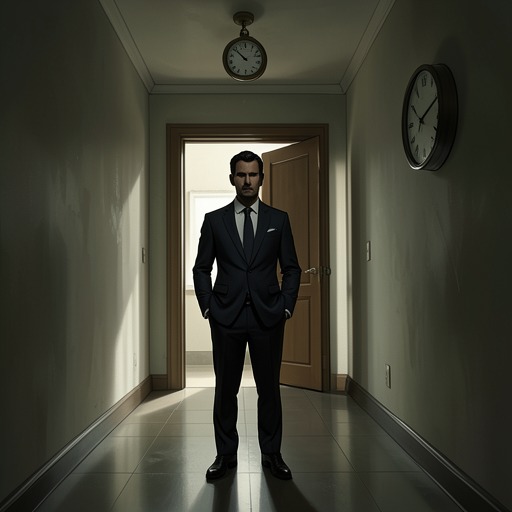
Aza Holmes reads the missing-person report over the course of a school day, returning to it whenever her biology teacher, Ms. Park, turns to the blackboard. It identifies Pickett as a 53-year-old, gray-haired, blue-eyed man, six feet tall and approximately 220 pounds. It records three small surgical scars from gallbladder removal and a tattoo on his left shoulder blade bearing the Latin phrase Nolite te bastardes carborundorum. At the time he disappeared, he was wearing his usual sleeping clothes: a horizontally striped navy-and-white nightshirt and light-blue boxer shorts. The report says he was discovered missing at 5:35 a.m., when police raided the house in connection with the corruption investigation.
The account offers few direct witnesses. The report’s witness statements mostly come from people who did not witness the disappearance; only Pickett’s sons, Davis Pickett and Noah Pickett, were at home that night. The front-gate camera recorded groundskeepers leaving at 5:40 p.m. The zoologist Malik left at 5:52, followed by Lyle at 6:02 and Rosa at 6:04. Their departures support Lyle’s account that Pickett had no nighttime staff, but they do not reveal what happened after the household emptied.
Photographs of nearly every room show no obvious disturbance. Pickett’s office contains papers that appear to have been left for the evening, and his bedside table still holds a cell phone. The carpets show one set of footprints leading to his desk and one leading away. Suits remain aligned in his closets, while three dirty dishes marked with pizza grease and tomato sauce sit at the kitchen sink. The untouched routines make the house seem less like a place abandoned after a struggle than one whose occupant has simply disappeared from it. Yet the report omits a potentially important piece of evidence: the night-vision photograph.
Clues Outside the Report
Before reading the police account, Aza remembers that Davis and Noah had set a motion-capture camera in the woods by the river. It used night vision and took a picture when something passed, whether deer, coyotes, or another moving presence. Because the missing-person report does not mention the resulting photograph, Aza and Daisy Ramirez realize they possess a piece of the timeline the police do not have. The significance lies not in a confirmed explanation of Pickett’s fate, but in the gap between what the investigators recorded and what the boys’ camera may have captured.
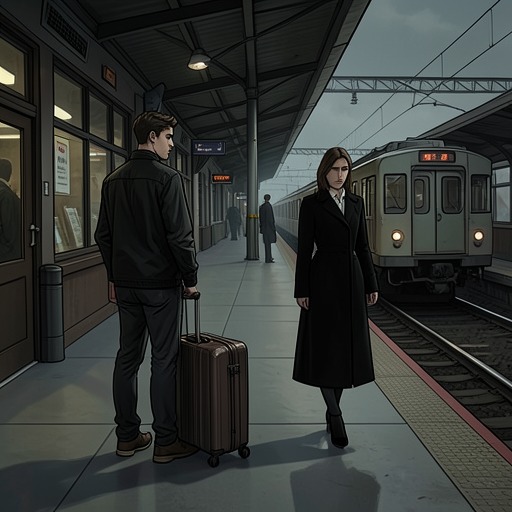
A separate cluster of notes associated with Pickett makes flight a plausible interpretation without turning it into fact. Searches connect Kosovo, Cambodia, and the Maldives to the absence of extradition treaties with the United States. Other notes point to a memoir about a woman whose father lived on the run from the law and to a news article about how difficult it is to fake one’s death. Together, these references suggest that Pickett may have been considering how to evade criminal charges or disappear deliberately. But the notes’ dates and order are unknown, and their meaning remains uncertain; one entry, the phrase about a jogger’s mouth, yields no useful explanation. The clues invite a theory of escape while withholding the proof that would settle it.
Family Consequences and Uncertainty
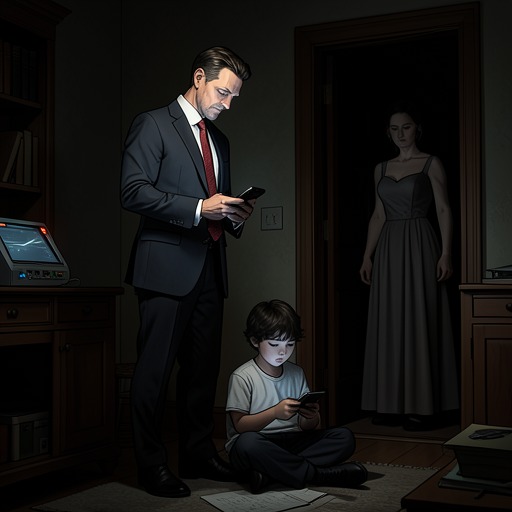
The disappearance leaves Davis and Noah without their father while the investigation continues. When Davis later visits Aza’s home, he describes himself as something like an orphan, though he says he is doing well. Asked who looks after him, he answers that it is more or less everybody and nobody: a house manager attends to the household, and a lawyer handles financial matters. The practical arrangements do not resolve the emotional fact of Pickett’s absence, and Davis’s account shows how the mystery reaches beyond police files and corporate affairs into the sons’ daily lives.
The narrative keeps the distinction between disappearance and escape intact. Pickett’s last known movements, the silent financial accounts, the orderly house, the missing report’s omissions, and the apparent flight-related notes form a chain of clues, not a confirmed account of his fate. His vanishing therefore remains both a legal problem and a deliberately incomplete story: the evidence gives Aza and Daisy grounds to investigate, but it does not yet tell them whether Pickett is hiding, dead, or somewhere beyond the reach of the people searching for him.