Abraham Lincoln
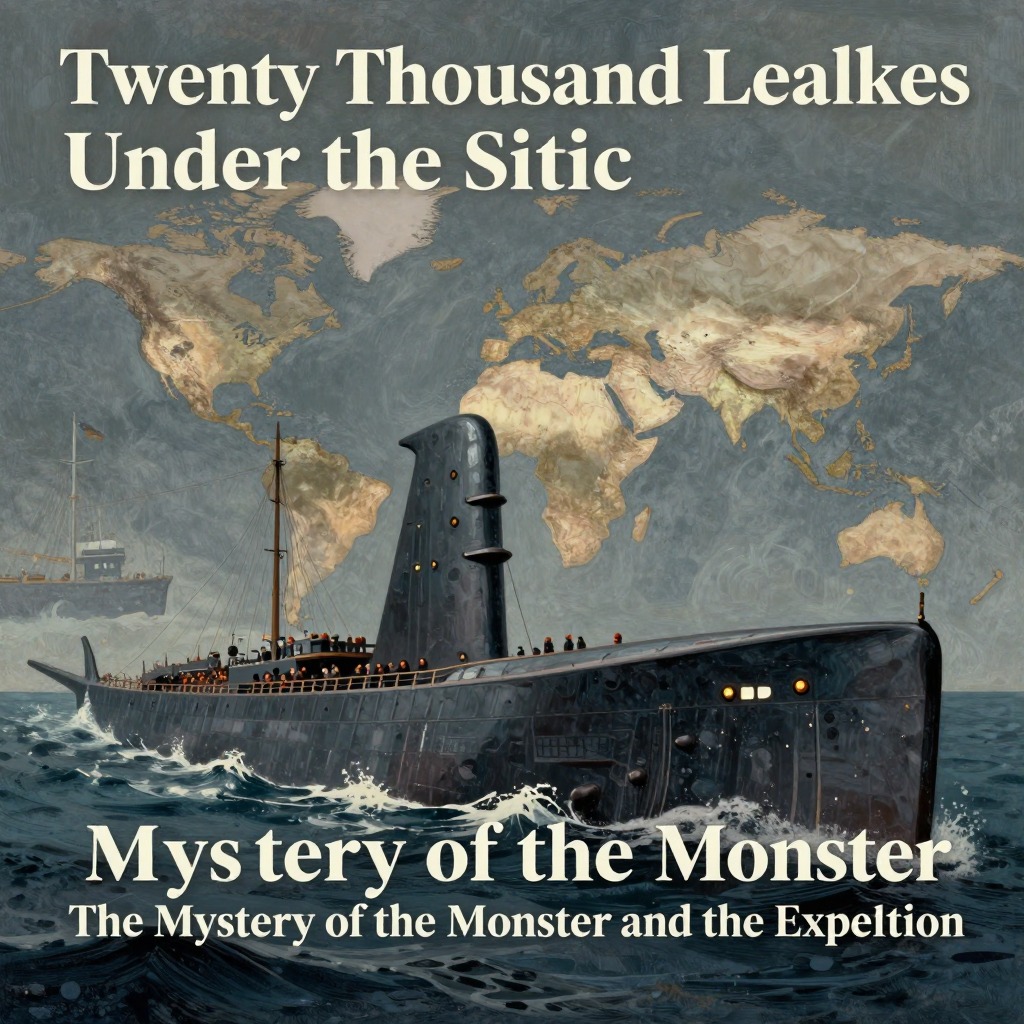
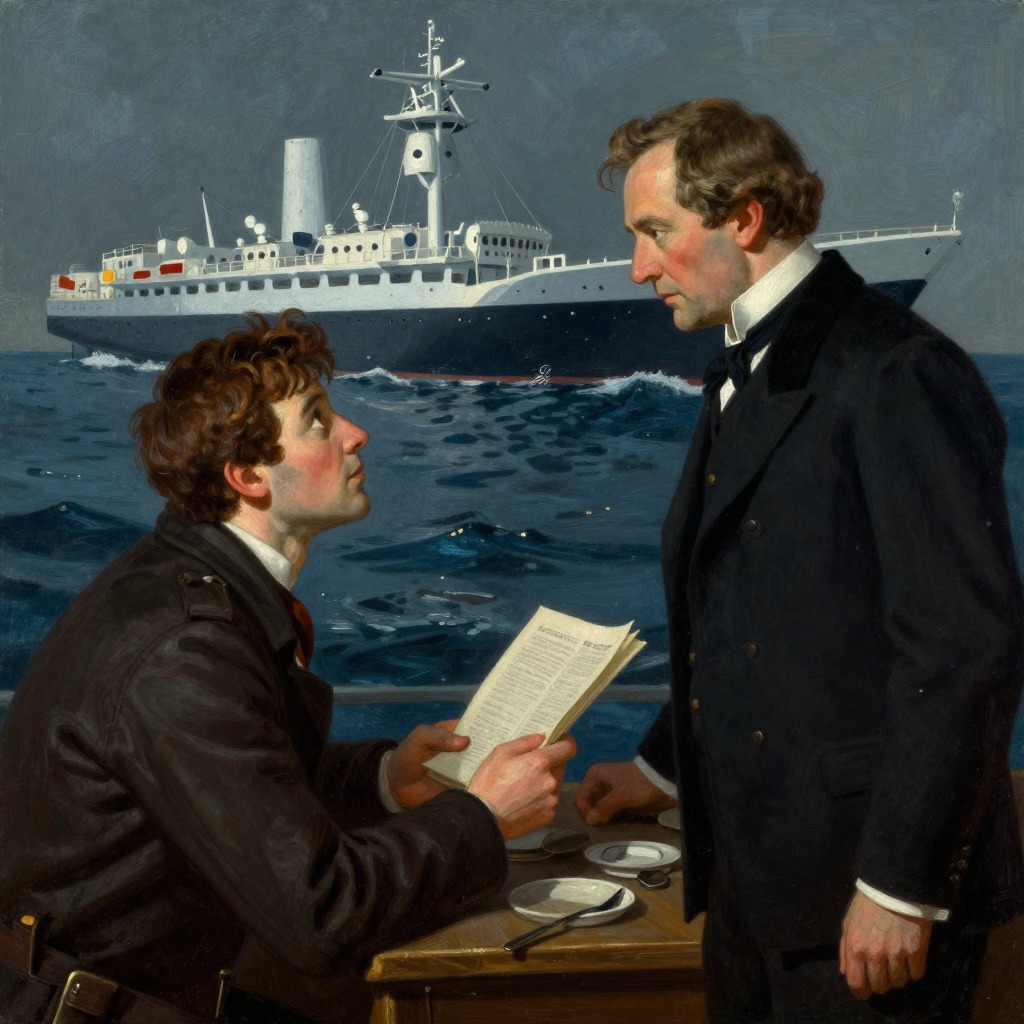
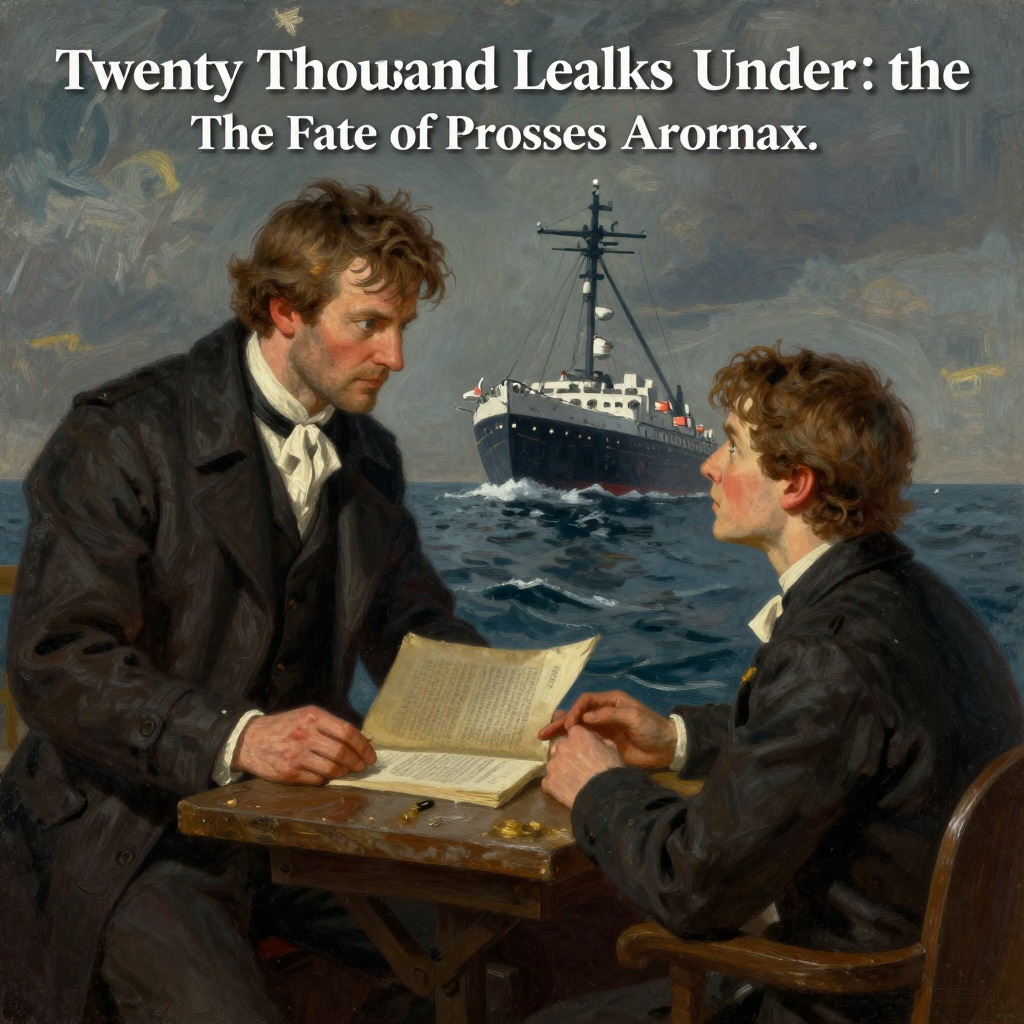
Twenty Thousand Leagues Under the SeaThe Abraham Lincoln is a high-speed frigate of the United States Navy, specially fitted out in 1867 to hunt down the mysterious sea monster that had been terrorizing Atlantic shipping. Under the command of Commander Farragut, the ship carries Professor Pierre Aronnax, his servant Conseil, and the Canadian harpooner Ned Land. Its pursuit of the supposed narwhale leads to a violent collision with the Nautilus, during which Aronnax, Conseil, and Ned Land are thrown overboard and subsequently taken prisoner aboard Captain Nemo's submarine. The Abraham Lincoln thus serves as the catalyst that brings the novel's principal characters together and launches the underwater voyage that forms the core of the narrative.
Identity and Mission
The Abraham Lincoln was a high-speed frigate furnished with superheating equipment that allowed the tension of its steam to build to seven atmospheres, giving it an average speed of 18.3 miles per hour. It was armed with the latest model breech-loading cannon, a weapon that could fire a four-kilogram conical projectile an average distance of sixteen kilometers. The ship was also equipped with every known whaling mechanism, from hand-hurled harpoons to blunderbusses firing barbed arrows and duck guns with exploding bullets. Its crew included Ned Land, the King of Harpooners, a Canadian of great height and strength whose skill with a harpoon was unmatched. The frigate was fitted out in New York, with the naval arsenals unlocked for Commander Farragut, who pressed energetically forward with the arming of his vessel. The ship left its Brooklyn pier on the same day Aronnax received his invitation from Secretary of the Navy J. B. Hobson, departing amid a crowd of 500,000 spectators who cheered from the wharves of Brooklyn and every part of New York bordering the East River.
The Hunt and the Collision
The Abraham Lincoln sailed along the east coast of South America with prodigious speed, doubled Cape Horn on July 6, 1867, and entered the Pacific. For three months the crew searched the northern Pacific seas, racing after every whale sighted and abruptly veering off course, but found nothing. By November 2, the crew's enthusiasm had turned to discouragement and fury, and Commander Farragut, like Christopher Columbus before him, asked for a grace period of just three days more. On the evening of November 5, with the delay about to expire, Ned Land spotted the creature. The frigate pursued the Nautilus at full steam, reaching 19.3 miles per hour, but the submarine matched its speed. Commander Farragut ordered the forecastle cannon fired, but the shell bounced off the Nautilus's rounded surface. The old gray-bearded gunner declared the beast must be covered with six-inch armor plate. The chase continued until nightfall, when the Nautilus appeared motionless. Ned Land launched his harpoon from the bobstays under the bowsprit, but the weapon collided with the hard substance of the submarine's hull. The electric light suddenly went out, and two enormous waterspouts crashed onto the deck of the frigate, toppling crewmen and breaking spare masts. A hideous collision occurred, and Aronnax was hurled into the sea. The Nautilus's tusk smashed the frigate's propeller and rudder, leaving the Abraham Lincoln unable to steer.
Aftermath and Significance
The Abraham Lincoln was left disabled after the collision, its propeller and rudder smashed by the monster's tusk. The frigate was unable to return to leeward after its crewmen, and Aronnax, Conseil, and Ned Land were left adrift in the ocean. The ship itself was not destroyed; Captain Nemo later stated that he was content simply to put the frigate in a condition where it could do him no harm, and that it would have no difficulty getting repairs at the nearest port. The Abraham Lincoln thus serves as the instrument that brings the novel's principal characters into the orbit of Captain Nemo and the Nautilus, setting the stage for the underwater voyage that follows. Its pursuit of the supposed narwhale, driven by public demand and the promise of a $2,000 reward for the first man to sight the animal, reflects the broader societal fascination with the mysterious sea monster that had captured the world's imagination.