Crespo Island
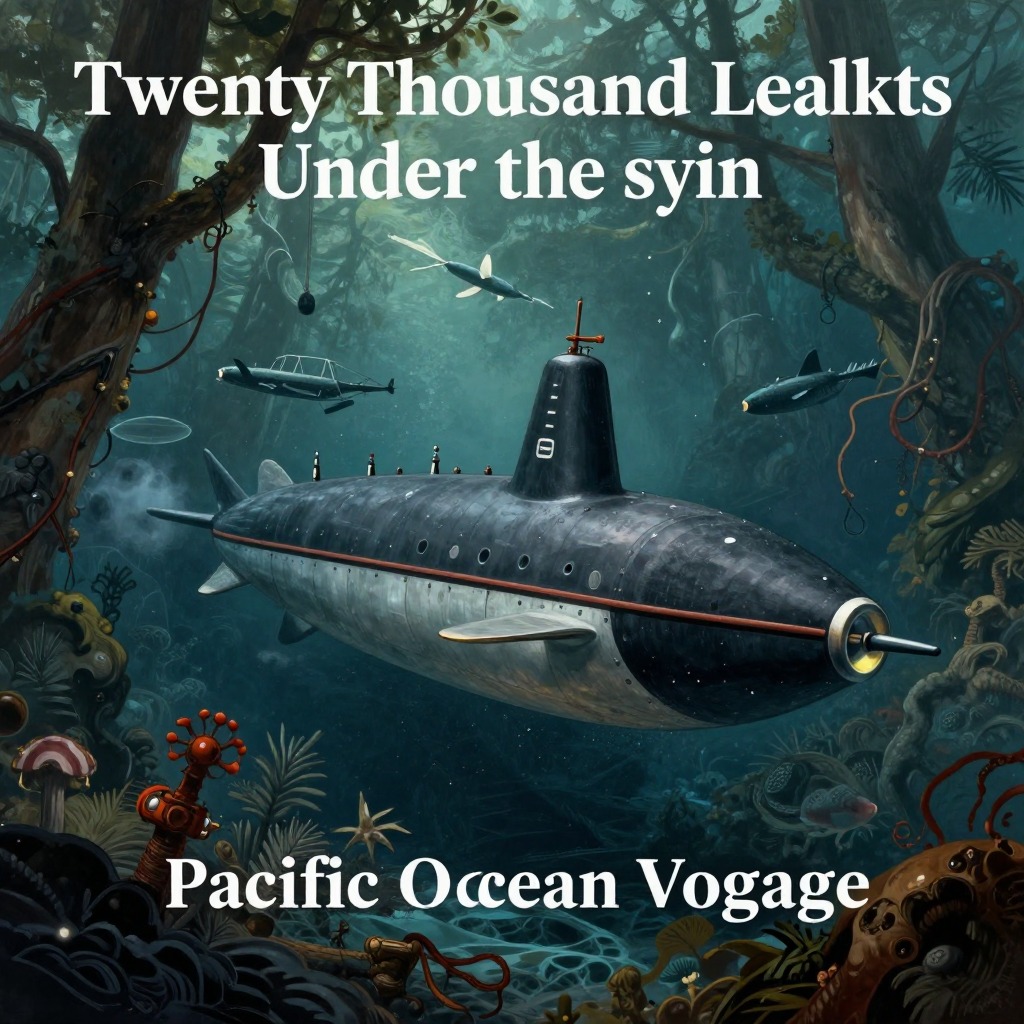
Twenty Thousand Leagues Under the SeaCrespo Island, a small, stray rock in the middle of the North Pacific, serves as the setting for the first underwater hunting expedition undertaken by the passengers of the Nautilus. Discovered in 1801 by Captain Crespo and marked on old Spanish charts as Rocca de la Plata, or "Silver Rock," the island lies at latitude 32° 40' north and longitude 167° 50' west, approximately 1,800 miles from the Nautilus's starting point in the seas of Japan. The invitation to hunt there, delivered in a note to Professor Aronnax on November 16, 1867, initially seems to contradict Captain Nemo's professed hatred of the shore, but the captain quickly clarifies that his forests are not on land but actual underwater forests, known only to him and growing only for him.
The Underwater Forest and the Dive
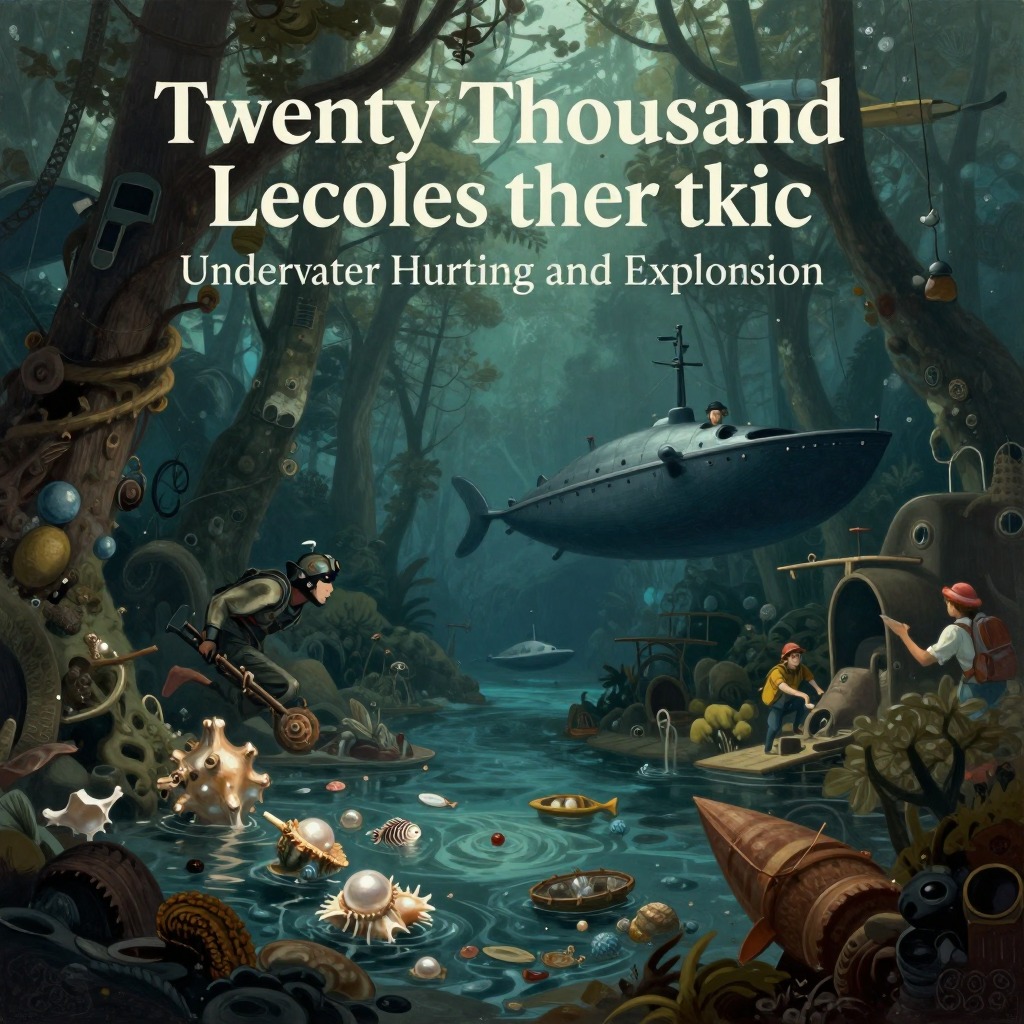
The expedition to Crespo Island's underwater forest marks a pivotal demonstration of the Nautilus's advanced technology. Before the dive, Captain Nemo equips his guests with Rouquayrol-Denayrouze diving devices, which store air under high pressure in tanks worn on the back, and Ruhmkorff electric lamps for illumination. The rifles provided are not gunpowder weapons but air guns that fire small glass capsules charged with high-voltage electricity, invented by the Austrian chemist Leniebroek, which kill any animal instantly on contact. The party, consisting of Captain Nemo, Professor Aronnax, Conseil, and a herculean crewman, descends from the Nautilus, which is aground in ten meters of water, through a watertight cell that floods to allow their exit. Once on the seafloor, Aronnax marvels at the power of the sun's rays penetrating the water, the fine-grained sand carpeting the bottom, and the riot of rainbow tints produced by refraction on the edges of rocks, flowers, and shells.
The Landscape and the Hunt
The underwater forest of Crespo Island is unlike any terrestrial woodland. The trees and plants, all marine algae and zoophytes, grow in a strict perpendicular line, rising straight up toward the surface of the ocean, governed by the density of the water. The seafloor is strewn with sharp chunks of stone, and the vegetation is a dense tangle of peacock's tails, scarlet rosetangle, and mermaid's cups, all without flowers. The party walks for four hours, reaching a depth of 150 meters, where the darkness becomes profound and they must activate their Ruhmkorff lamps. During the hunt, Captain Nemo demonstrates the power of the electric rifle by killing a magnificent sea otter, a valuable and increasingly rare carnivore, and his companion shoots an albatross. The expedition culminates in a tense encounter with a pair of enormous blue sharks, which pass by without noticing the group, allowing them to escape a deadly threat.
Narrative Role and Significance
Crespo Island serves as a crucial narrative device, transitioning the story from the confined world of the Nautilus to the vast, unexplored realm of the ocean floor. The expedition validates Captain Nemo's claims of self-sufficiency and his unique relationship with the sea, showing that he can not only travel through the water but also "hunt" and "walk" within it. For Professor Aronnax, the experience is a revelation, confirming his scientific theories about the possibility of life in the deep and providing him with firsthand evidence of wonders he had only imagined. The island itself is less a physical location than a threshold, a point of entry into the new, liquid element that will define the remainder of the voyage. The successful hunt and the safe return to the Nautilus solidify the fragile trust between the captives and their enigmatic host, even as the dangers encountered—from giant sea spiders to sharks—underscore the constant peril of this underwater world.