Gulf Stream
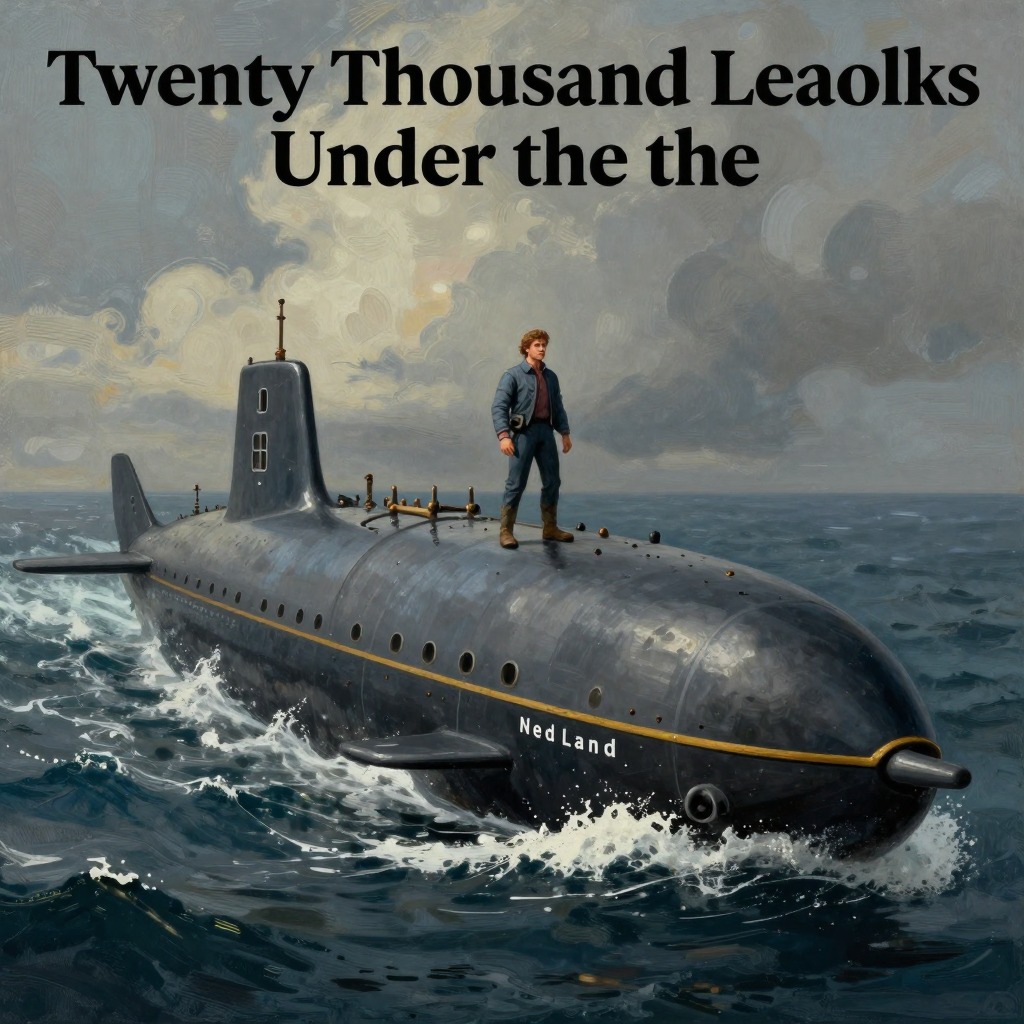
Twenty Thousand Leagues Under the SeaThe Gulf Stream is the most significant oceanic feature encountered during the Nautilus's voyage through the North Atlantic, a warm-water current that operates as a river within the sea, with its own distinct banks, temperature, and marine life. Its presence dominates the narrative from the moment the Nautilus enters its flow after leaving the Bahamas, shaping the ship's course, the weather it faces, and the observations of Professor Aronnax. More than a mere navigational landmark, the Gulf Stream becomes a character in its own right, a force of nature that both aids and imperils the submersible, and a symbol of the planet's hidden, dynamic systems that Captain Nemo has mastered.
Definition and Oceanographic Significance
Commander Maury, the American oceanographer whose work Captain Nemo admires, is credited with discovering the true source of the Gulf Stream in the Bay of Biscay. From there, its waters, initially weak in temperature and color, travel south, skirt equatorial Africa, warm in the Torrid Zone, cross the Atlantic, and reach Cape São Roque on the coast of Brazil. There the current forks, with one branch entering the Caribbean Sea to become superheated before emerging from the Gulf of Mexico. This branch then heads north up the American coast, its waters a pure indigo that contrasts sharply with the green waves of the surrounding ocean. The Gulf Stream's average depth is 3,000 feet, its average width sixty miles, and its volume of water is greater than that of all the world's rivers combined. Its speed, which steadily decreases as it advances northward, is crucial; experts agree that if its speed and direction were to change, the climates of Europe would undergo disturbances whose consequences are incalculable. The current's distinctness is so clear that abreast of the Carolinas, the Nautilus's spur cut the waves of the Gulf Stream while its propeller was still churning those belonging to the ocean.
The Nautilus's Journey and the Storm
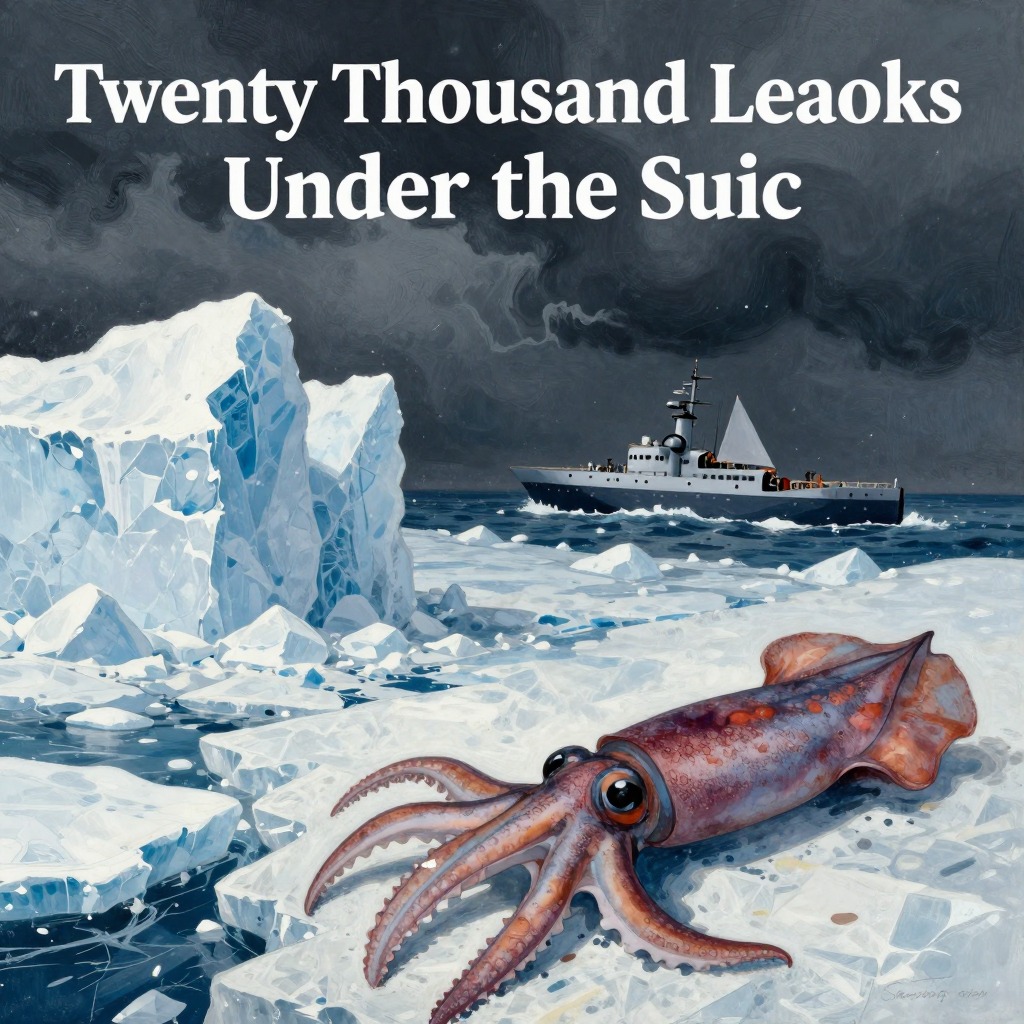
The Nautilus enters the Gulf Stream after leaving Old Bahama Channel, which is fourteen leagues wide by 350 meters deep, and the current moves at a rate of eight kilometers per hour. The ship wanders within this current for days, its course seemingly aimless after the traumatic battle with the giant squid. The Gulf Stream's waters, murky and rich in saline material, are a different temperature from the surrounding sea, and when Conseil dips his hands into it, he is astonished to feel no sensation of either hot or cold, as the water temperature is barely different from human blood. The current sweeps along a host of marine life, including argonauts, rays, and various sharks. The most dramatic event occurs when the Nautilus, cruising abreast of Long Island, is caught in a hurricane that the Gulf Stream itself has helped to generate. The current's nickname, the Lord of Storms, is earned through the difference in temperature between its waters and the superimposed layers of air, which creates fearsome cyclones. During this storm, the Nautilus is battered by waves fifteen meters high, and Captain Nemo, lashed to the platform, faces the elements head-on, courting a death worthy of himself. The storm reaches its peak, with the skies catching fire and the air streaked with lightning, before the Nautilus finally sinks beneath the waves to find tranquility in the depths.
Thematic and Narrative Significance
The Gulf Stream serves as a powerful symbol of the natural forces that both enable and constrain Captain Nemo's quest for absolute freedom. It is a force he can navigate but cannot control, a reminder that even the Nautilus is subject to the laws of nature. The current's role in generating the hurricane underscores the theme of nature's sublime and terrifying power, a power that Nemo both respects and challenges. Furthermore, the Gulf Stream's function as a global heat regulator, stabilizing the climates of Europe, connects the local journey of the Nautilus to the planetary scale of the novel's vision. The current is a living artery of the world, a concept that aligns with Nemo's own view of the sea as a living, breathing entity with its own circulation. The detailed descriptions of the Gulf Stream's properties, from its temperature to its speed, reflect the novel's encyclopedic ambition and its grounding in the scientific knowledge of the 19th century, particularly the work of Commander Maury. The Gulf Stream is not merely a setting but a dynamic, active participant in the narrative, a force that shapes the final, desperate phase of the voyage and underscores the novel's central tension between human ambition and the overwhelming power of the natural world.